
Invertebrate
Pork Tapeworm
Taenia soliumAlso known as Armed Tapeworm
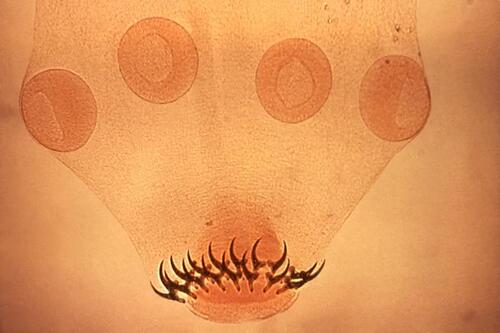
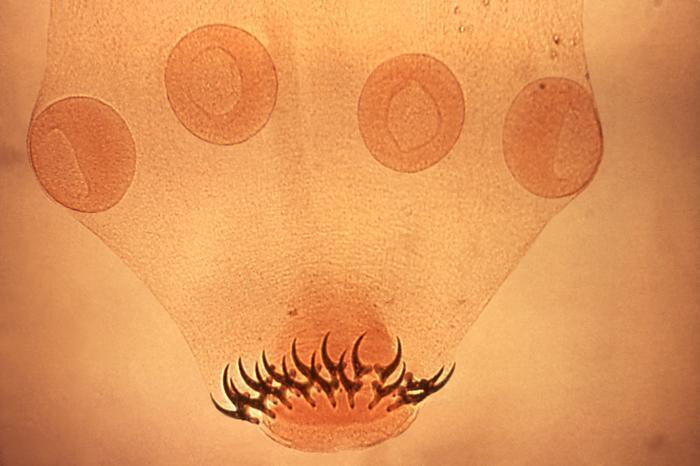
Pork tapeworms are ribbon-like intestinal parasites that anchor to the human gut wall with a tiny head bearing four suckers and a double ring of hooks. Lacking a mouth or digestive tract, they absorb pre-digested nutrients directly through their outer skin while shedding egg-filled segments in host feces. When pigs or humans accidentally swallow those microscopic eggs, larvae hatch and migrate into muscle, eye, or brain tissue to form fluid-filled cysts.
ParasiticSegmentedZoonotic
—observations
—countries
—peak records
Not EvaluatedConservation statusIUCN Red List categoriesLCNTVUENCREWEXNot Evaluated — not placed on the risk ladderRed List categories, explained →
Diet & preyHost intestinal nutrients
ThreatsModern sanitation, meat inspection, thorough cooking of pork, and antiparasitic medication
HabitatsHuman small intestine (adults) and pig or boar tissues (larval cysts), worldwide where pork is eaten
Life span2 to 3 years in a human host; larval cysts can survive for several years
Classification
- OrderCyclophyllidea
- FamilyTaeniidae
- GenusTaenia
- SpeciesTaenia solium
Range data is not available yet.
Interaction riskModerate
- Low
- Moderate
- High
- Very high
- Why interaction risk is moderate
- Safe to view externally, though ingesting eggs or cysts in undercooked pork causes serious parasitic disease.
Responsible observation
- Food Safety: Cook pork thoroughly to at least 63 degrees Celsius to destroy any hidden larval cysts.
- Hygiene: Wash hands thoroughly with soap and water after using the restroom and before preparing food.
- Identification: Under magnification, the pinhead-sized scolex displays four suckers and a ring of hooks that distinguish it from the beef tapeworm.

Definitive Host no rights reserved, uploaded by Abhas Misraraj · cc0
Intermediate Host Valentin Panzirsch / CC BY-SA 3.0 at · cc-by-sa Image unavailable
Close Relative Close Relative
Help improve the field guideSomething wrong?
Checking your Fauna account…Report a name, category, or profile issue for review.