
Bird · GBIF taxon 6092637
Golden-cheeked Warbler
Setophaga chrysopariaAlso known as Gold Finch of Texas
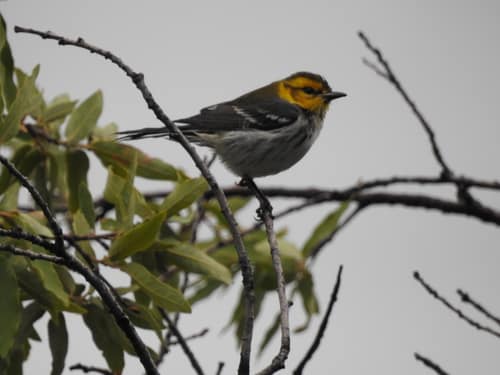
Male Golden-cheeked Warblers have black backs and throats set off by bright golden cheeks, while females are olive-backed and less strongly patterned. They breed only in mature juniper-oak woodland of central Texas and use strips of peeling juniper bark in their nests.
endangered warblerTexas endemic breederjuniper-oak specialist

—observations
—countries
—peak records
EndangeredConservation statusIUCN Red List categoriesLCNTVUENCREWEXEndangeredRed List categories, explained →
Diet & prey
- caterpillars
- beetles
- spiders
Predators
- hawks
- snakes
- jays
ThreatsBreeding habitat clearing, fragmentation, urban expansion, wildfire, drought, and nest parasitism
HabitatsMature Ashe juniper and oak woodland for breeding, and montane forest during migration and winter
Life spanOften several years, with documented individuals surviving at least eight years
Size / weightNot available
Classification
- FamilyParulidae
- SpeciesSetophaga chrysoparia
Range data is not available yet.
Interaction riskLow
- Low
- Moderate
- High
- Very high
- Why interaction risk is low
- Protect breeding habitat by staying on routes, minimizing noise, and withholding precise nest locations.
- What to notice
- Confirm the golden cheek, dark eye line, and habitat without approaching a singing bird or nest.
- Support conservation
- Do not handle birds or vegetation, conceal precise nesting locations, and follow all protected-area restrictions.
Responsible observation
- Identify: Look for a golden cheek enclosed by black on an adult male.
- Protect: Observe quietly from established routes without broadcasting calls or locations.
Help improve the field guideSomething wrong?
Checking your Fauna account…Report a name, category, or profile issue for review.