
Plant
Common Emu-Bush
Eremophila glabraAlso known as Tar Bush, Black Fuchsia
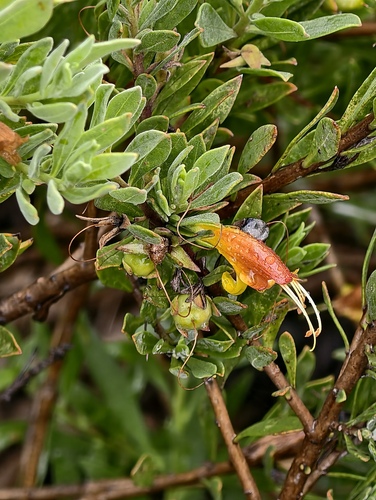
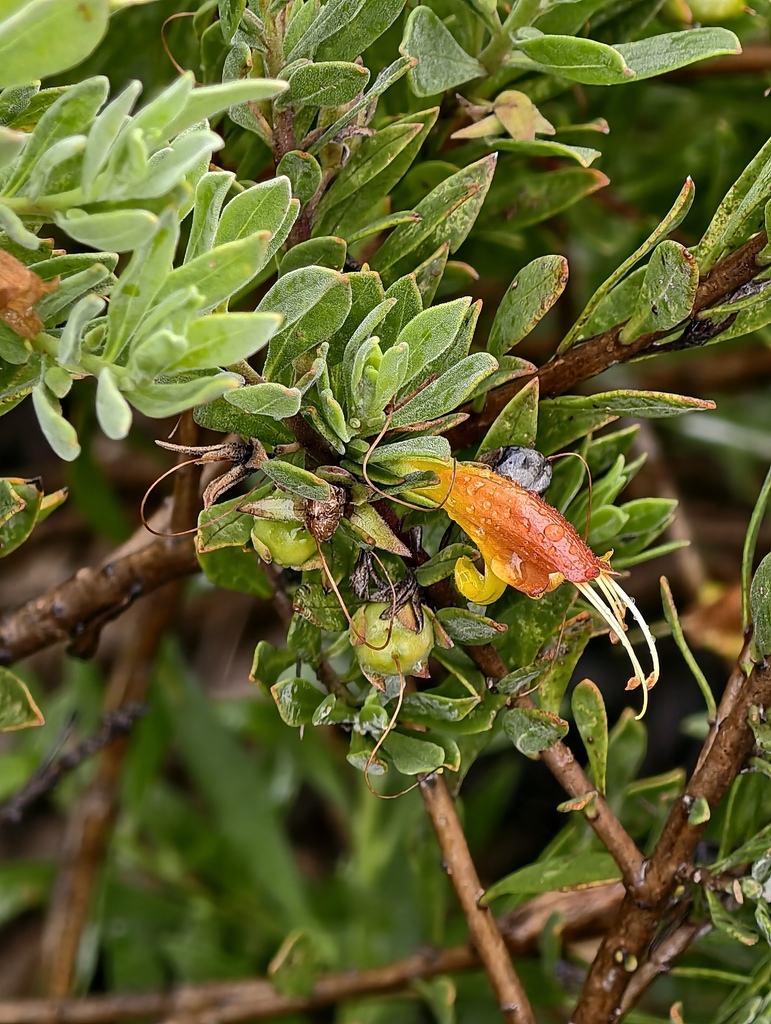
Common emu-bush takes on wildly different shapes across Australia, growing anywhere from a low, ground-hugging mat to an upright, spreading shrub. Its curved, tubular flowers burst open in shades of red, orange, yellow, or green, producing copious nectar that draws in honeyeaters throughout winter and spring. Tiny raised glands dot the stems, leaves, and blooms, giving the foliage a slightly sticky texture despite its scientific name meaning smooth.
EvergreenDrought-TolerantBird-Pollinated
—observations
—countries
—peak records
Not EvaluatedConservation statusIUCN Red List categoriesLCNTVUENCREWEXNot Evaluated — not placed on the risk ladderRed List categories, explained →
Diet & preySunlight, Water, Soil minerals
Predators
- Emus
- Kangaroos
- Rabbits
ThreatsLand clearing, overgrazing by livestock and feral rabbits, and invasive weeds
HabitatsMallee scrub, mulga woodland, coastal dunes, and arid grasslands across Australia
Life span10 to 25 years
Classification
- OrderLamiales
- FamilyScrophulariaceae
- GenusEremophila
- SpeciesEremophila glabra
Range data is not available yet.
Interaction riskLow
- Low
- Moderate
- High
- Very high
- Why interaction risk is low
- Safe to observe at a normal distance; avoid ingesting wild plant parts.
Responsible observation
- Flower Shape: Look for curved, two-lipped tubular blooms in red, orange, yellow, or green.
- Glandular Texture: Check stems and leaves for tiny raised resin glands that give a sticky feel.
- Bird Watching: Pause quietly near flowering shrubs in winter to spot visiting honeyeaters.
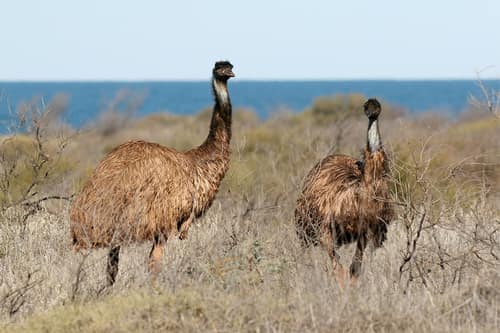
Seed Disperser (c) patrickkavanagh, some rights reserved (CC BY) · cc-by Image unavailable
Pollinator 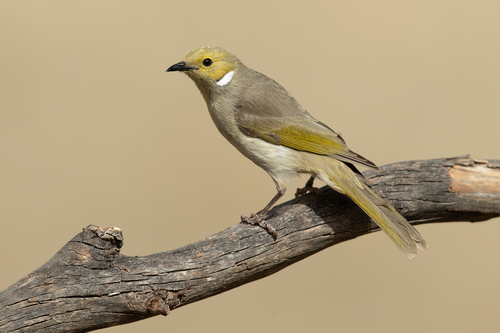
Pollinator (c) JJ Harrison, some rights reserved (CC BY-SA) · cc-by-sa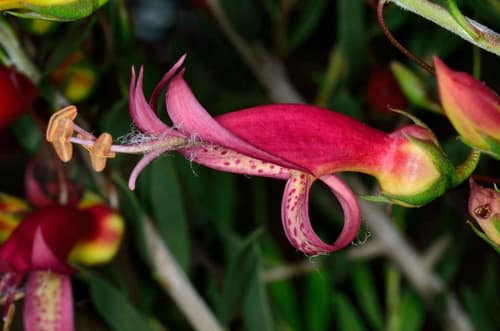
Close Relative (c) Chris Lindorff, some rights reserved (CC BY), uploaded by Chris Lindorff · cc-byClose Relative
Help improve the field guideSomething wrong?
Checking your Fauna account…Report a name, category, or profile issue for review.