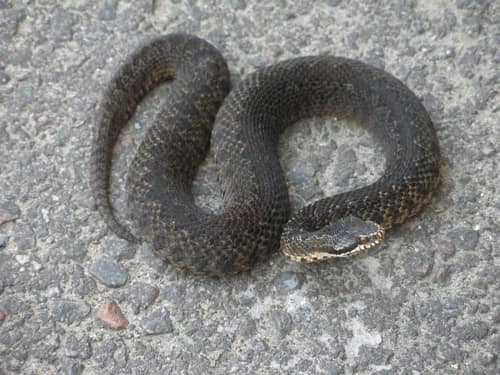
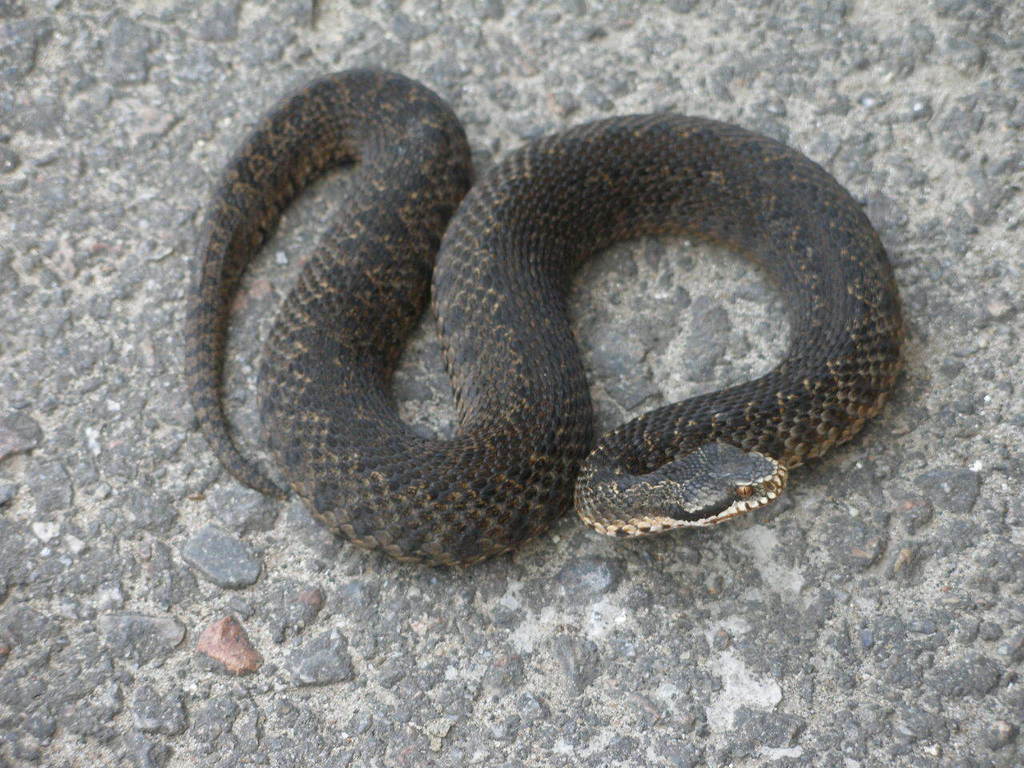
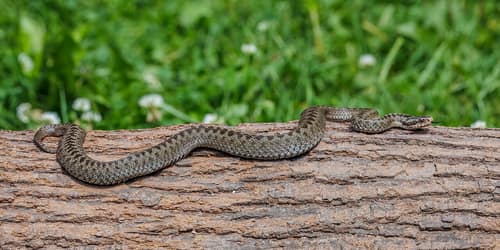
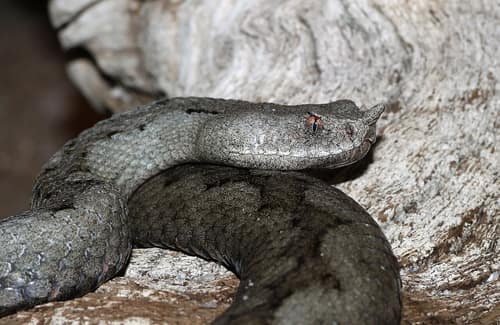
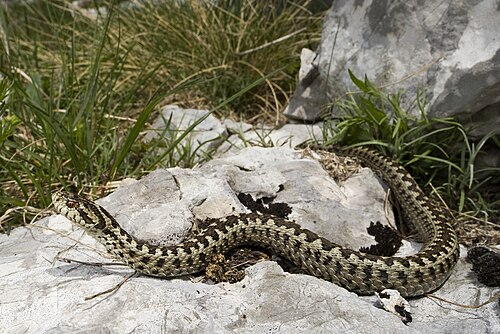
Also known as Caucasus Viper, Kaznakow's Viper, Kaznakov's Viper
Caucasian Vipers inhabit humid montane slopes and forested river valleys of the Black Sea region, spending mornings basking on mossy rocks and forest clearings. Their bold warning coloration ranges from intense scarlet to golden yellow, contrasted by a broad black zigzag pattern down the back. Females give birth to live young late in summer, which immediately begin hunting small lizards and insects in dense leaf litter.
ThreatsHabitat destruction from agricultural expansion, urban development, and illegal collection for the pet trade
HabitatsHumid broadleaf forests, subalpine meadows, and river valleys
Life span10–15 years
Classification
FamilyViperidae
SpeciesVipera kaznakovi
Range & activity
Range data is not available yet.
Safe observation
Interaction riskVery high
Low
Moderate
High
Very high
Why interaction risk is very high
Possesses dangerous venom; maintain a safe distance and never attempt to handle.
Why it is dangerous
Venom contains cytotoxins and hemotoxins that cause severe local tissue damage, intense pain, and potential systemic poisoning requiring prompt medical treatment.
How to recognize a risky encounter
Look for a short, thick snake with a wide triangular head, vertical pupils, and vibrant orange, yellow, or red patterning with dark dorsal blotches.
What to do
Never attempt to handle, capture, or corner this species; slowly back away if encountered in the wild.
What to notice
Recognizable by its unique, brilliant coloration and thick body restricted to high-humidity habitats in Turkey, Georgia, and Russia.
Support conservation
Avoid sharing precise GPS coordinates of observations on public platforms to protect remaining wild populations from illegal collectors.
Responsible observation
Trail Safety: Stick to established paths when hiking in humid mountain forests to avoid stepping on basking snakes.
Observation Distance: Observe from a distance of at least two meters and never reach into dense brush or under loose rocks.