
Reptile
Banded Leaf-toed Gecko
Hemidactylus fasciatusAlso known as West African Banded Gecko
Banded leaf-toed geckos spend daylight hours concealed behind flaking tree bark, deep rock crevices, or fallen timber across the Guinean moist forests. At night, they emerge to stalk foliage and rocky surfaces for insects, using specialized adhesive toe pads to navigate sheer vertical terrain. Females deposit pairs of hard-shelled eggs in sheltered microhabitats, often returning to communal nesting crevices over successive breeding cycles.
NocturnalArborealCryptic
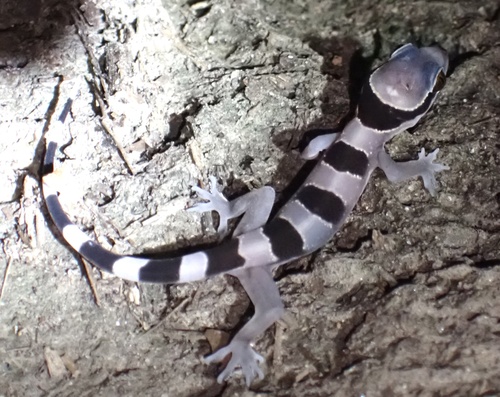
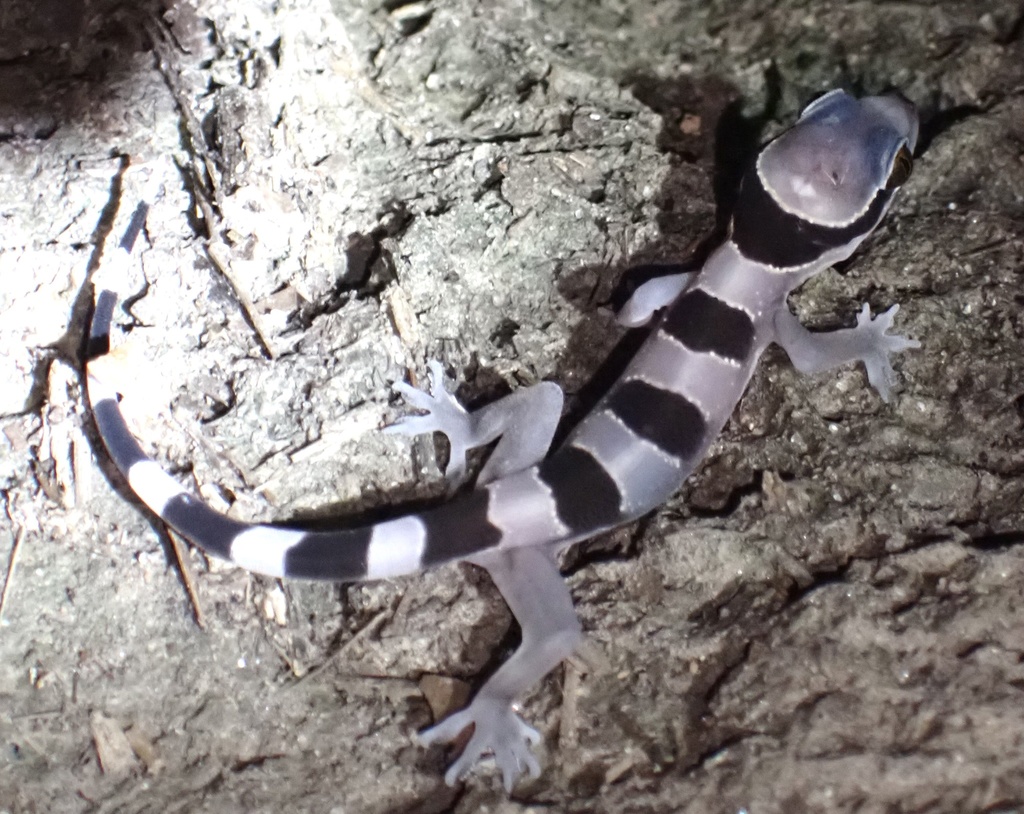
—observations
—countries
—peak records
Least ConcernConservation statusIUCN Red List categoriesLCNTVUENCREWEXLeast ConcernRed List categories, explained →
Diet & preyMoths, Crickets, Spiders
Predators
- Colubrid snakes
- Nocturnal birds
- Large spiders
ThreatsDeforestation, habitat fragmentation, logging operations
HabitatsTropical moist lowland forests, rock outcrops, secondary woodlands
Life span5–10 years
Classification
- FamilyGekkonidae
- SpeciesHemidactylus fasciatus
Range data is not available yet.
Interaction riskLow
- Low
- Moderate
- High
- Very high
- Why interaction risk is low
- Harmless to humans; safe to observe from a respectful distance.
Responsible observation
- Night Spotting: Use a dim or red-tinted headlamp to watch them hunt along trunks without scaring them.
- Microhabitat Care: Refrain from peeling loose bark or shifting forest rocks where individuals shelter by day.
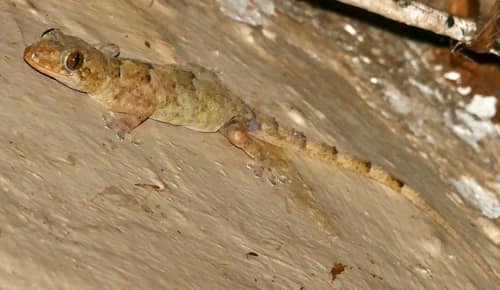
Competitor (c) Bernard DUPONT, some rights reserved (CC BY-SA) · cc-by-sa Image unavailable
Close Relative Close Relative
Help improve the field guideSomething wrong?
Checking your Fauna account…Report a name, category, or profile issue for review.