
Bird
Long-wattled Umbrellabird
Cephalopterus penduligerMales sport an extraordinary, feathered throat wattle reaching up to 35 cm in length, which inflates like a fleshy ornament during courtship beneath a thick, overarching crest. In the dripping canopy of the Chocó bioregion, these elusive birds gather at traditional lek trees where males project low, resonant, foghorn-like booms across mountain ravines. Essential to forest regeneration, they swallow massive palm nuts and laurels whole, dispersing heavy canopy seeds that few other birds can manage.
Cloud ForestFrugivoreVocal Display
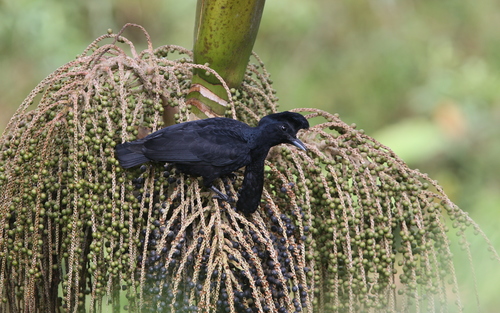
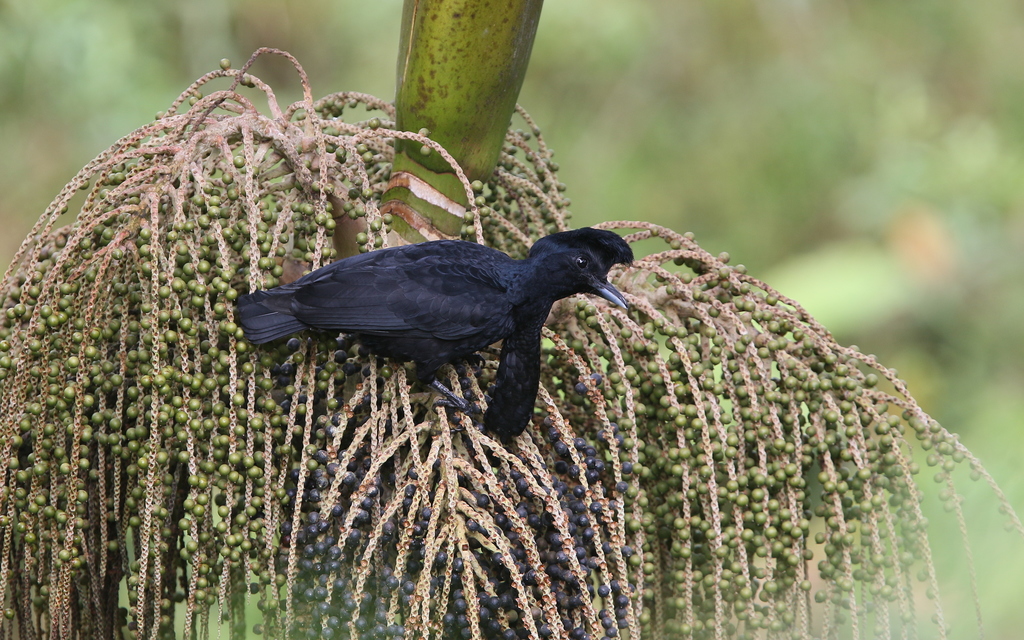
—observations
—countries
—peak records
VulnerableConservation statusIUCN Red List categoriesLCNTVUENCREWEXVulnerableRed List categories, explained →
Diet & preyArecaceae fruits, Lauraceae fruits, Cicadas
Predators
- Ornate Hawk-Eagle
- Black-and-chestnut Eagle
- Ocelot
ThreatsDeforestation, agricultural expansion, road construction, and logging
HabitatsHumid premontane foothill forests and wet cloud forests
Life span10–15 years
Classification
- FamilyCotingidae
- SpeciesCephalopterus penduliger
Range data is not available yet.
Interaction riskLow
- Low
- Moderate
- High
- Very high
- Why interaction risk is low
- Safe to observe at a normal distance.
- What to notice
- Look for a large, all-black silhouette with an umbrella-shaped crest and an exceptionally long, feathered neck wattle hanging over the breast.
- Support conservation
- Observe strictly from marked reserve trails, avoid flash photography, and hire accredited local community guides.
Responsible observation
- Acoustic tracking: Listen at dawn for low, bovine-like humming echoing through misty cloud forest ravines.
- Lek etiquette: Maintain quiet stillness from a blind or trail when observing traditional display perches.
- Fruiting palms: Scan fruiting canopy trees where these large cotingas forage silently between lek sessions.
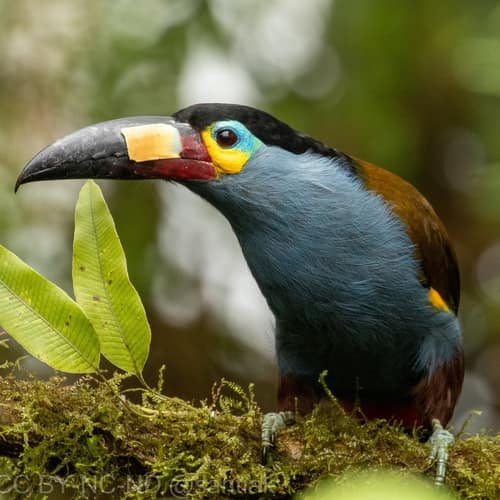
Competitor (c) Santiago Ron, some rights reserved (CC BY), uploaded by Santiago Ron · cc-by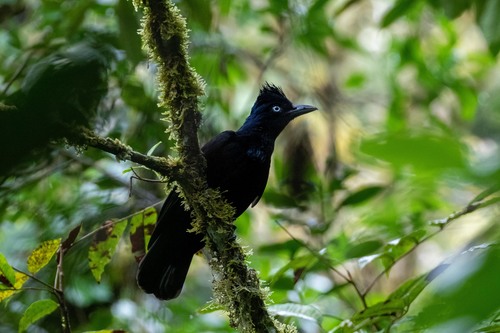
Close Relative (c) Thibaud Aronson, some rights reserved (CC BY-SA), uploaded by Thibaud Aronson · cc-by-sa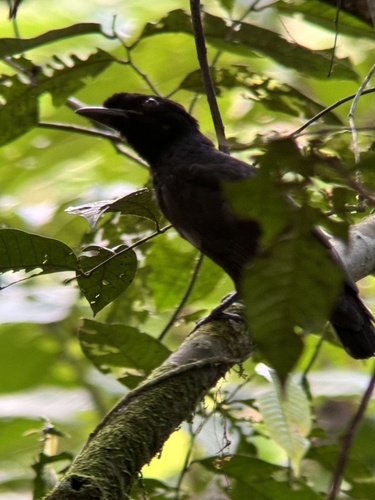
Close Relative (c) Elizabeth Axley, some rights reserved (CC BY) · cc-by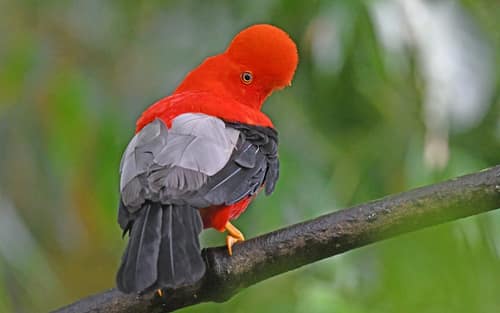
Same Family (c) Christoph Moning, some rights reserved (CC BY), uploaded by Christoph Moning · cc-by
Help improve the field guideSomething wrong?
Checking your Fauna account…Report a name, category, or profile issue for review.