
Reptile
Placodus gigas
Placodus gigasPlacodus gigas was a robust marine reptile adapted for life in shallow coastal waters during the Middle Triassic period. Its barrel-shaped body and heavily thickened bones acted as natural ballast, allowing it to cruise along the seabed without expending excess energy. Forward-projecting incisors plucked hard-shelled invertebrates from the substrate, while expansive, pavement-like palate teeth crushed them with formidable biting force.
PrehistoricMarine Reptile
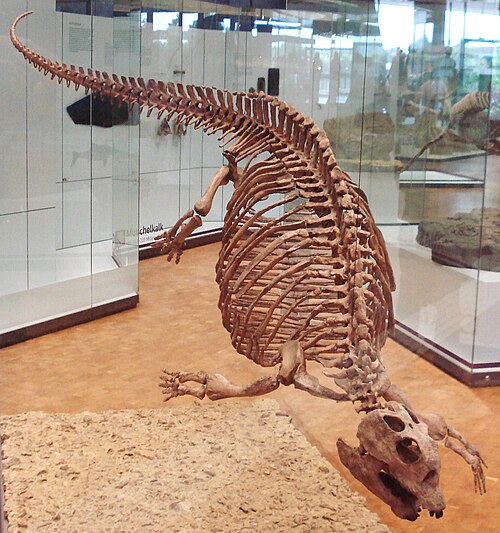
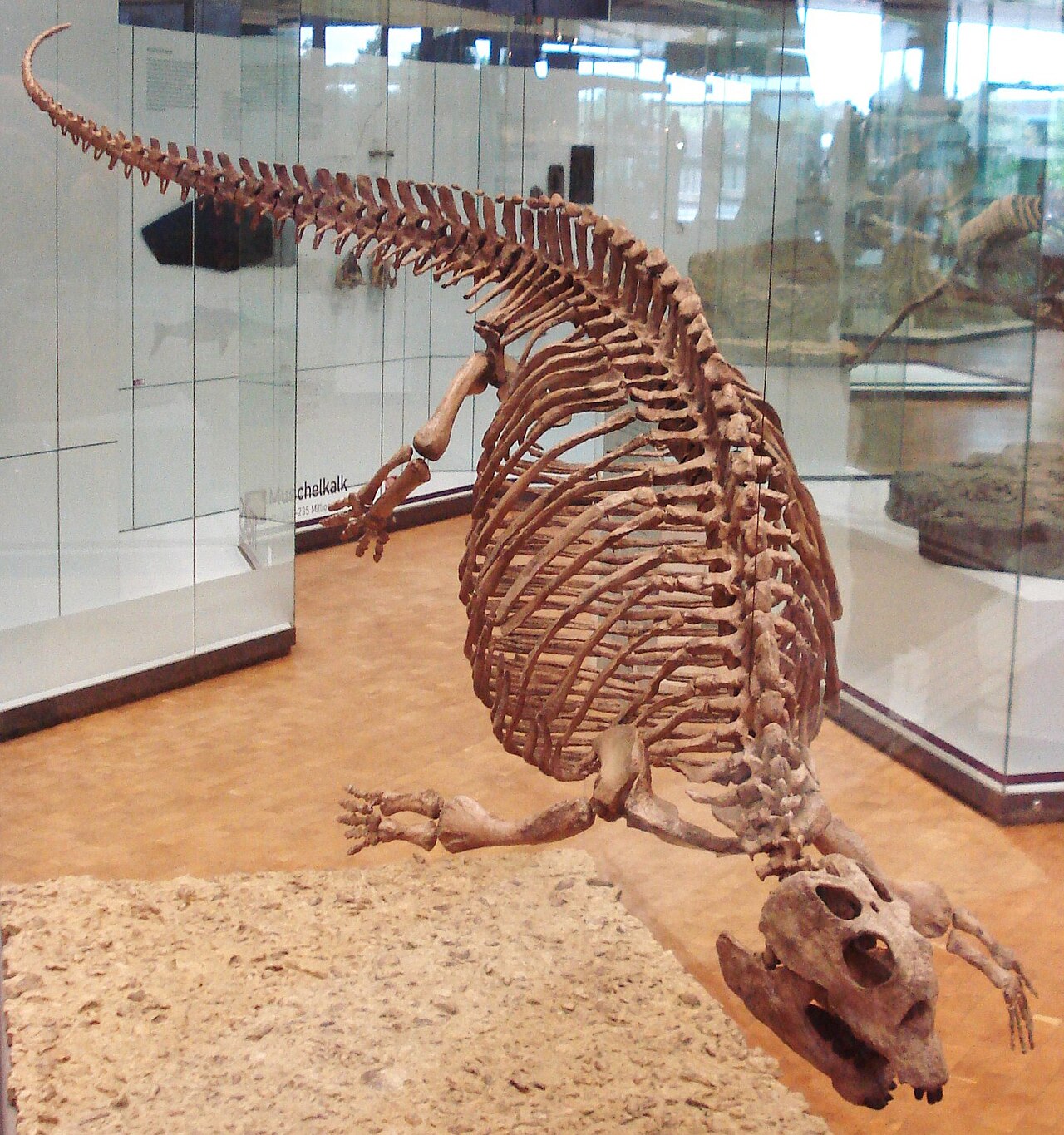
—observations
—countries
—peak records
ExtinctConservation statusIUCN Red List categoriesLCNTVUENCREWEXExtinctRed List categories, explained →
Diet & preyBivalves, Brachiopods, Gastropods
Predators
- Nothosaurus
- Cymbospondylus
- Large prehistoric sharks
ThreatsMarine ecosystem shifts and extinction events during the Triassic period
HabitatsWarm, shallow epicontinental seas and coastal lagoons
Life spanEstimated 15–25 years
Classification
- FamilyPlacodontidae
- GenusPlacodus
- SpeciesPlacodus gigas
Range data is not available yet.
Interaction riskLow
- Low
- Moderate
- High
- Very high
- Why interaction risk is low
- Extinct species known only from fossil records.
Responsible observation
- Museum Specimens: Examine articulated skeletons in paleontology museums to see the unique, flattened crushing teeth.
- Fossil Sites: Look for diagnostic dental plates and thick rib fragments in limestone layers of the Germanic Basin.
 Image unavailable
Order Placodontia Order Placodontia Contemporary Predator
Help improve the field guideSomething wrong?
Checking your Fauna account…Report a name, category, or profile issue for review.