
Species
Araeoscelis gracilis
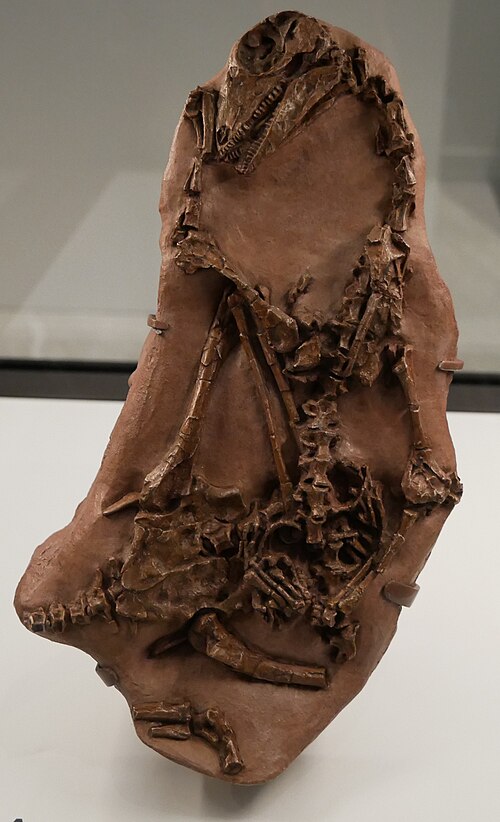
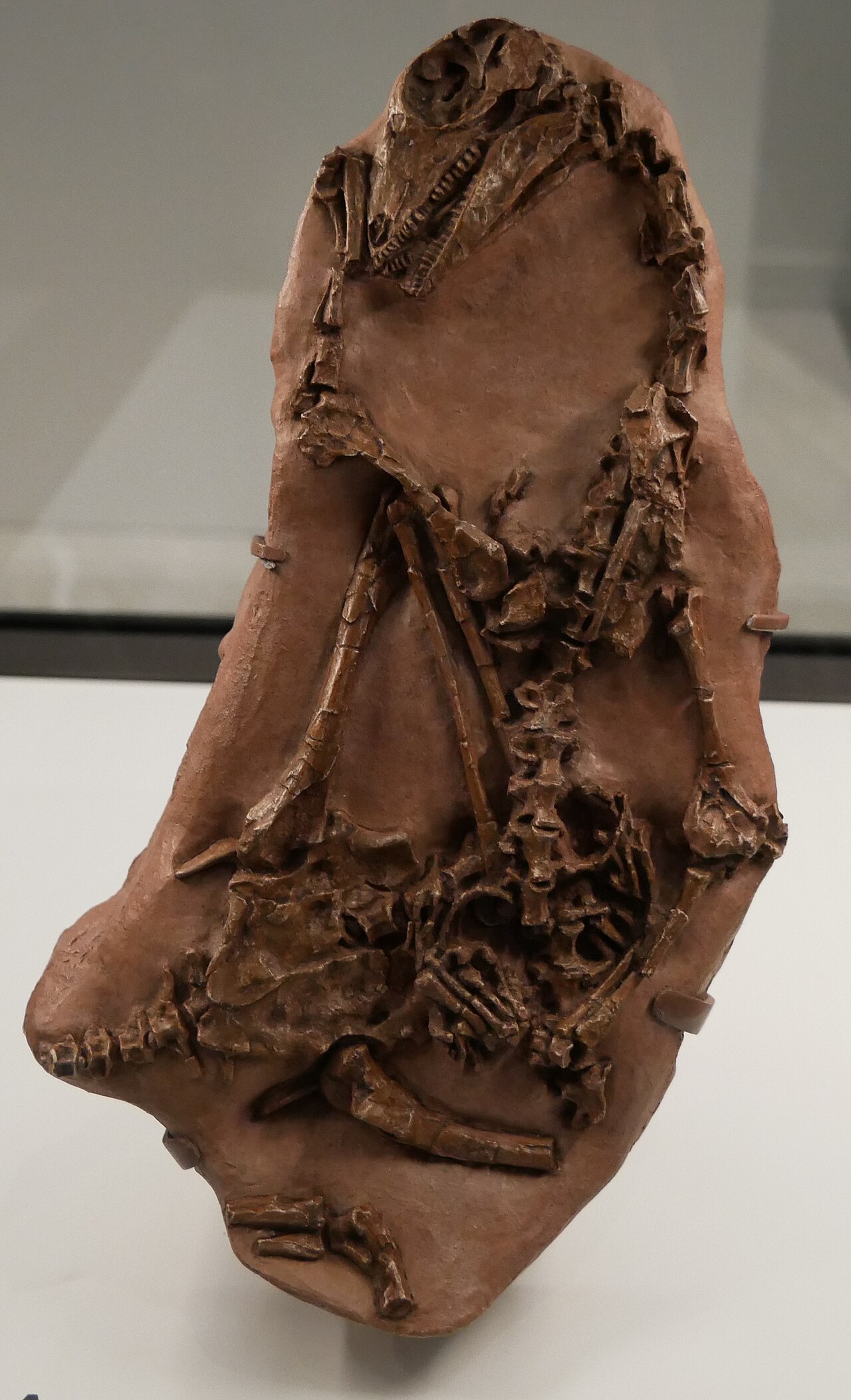
Araeoscelis gracilisAraeoscelis gracilis was a slender, lizard-like reptile that scurried across the floodplains of Early Permian North America roughly 275 million years ago. Unlike most diapsids, its skull lacked a lower temporal opening, an unusual evolutionary reversal that braced its jaws for crushing hard-shelled insects with its broad, blunt cheek teeth. Long, gracile limbs and an elongated neck gave this agile hunter a fast stride for chasing prey and escaping larger Permian predators.
InsectivorousEarly Permian
—observations
—countries
—peak records
ExtinctConservation statusIUCN Red List categoriesLCNTVUENCREWEXExtinctRed List categories, explained →
Diet & preyBeetles, Cockroaches, Small arthropods
Predators
- Dimetrodon
- Ophiacodon
- Eryops
ThreatsExtinct; disappeared during Early Permian environmental shifts
HabitatsEarly Permian terrestrial floodplains and seasonal uplands of North America
Life spanUnknown (fossil species, likely 5 to 10 years based on modern analogs of similar size)
Classification
- FamilyAraeoscelididae
- SpeciesAraeoscelis gracilis
Range data is not available yet.
Interaction riskLow
- Low
- Moderate
- High
- Very high
- Why interaction risk is low
- Extinct fossil species; known only from museum specimens and Early Permian rock formations.
Responsible observation
- Fossil Viewing: Look for articulated skeletons in Early Permian museum collections from the Clear Fork Group of Texas.
- Skull Anatomy: Notice the single upper temporal opening, caused by a rare secondary closure of the lower opening.
- Teeth Detail: Observe the broad, blunt cheek teeth adapted for crushing hard-shelled insects.
 Image unavailable
Same Genus 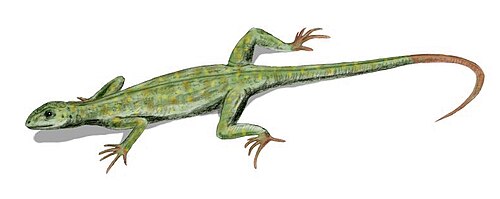
Early Diapsid Nobu Tamura (http://spinops.blogspot.com) / CC BY 2.5 · cc-by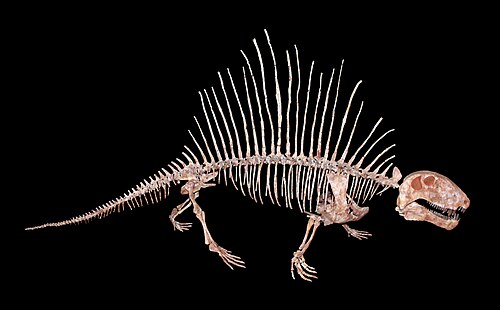
Predator H. Zell / CC BY-SA 3.0 · cc-by-sa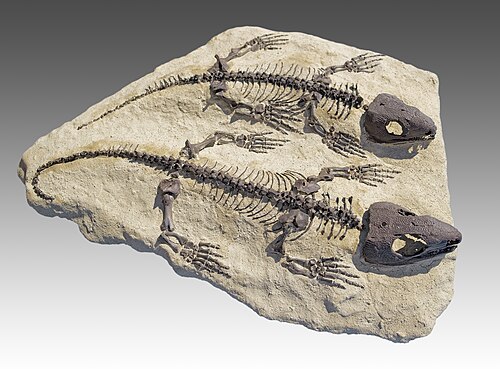
Neighbor Didier Descouens / CC BY-SA 4.0 · cc-by-saSame Family
Help improve the field guideSomething wrong?
Checking your Fauna account…Report a name, category, or profile issue for review.