
Amphibian · GBIF taxon 5935808
Seymouria baylorensis
Seymouria baylorensisSeymouria baylorensis was a heavily built reptiliomorph that roamed the semi-arid floodplains of Early Permian Texas, hunting terrestrial invertebrates and small tetrapods. Its stout limbs held the trunk clear of the ground during locomotion, powered by muscular girdles and a heavily reinforced vertebral column. Although adults were well adapted to dry land, their life cycle retained an aquatic larval stage with external gills before metamorphosing into terrestrial forms.
PrehistoricCarnivoreFossil
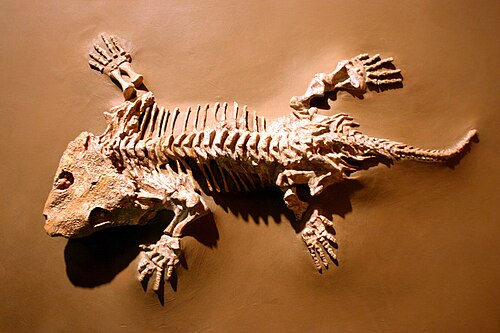
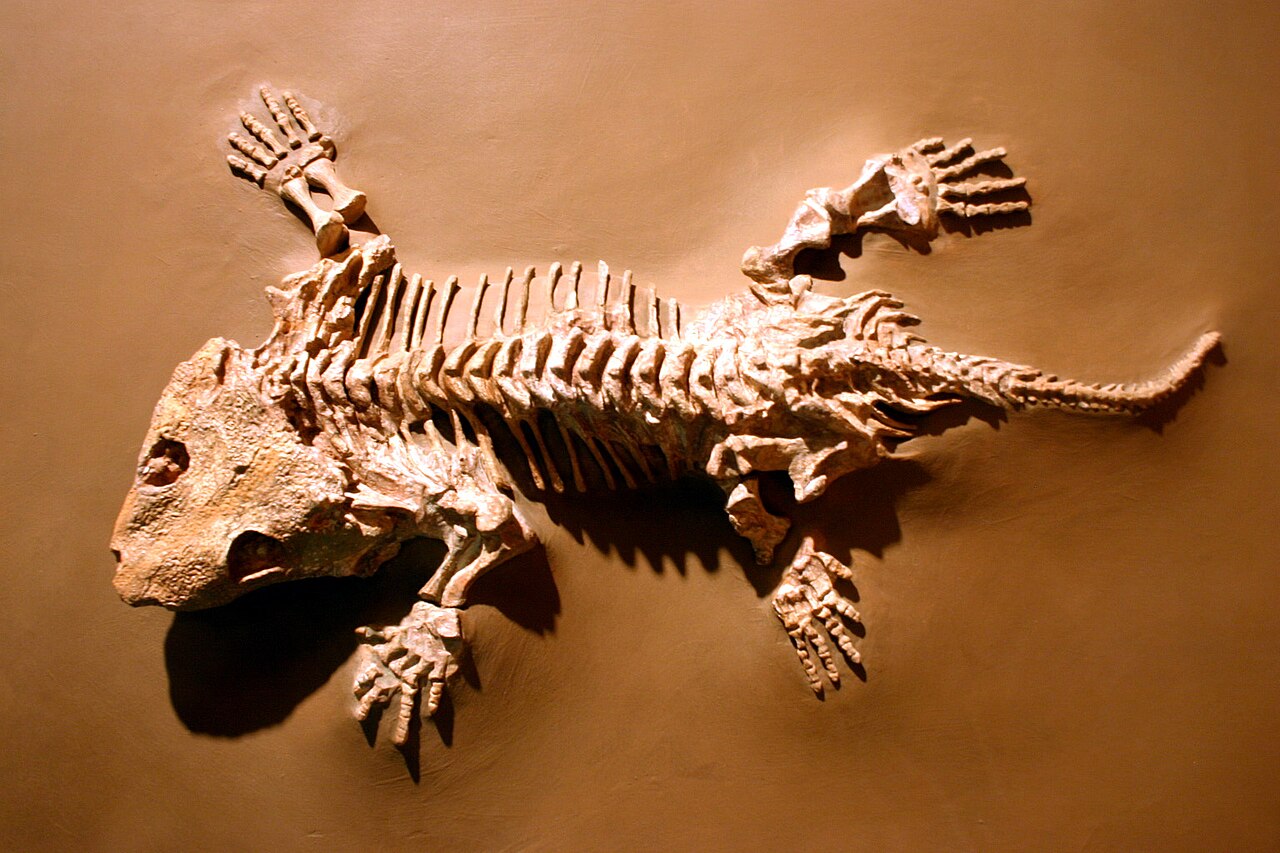
Licensed referenceRyan Somma / CC BY-SA 2.0 · cc-by-sa
—observations
—countries
—peak records
ExtinctConservation statusIUCN Red List categoriesLCNTVUENCREWEXExtinctRed List categories, explained →
Diet & prey
- Insects
- Small temnospondyls
- Early captorhinids
Predators
- Dimetrodon limbatus
- Ophiacodon mirus
ThreatsClimatic changes and ecological competition (extinct during the Early Permian)
HabitatsSemi-arid floodplains, river deltas, and open terrestrial lowlands
Life spanApproximately 10–20 years
Size / weightNot available
Classification
- FamilySeymouriidae
- GenusSeymouria
- SpeciesSeymouria baylorensis
Range data is not available yet.
Interaction riskLow
- Low
- Moderate
- High
- Very high
- Why interaction risk is low
- Extinct species known only from Early Permian fossils; safe to observe museum specimens.
Responsible observation
- Fossil Examination: Look for a triangular, heavily textured skull displaying prominent otic notches.
- Skeletal Structure: Observe the swollen neural arches that stiffened its spine for land walking.
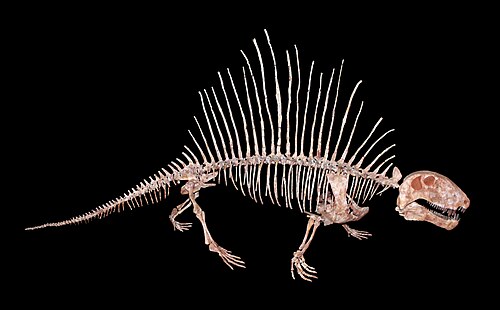
Predator H. Zell / CC BY-SA 3.0 · cc-by-sa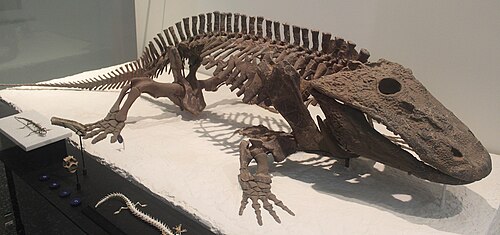
Neighbor jonathan Chen / CC BY-SA 4.0 · cc-by-sa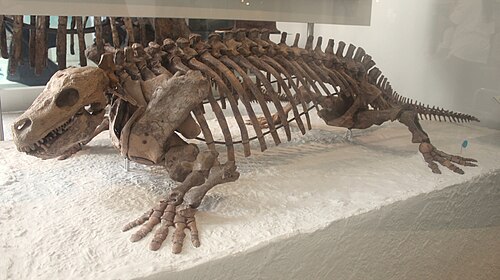
Neighbor Jonathan Chen / CC BY-SA 4.0 · cc-by-sa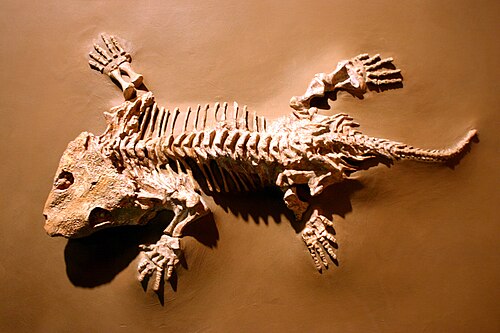
Close Relative Ryan Somma / CC BY-SA 2.0 · cc-by-sa
Help improve the field guideSomething wrong?
Checking your Fauna account…Report a name, category, or profile issue for review.