
Insect · GBIF taxon 5865098
Western Willow Spreadwing
Chalcolestes viridisAlso known as Willow Emerald Damselfly, Green Emerald Damselfly
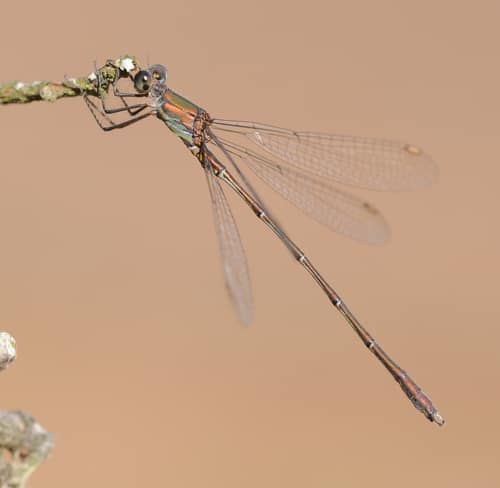
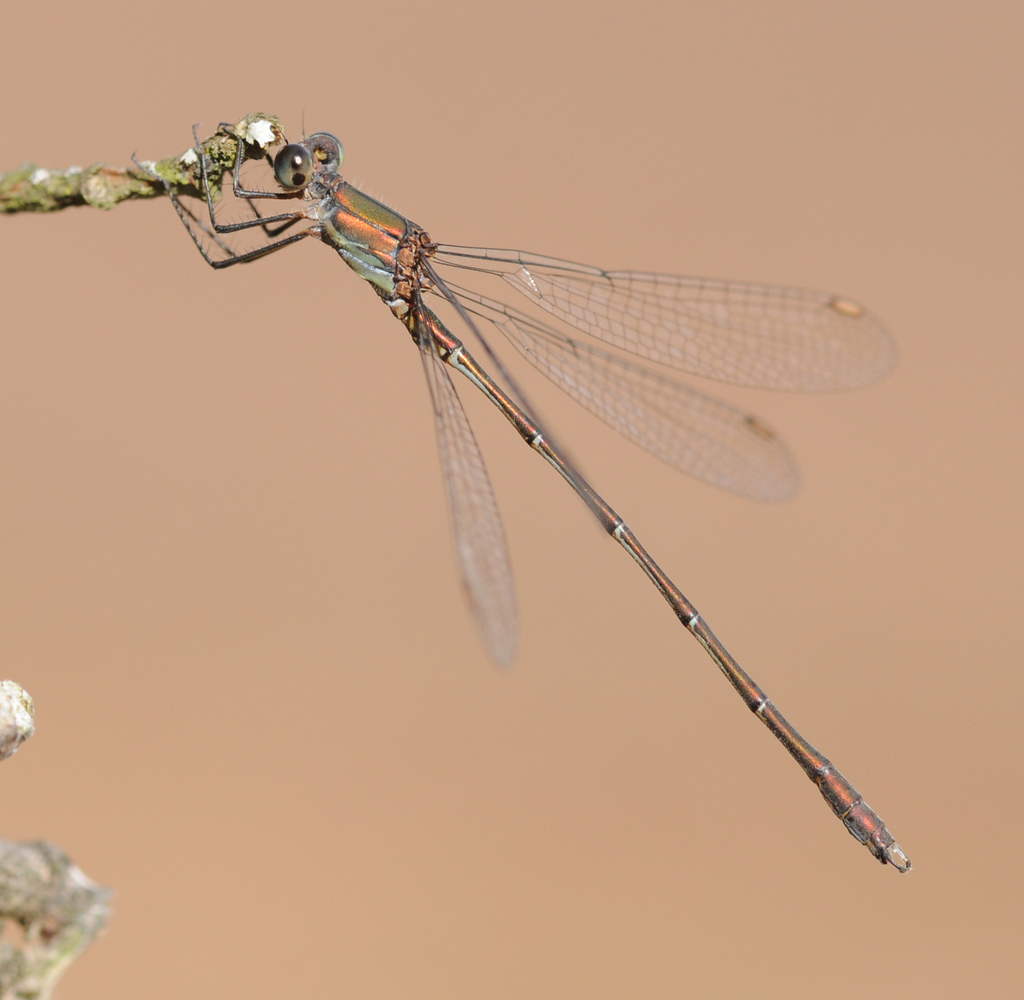
Western willow spreadwings flash emerald-green as they patrol sunny clearings around sheltered ponds and slow-moving streams. Unlike typical damselflies that fold their wings flat along the abdomen, adults rest with wings held half-open at a distinct outward angle. Females use a sharp ovipositor to slice into the soft bark of overhanging trees, depositing eggs that form gall-like swellings before the newly hatched larvae drop down into the water below.
MetallicSpreadwingAquatic Insect
—observations
—countries
—peak records
Least ConcernConservation statusIUCN Red List categoriesLCNTVUENCREWEXLeast ConcernRed List categories, explained →
Diet & prey
- Mosquitoes
- Midges
- Small Flies
Predators
- Birds
- Frogs
- Spiders
ThreatsRemoval of riparian tree cover, water pollution, and wetland drainage
HabitatsPonds, canals, ditches, and slow-flowing streams bordered by overhanging trees
Life span1–2 years (mostly as underwater larvae; adults live 1–3 months)
Size / weightNot available
Classification
- FamilyLestidae
- SpeciesChalcolestes viridis
Range data is not available yet.
Interaction riskLow
- Low
- Moderate
- High
- Very high
- Why interaction risk is low
- Harmless to humans and safe to observe from a normal distance.
Responsible observation
- Check Overhanging Branches: Scan willow or alder boughs hanging directly over calm water during late summer and autumn.
- Approach Slowly: Look for resting adults holding their wings extended at a characteristically wide 45-degree angle.
 Image unavailable
Close Relative 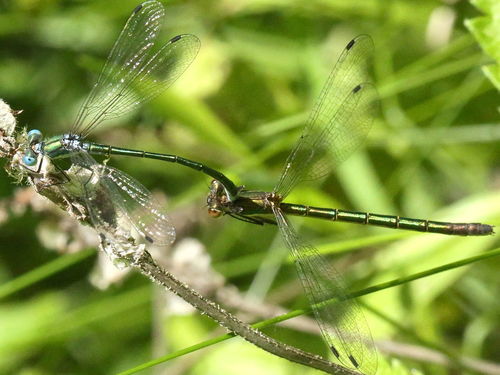
Family Member (c) Peter Chen 2.0, some rights reserved (CC BY) · cc-byFamily Member
Help improve the field guideSomething wrong?
Checking your Fauna account…Report a name, category, or profile issue for review.