
Invertebrate
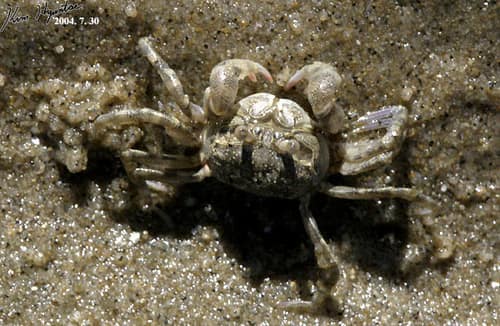
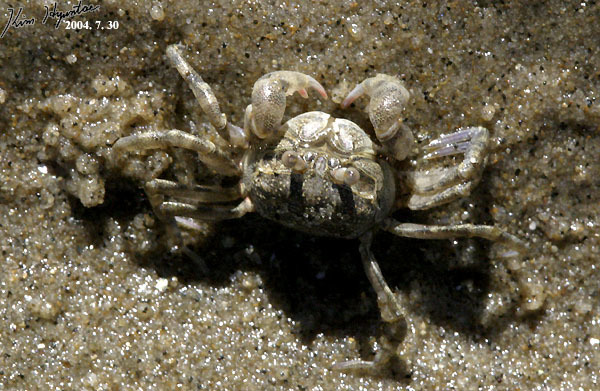
Scopimera globosa
Scopimera globosaAlso known as Sand-Bubbler Crab, Globe Sand Bubbler Crab
Sand bubbler crabs emerge on exposed intertidal sandflats at low tide, sifting through moist sediment for microscopic food. As they process the sand with specialized mouthparts, they scrape the clean residue into neat, round pellets that radiate outward from their burrow entrances. Before the returning tide flattens their intricate sand patterns, these miniature crustaceans retreat underground, trapping air inside their burrows to survive submerged.
IntertidalBurrowingCrustacean
—observations
—countries
—peak records
Not EvaluatedConservation statusIUCN Red List categoriesLCNTVUENCREWEXNot Evaluated — not placed on the risk ladderRed List categories, explained →
Diet & preyMicroalgae, Organic detritus, Nematodes
Predators
- Shorebirds
- Fish
- Predatory crabs
ThreatsCoastal development, beach grooming, and marine pollution
HabitatsIntertidal sandy beaches, estuaries, and tidal flats
Life span1–3 years
Classification
- OrderDecapoda
- FamilyDotillidae
- GenusScopimera
- SpeciesScopimera globosa
Range data is not available yet.
Interaction riskLow
- Low
- Moderate
- High
- Very high
- Why interaction risk is low
- Safe to observe at a normal distance.
Responsible observation
- Low Tide Spotting: Look for intricate radial patterns of tiny sand pellets surrounding a central hole.
- Patient Approach: Walk gently on sand flats, as vibrations and shadows drive them into burrows immediately.
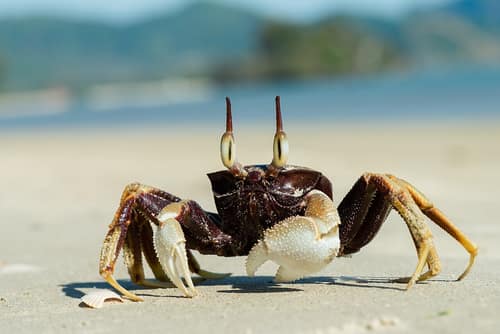
Competitor Rushenb / CC BY-SA 3.0 · cc-by-sa Image unavailable
Frequent Companion Co-Inhabitant
Help improve the field guideSomething wrong?
Checking your Fauna account…Report a name, category, or profile issue for review.