
Bird
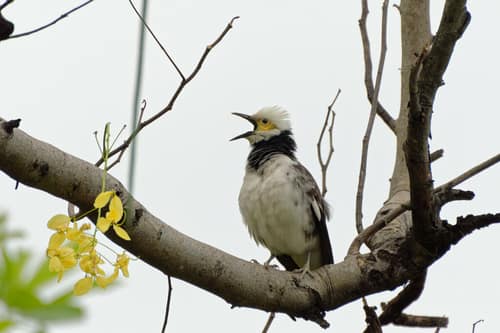
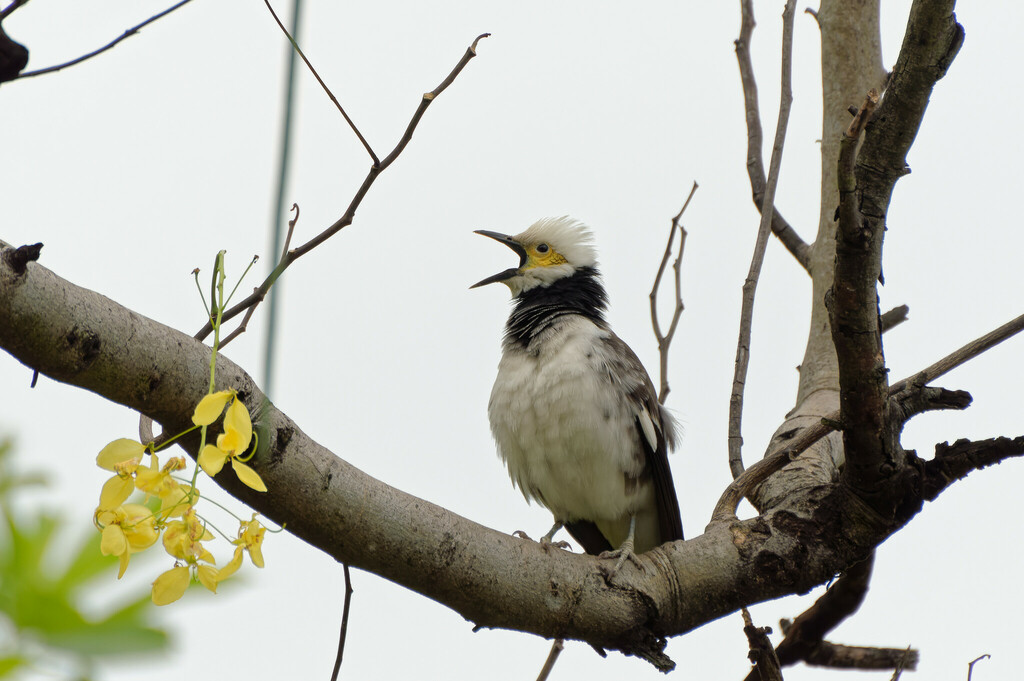
Black-collared Starling
Gracupica nigricollisAlso known as Black-collared Myna
Black-collared starlings command attention with bold black-and-white plumage, bright yellow patches around their eyes, and a broad black ring wrapped around their lower necks. These adaptable songbirds forage in loud pairs or family groups across park lawns, pastures, and suburban hedges, stepping deliberately to snatch up soil invertebrates and fallen fruit. Their loud, melodious whistles echo through city squares and open woodlands across Southeast Asia, where they readily construct bulky dome nests high in tall trees.
VocalPatternedUrban Adapting
—observations
—countries
—peak records
Least ConcernConservation statusIUCN Red List categoriesLCNTVUENCREWEXLeast ConcernRed List categories, explained →
Diet & preyInsects, Earthworms, Berries
Predators
- Domestic Cats
- Snakes
- Raptors
ThreatsHabitat urbanization, localized trapping for the songbird trade
HabitatsGrasslands, dry open forests, agricultural fields, urban parks
Life span5–10 years
Classification
- OrderPasseriformes
- FamilySturnidae
- GenusGracupica
- SpeciesGracupica nigricollis
Range data is not available yet.
Interaction riskLow
- Low
- Moderate
- High
- Very high
- Why interaction risk is low
- Safe to observe at a normal distance.
Responsible observation
- Listen for vocalizations: Look into tall canopy trees or light poles when hearing loud, metallic whistling calls.
- Watch open lawns: Spot pairs stepping purposefully through short grass searching for soil invertebrates.
- Observe from a distance: Keep a respectful gap near bulky stick nests built high in palm crowns.
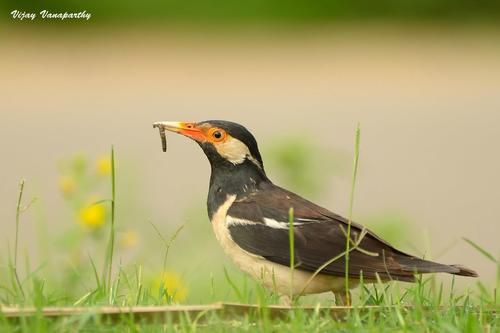
Close Relative (c) Vijay Vanaparthy, some rights reserved (CC BY), uploaded by Vijay Vanaparthy · cc-by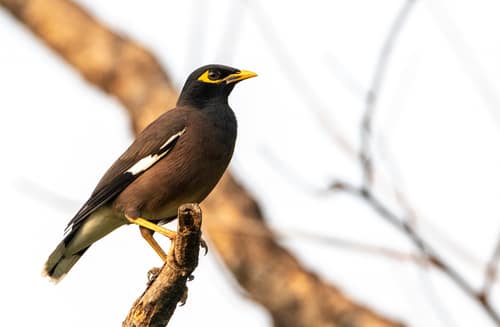
Family Relative (c) David F. Belmonte, some rights reserved (CC BY), uploaded by David F. Belmonte · cc-by Image unavailable
Family Relative
Help improve the field guideSomething wrong?
Checking your Fauna account…Report a name, category, or profile issue for review.