
Eastern Barn Owl
Tyto delicatulaAlso known as Australasian Barn Owl, Australian Barn Owl, Delicate Owl
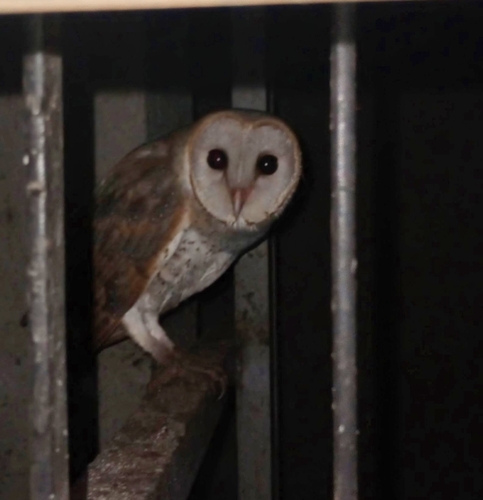
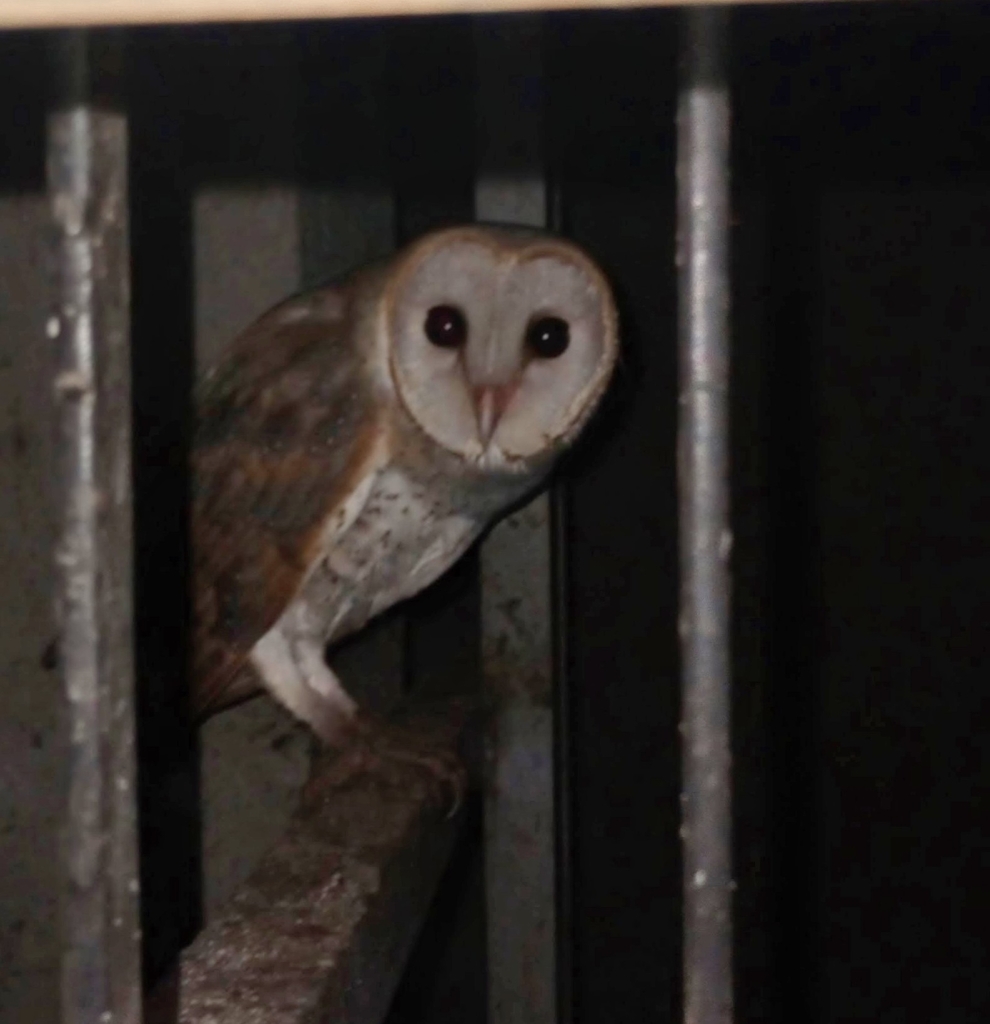
Gliding silently across grasslands and paddocks on comb-fringed primary feathers, this nocturnal hunter uses its heart-shaped facial disc to funnel the faintest scurrying sounds directly into offset ear openings. Populations fluctuate dramatically in sync with rodent plagues across the Australian outback, triggering rapid breeding cycles with large clutches in tree hollows. Roosting during the day in dense foliage, caves, or abandoned farm outbuildings, it screeches with a raspy hiss rather than a traditional owl hoot.
- Wedge-tailed Eagle
- Powerful Owl
- Carpet Python
- OrderStrigiformes
- FamilyTytonidae
- GenusTyto
- SpeciesTyto delicatula
- Low
- Moderate
- High
- Very high
- Why interaction risk is low
- Sharp talons and beak can cause injury if handled; observe safely from a distance.
- Why it is dangerous
- Equipped with curved, razor-sharp talons and a hooked beak that inflict deep puncture wounds and lacerations when cornered.
- How to recognize a risky encounter
- Recognizable by the white heart-shaped facial disc, dark eyes, buff-speckled back, and pure white underparts.
- What to do
- Never handle a grounded or injured owl barehanded; drape a heavy towel over it and contact a wildlife rescuer.
- Daytime Sightings: Look inside derelict sheds, dense pine stands, and deep hollows where birds roost motionless.
- Roadside Caution: Drive slowly on rural roads at night, where hunting owls frequently swoop low across headlights.
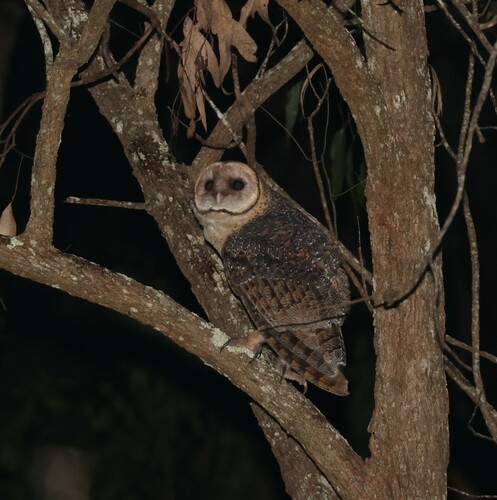
Same Genus (c) Greg Tasney, some rights reserved (CC BY-SA) · cc-by-sa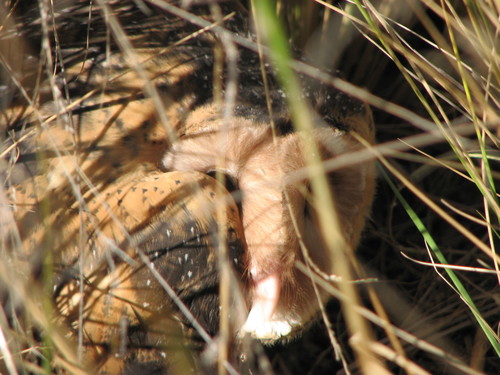
Same Genus (c) Tony Eales, some rights reserved (CC BY-SA) · cc-by-sa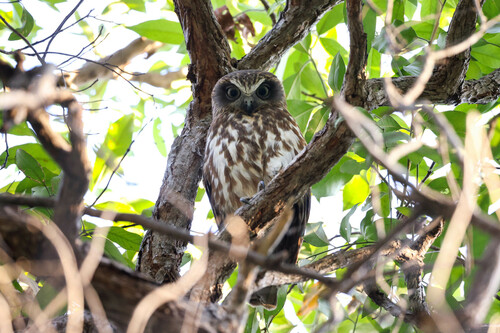
Nocturnal Competitor (c) Ged Tranter, some rights reserved (CC BY), uploaded by Ged Tranter · cc-by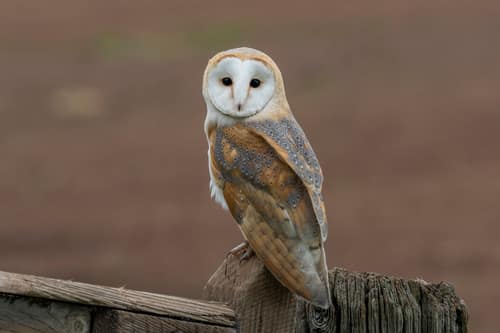
Close Relative (c) caroline legg, some rights reserved (CC BY) · cc-by
Found in Collections
Moonlight Marvels
Eastern Barn Owl is found in this collection. Identify it in Fauna to fill this slot and continue your progress.
Report a name, category, or profile issue for review.