
Invertebrate
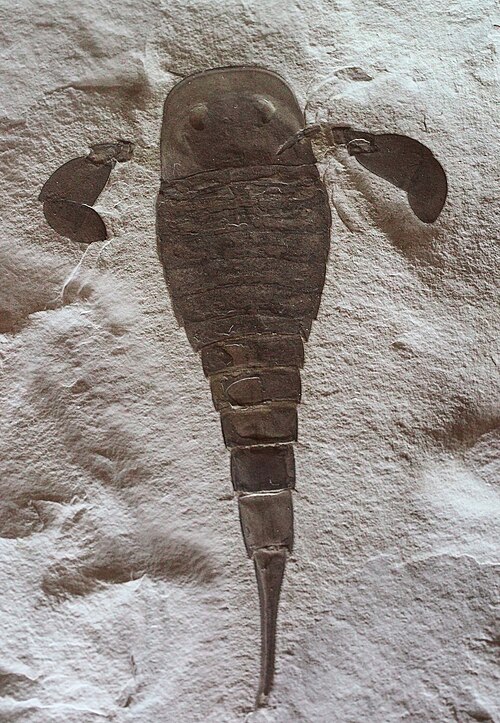
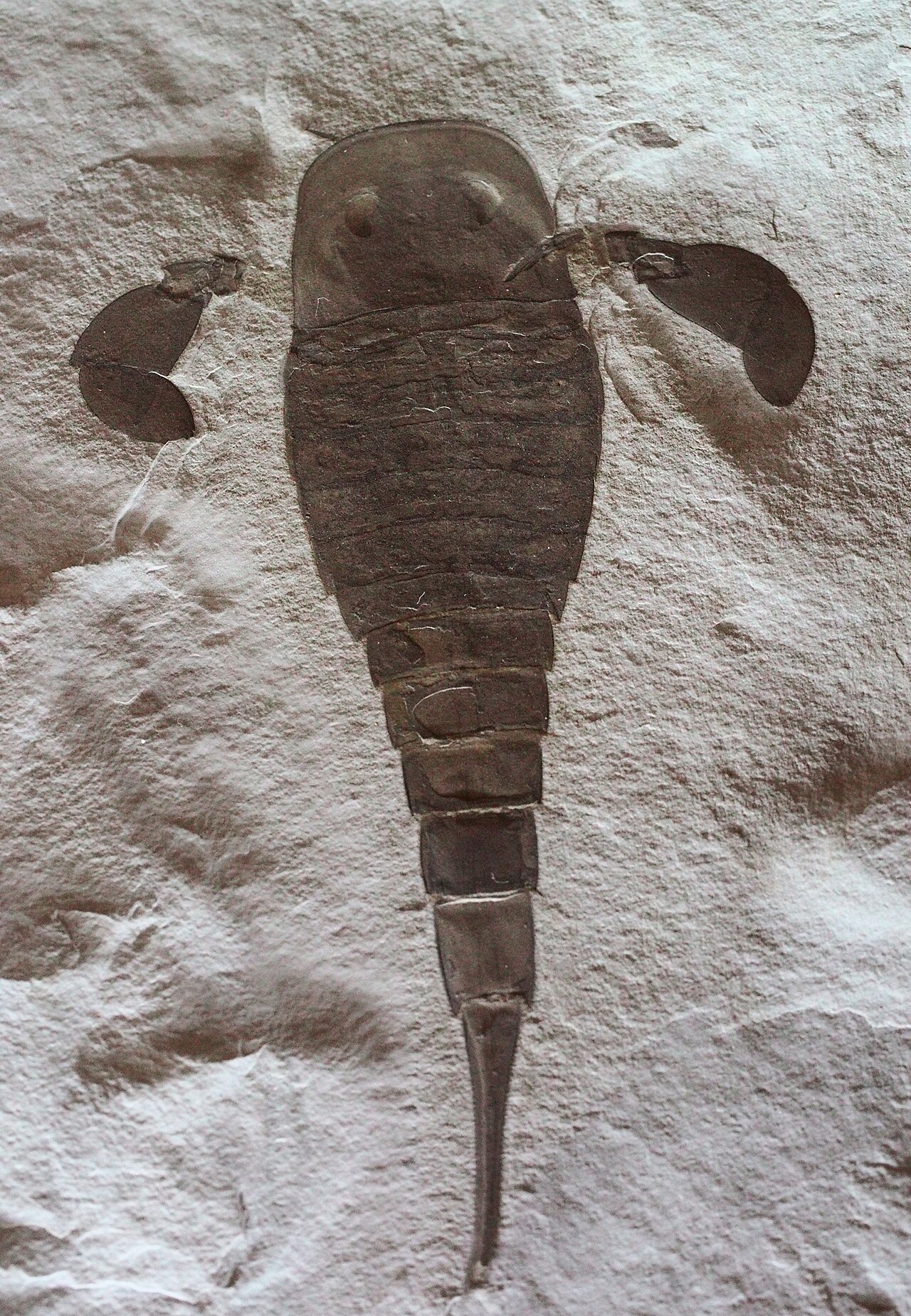
Eurypterus remipes
Eurypterus remipesAlso known as Sea Scorpion, Silurian Sea Scorpion, New York State Fossil
Eurypterus remipes propelled itself through ancient waterways using broad, paddle-like rear limbs and steered with a flattened, blade-like telson. These armored chelicerates patrolled shallow, hypersaline lagoons and tidal flats during the Silurian Period, using spined front appendages to pin down soft-bodied prey. Spectacularly preserved fossil deposits reveal complete growth series, showing that young eurypterids molted repeatedly in sheltered coastal shallows much like modern horseshoe crabs.
PrehistoricCarnivorous
—observations
—countries
—peak records
ExtinctConservation statusIUCN Red List categoriesLCNTVUENCREWEXExtinctRed List categories, explained →
Diet & preySmall trilobites, Polychaete worms, Early jawless fish
Predators
- Large cephalopods
- Giant pterygotid sea scorpions
ThreatsExtinct (marine ecosystem turnover during the mid-Paleozoic)
HabitatsShallow hypersaline lagoons, estuaries, and calm tidal bays
Life spanEstimated 5–10 years based on growth stages
Classification
- FamilyEurypteridae
- GenusEurypterus
- SpeciesEurypterus remipes
Range data is not available yet.
Interaction riskLow
- Low
- Moderate
- High
- Very high
- Why interaction risk is low
- Extinct prehistoric species known exclusively from the fossil record.
Responsible observation
- Museum viewing: Observe articulated carapaces and compound eyes in paleontology exhibits.
- Field identification: Look for dark, carbonaceous chitinous outlines preserved in fine dolostone.
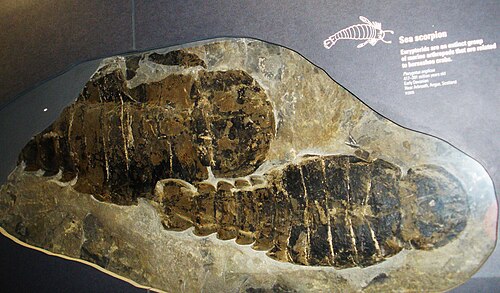
Predator Ghedoghedo / CC BY-SA 3.0 · cc-by-sa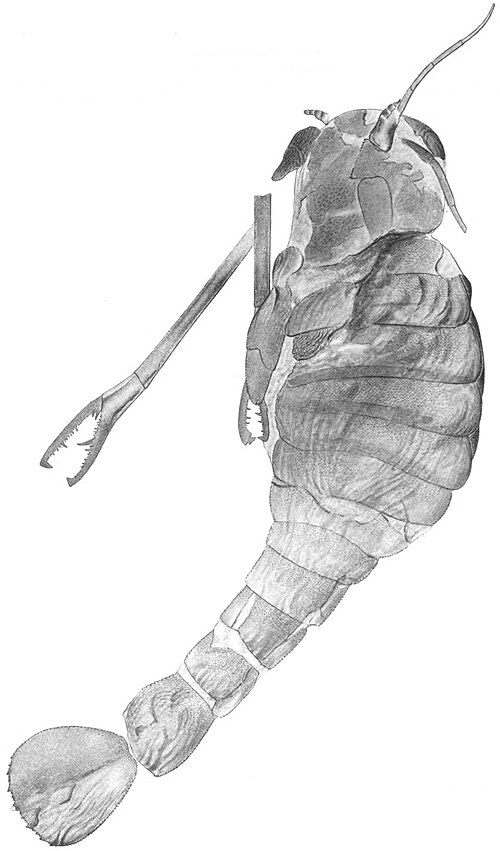
Neighbor John Mason Clarke (1857-1925) and Rudolf Ruedemann (1864-1956) / Public domain · cc0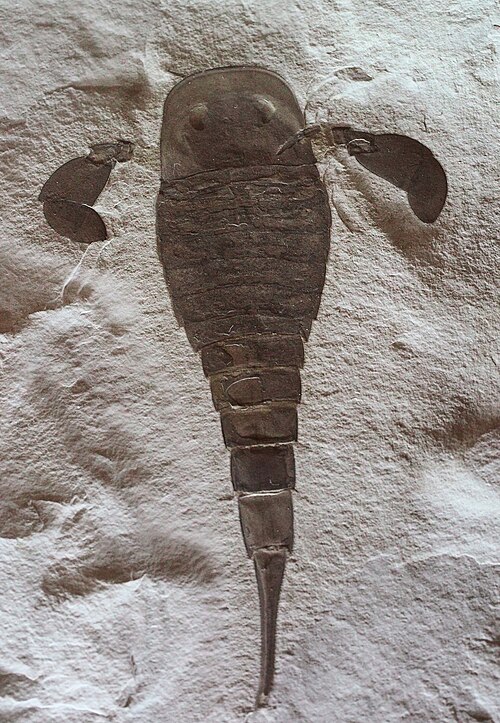
Close Relative Luis Fernández García / CC BY-SA 4.0 · cc-by-sa
Living Relative (c) Meghan Cassidy, some rights reserved (CC BY-SA), uploaded by Meghan Cassidy · cc-by-sa
Help improve the field guideSomething wrong?
Checking your Fauna account…Report a name, category, or profile issue for review.