
Invertebrate
Brown Freshwater Crab
Barytelphusa cunicularisAlso known as Indian Freshwater Crab, Common Indian Freshwater Crab
Brown freshwater crabs excavate deep burrows along muddy riverbanks, irrigation channels, and paddy fields, emerging primarily at dusk and during monsoon rains to forage. They serve as industrious soil engineers by churning wetlands and recycling detritus, while also forming a staple food source for wading birds, otters, and monitor lizards. Unlike marine decapods, females brood eggs directly under their abdominal flap until miniature, fully formed juveniles hatch and disperse.
FreshwaterBurrowerNocturnal
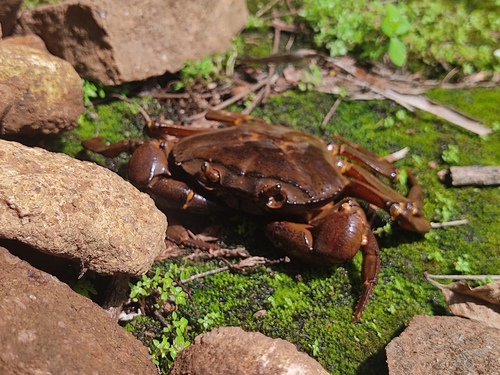
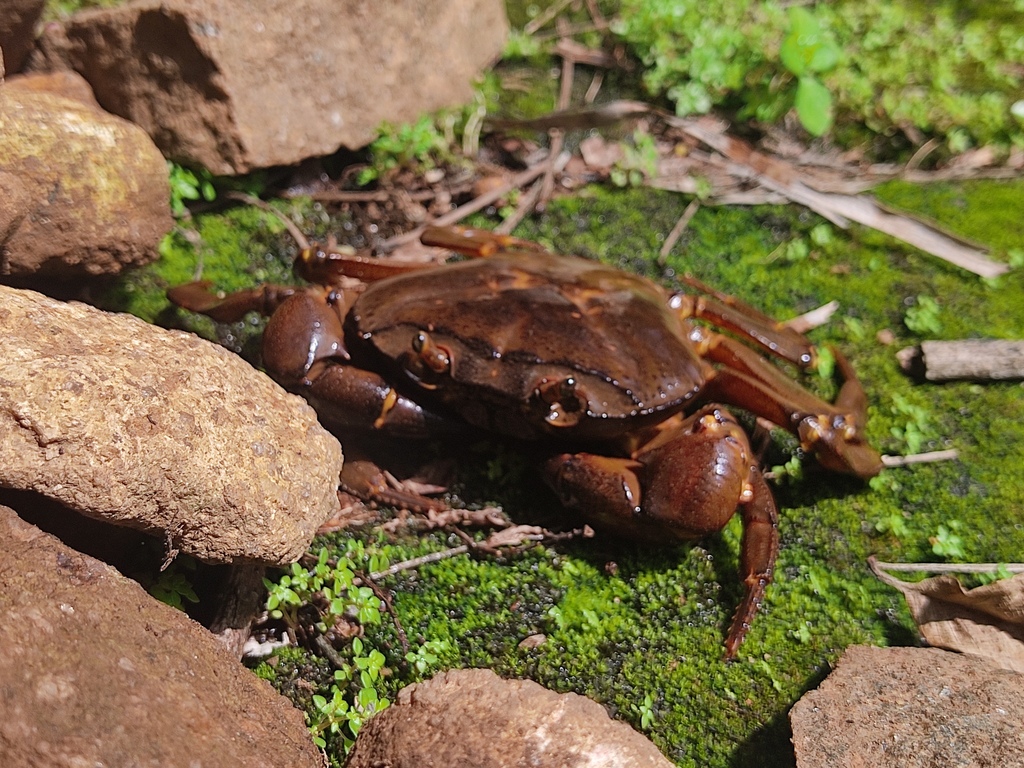
—observations
—countries
—peak records
Least ConcernConservation statusIUCN Red List categoriesLCNTVUENCREWEXLeast ConcernRed List categories, explained →
Diet & preyFreshwater snails, Aquatic insect larvae, Fallen plant matter
Predators
- Indian pond heron
- Bengal monitor
- Smooth-coated otter
ThreatsAgricultural pesticide runoff, wetland draining, and intensive local harvest for food
HabitatsFreshwater streams, rivers, ponds, wetlands, and flooded agricultural fields
Life span3–5 years
Classification
- OrderDecapoda
- FamilyGecarcinucidae
- GenusBarytelphusa
- SpeciesBarytelphusa cunicularis
Range data is not available yet.
Interaction riskLow
- Low
- Moderate
- High
- Very high
- Why interaction risk is low
- Powerful chelae can deliver a painful pinch if handled; observe without touching.
- Why it is dangerous
- Possesses robust, asymmetrical chelae evolved to crack mollusk shells, capable of delivering a painful pinch that can lacerate fingers.
- How to recognize a risky encounter
- Look for a smooth, dark brown or olive-brown oval carapace with a prominent, heavier right claw.
- What to do
- Allow the crab to move away naturally and avoid reaching into dark burrows or trapping it with bare hands.
Responsible observation
- Spotting burrows: Search for raised mud pellets and chimney-like burrow entrances along wet ditch banks and paddy bunds.
- Night searching: Scan shallow water edges with a flashlight after dark when crabs leave their burrows to forage.
- Hands off: Refrain from handling, as their enlarged right chela can pinch firmly enough to break human skin.
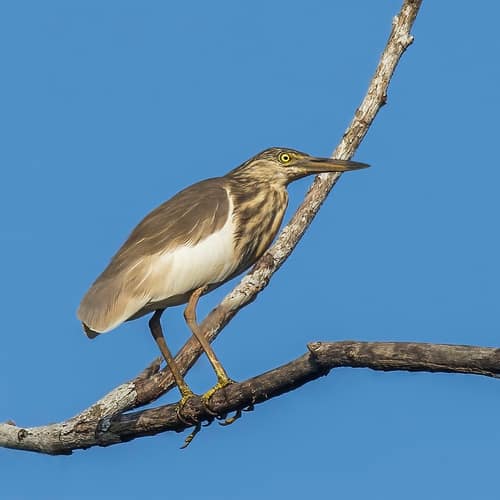
Predator Charles J. Sharp / CC BY-SA 4.0 · cc-by-sa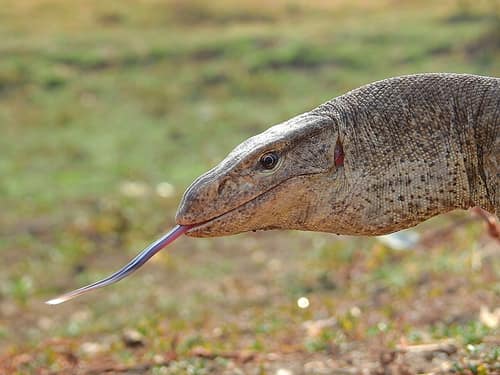
Predator Shantanu Kuveskar / CC BY-SA 4.0 · cc-by-sa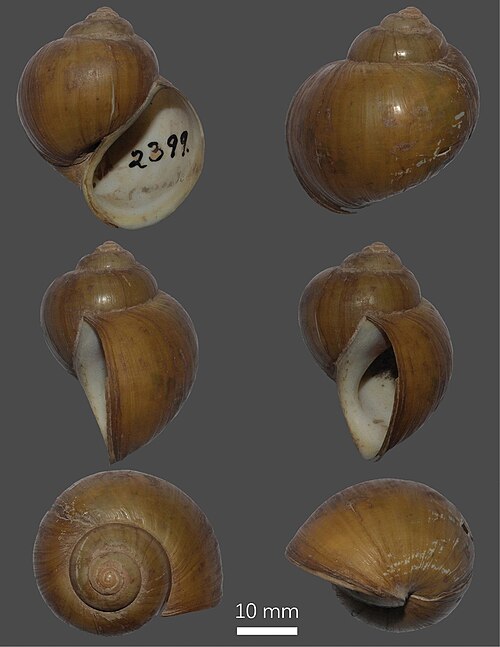
Prey Tripathy B, Sajan S, Cowie RH (2019) Illustrated catalogue of types of Ampullariidae Gray, 1824 (Mollusca, Gastropoda) in the National Zoological Collection of the Zoological Survey of India, with lectotype designations. Zoosystematics and Evolution 96(1): 1-23. https://doi.org/10.3897/zse.96.47792 / CC0 · cc0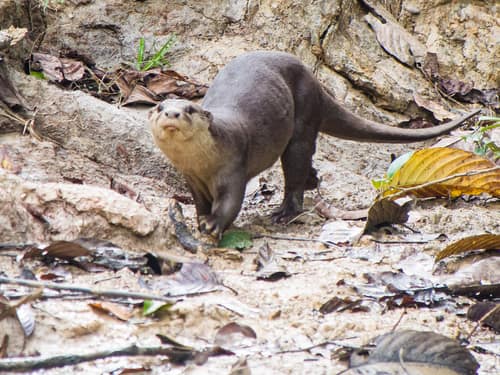
Predator "Smooth-coated Otter" by Mike Prince is licensed under CC BY 2.0. To view a copy of this license, visit https://creativecommons.org/licenses/by/2.0/. · cc-by
Help improve the field guideSomething wrong?
Checking your Fauna account…Report a name, category, or profile issue for review.