
Invertebrate · GBIF taxon 5790281
Japanese Freshwater Crab
Geothelphusa dehaaniAlso known as Sawagani, Sawa Crab, Japanese Mountain Crab
Sawagani spend their lives entirely in cold, oxygen-rich mountain streams, bypassing the free-swimming marine larval stage typical of most crabs. Females carry relatively large, nutrient-rich eggs under their abdomens until miniature juveniles hatch fully formed. Coloration ranges strikingly across regional populations, presenting shades of porcelain blue, rusty red, or mottled olive brown.
NocturnalFreshwaterEndemic
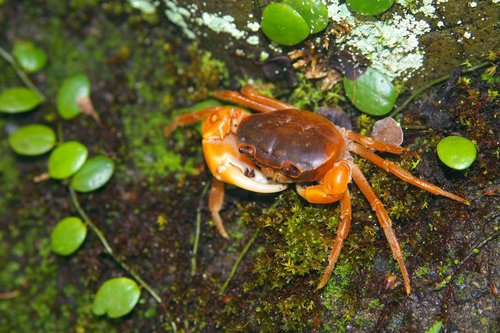
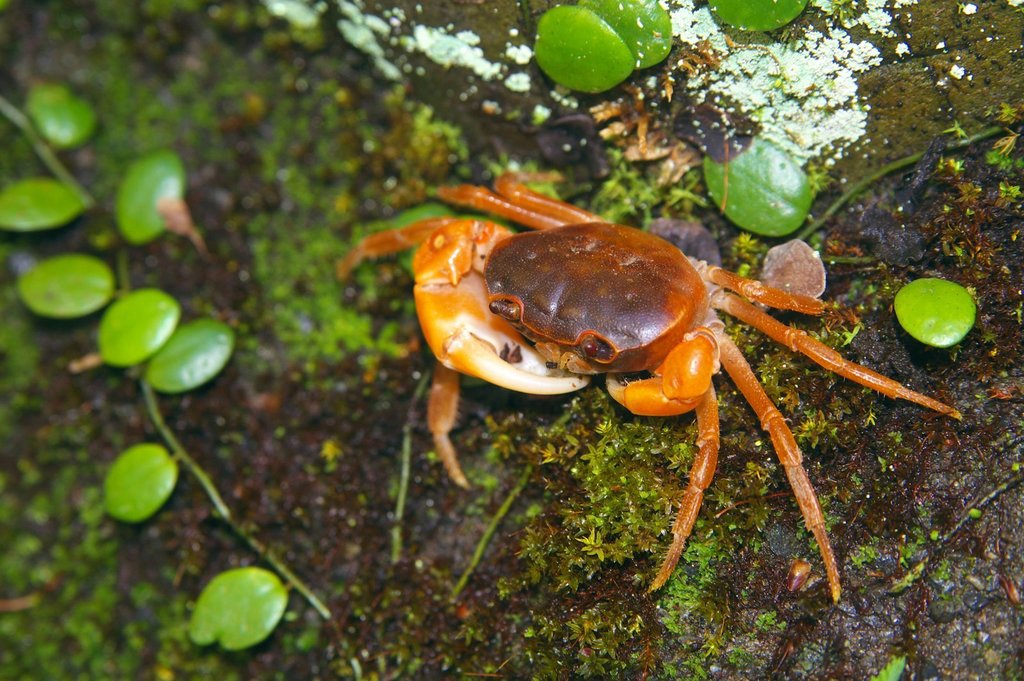
—observations
—countries
—peak records
Least ConcernConservation statusIUCN Red List categoriesLCNTVUENCREWEXLeast ConcernRed List categories, explained →
Diet & prey
- Aquatic larvae
- Fallen leaves
- Freshwater snails
Predators
- Herons
- Raccoon dogs
- Giant salamanders
ThreatsWater pollution, stream channelization, deforestation, localized overcollecting
HabitatsClean mountain streams, cold headwater brooks, damp forest floors
Life span3–5 years
Size / weightNot available
Classification
- FamilyPotamidae
- SpeciesGeothelphusa dehaani
Range data is not available yet.
Interaction riskLow
- Low
- Moderate
- High
- Very high
- Why interaction risk is low
- Safe to observe at a normal distance along shaded stream banks.
Responsible observation
- Stream Scouting: Look beneath submerged rocks and along mossy banks during humid nights when crabs emerge to forage.
- Habitat Ethics: Carefully return turned stones to their original positions to protect delicate aquatic microhabitats.
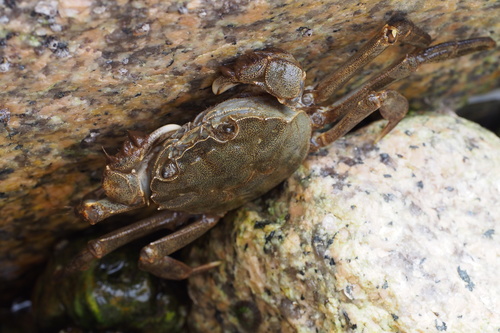
Sympatric Crustacean (c) harum.koh, some rights reserved (CC BY-SA), uploaded by harum.koh · cc-by-sa Image unavailable
Related Crustacean
Help improve the field guideSomething wrong?
Checking your Fauna account…Report a name, category, or profile issue for review.