
Reptile
Common Five-lined Skink
Plestiodon fasciatusAlso known as American Five-lined Skink
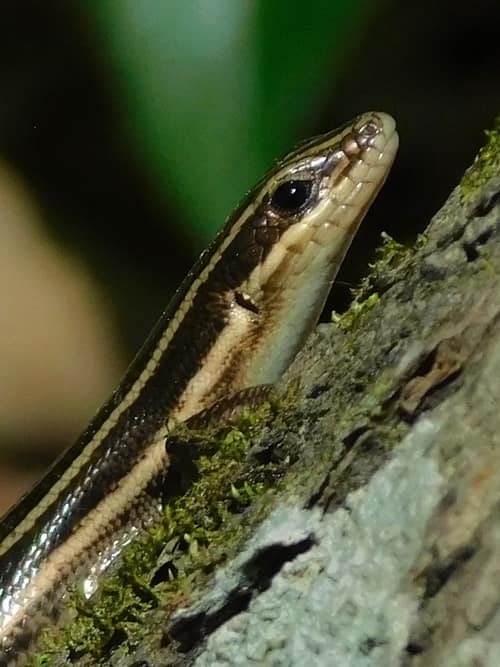
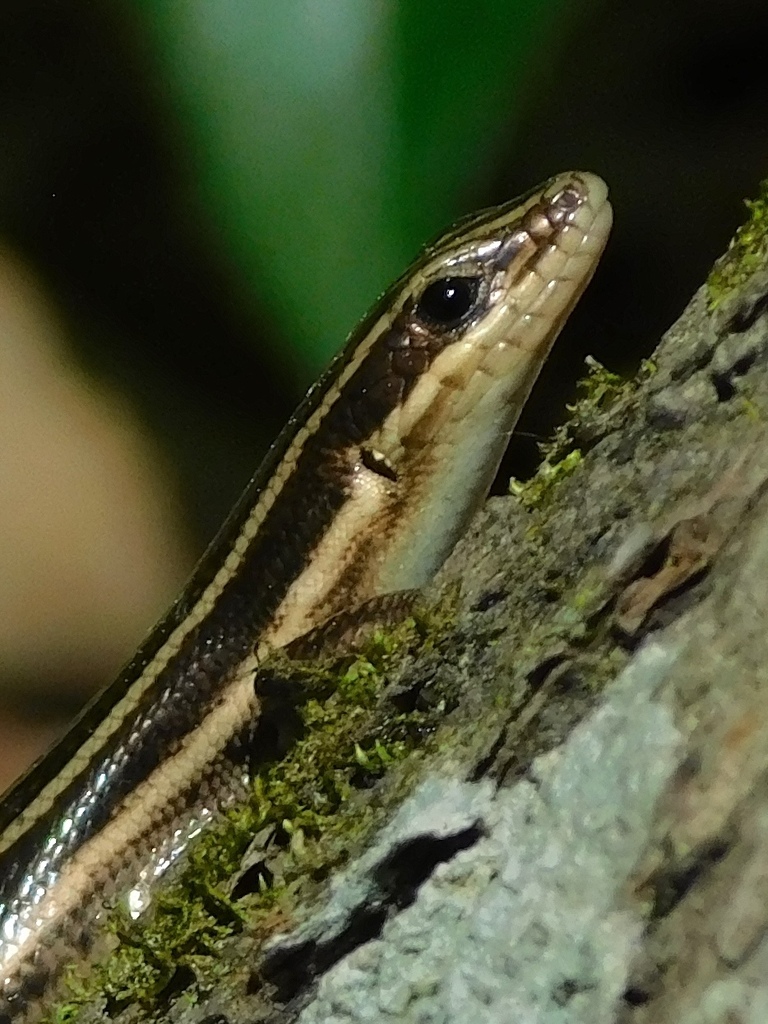
Common Five-lined Skinks are sleek woodland lizards with smooth shiny scales and short legs. Juveniles and many females show five pale body stripes and a vivid blue tail, while mature males become browner with reddish jaws.
skinkwoodland floorblue-tailed juvenile
—observations
—countries
—peak records
Least ConcernConservation statusIUCN Red List categoriesLCNTVUENCREWEXLeast ConcernRed List categories, explained →
Diet & preyBeetles, spiders, crickets
Predators
- snakes
- hawks
- domestic cats
ThreatsHabitat loss, road mortality, pesticide exposure, free-roaming cats, and collection
HabitatsMoist woods, rocky slopes, fallen logs, stumps, and forest-edge debris
Life spanUsually several years, with some individuals surviving beyond six years
Classification
- FamilyScincidae
- GenusPlestiodon
- SpeciesPlestiodon fasciatus
Range data is not available yet.
Interaction riskLow
- Low
- Moderate
- High
- Very high
- Why interaction risk is low
- Handled skinks may bite or release their tail as a defense.
- Why it is dangerous
- A restrained skink can bite, and grabbing the tail may cause it to detach.
- How to recognize a risky encounter
- Young animals usually show five light stripes, glossy scales, and a bright blue tail.
- What to do
- Do not capture or hold the lizard; clean any accidental bite that breaks the skin.
Responsible observation
- Watch: Let basking skinks retreat naturally beneath logs or rocks.
- Identify: Count five pale stripes on young animals and note the smooth glossy scales.
Help improve the field guideSomething wrong?
Checking your Fauna account…Report a name, category, or profile issue for review.