
Reptile · GBIF taxon 5789505
Armenian Viper
Montivipera raddeiAlso known as Radde's Viper, Armenian Mountain Viper
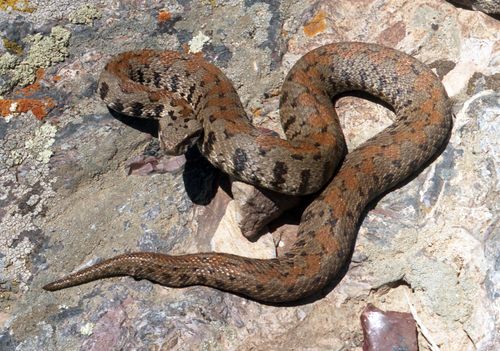
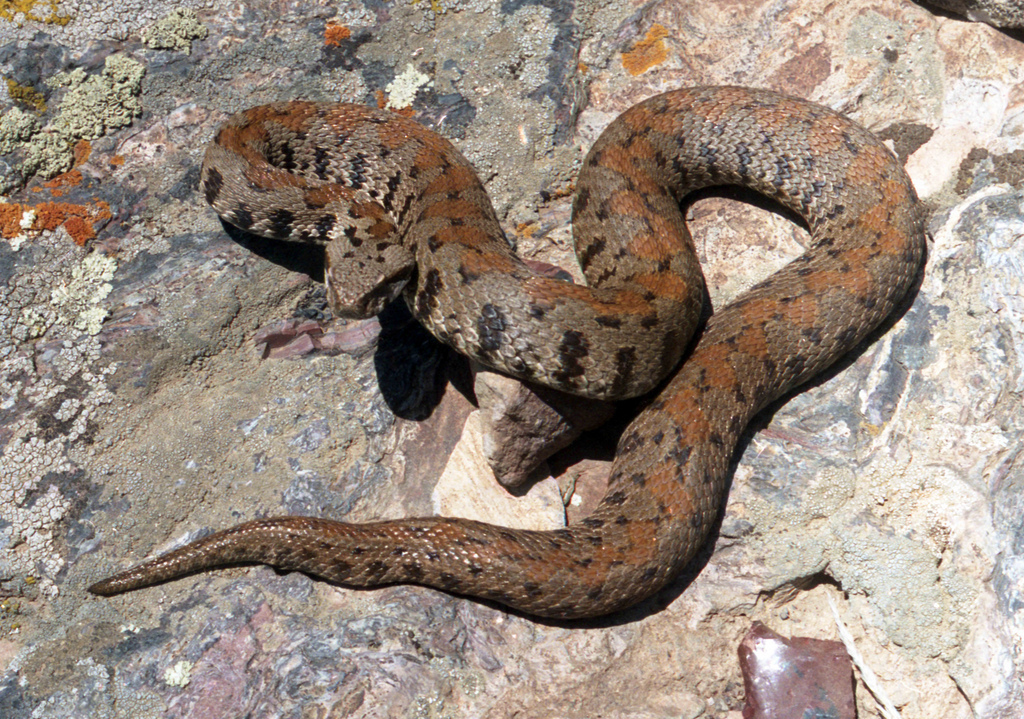
Armenian vipers inhabit high-altitude, sun-drenched rocky slopes and alpine meadows across the Caucasus and Armenian Highlands. These ambush predators blend seamlessly into limestone scree and rocky outcrops, lying in wait for passing rodents, lizards, and small birds. Females give birth to live young after a summer gestation period, relying on warm sunlit boulders to regulate their temperature.
VenomousHigh AltitudeAmbush Hunter
—observations
—countries
—peak records
Near ThreatenedConservation statusIUCN Red List categoriesLCNTVUENCREWEXNear ThreatenedRed List categories, explained →
Diet & prey
- Voles
- Lizards
- Small birds
Predators
- Eagles
- Harriers
- Mustelids
ThreatsIllegal collection for pet trade, habitat degradation, agricultural development
HabitatsRocky mountain slopes, alpine scree, subalpine scrub
Life span12–15 years in the wild
Size / weightNot available
Classification
- FamilyViperidae
- SpeciesMontivipera raddei
Range data is not available yet.
Interaction riskVery high
- Low
- Moderate
- High
- Very high
- Why interaction risk is very high
- Delivers a dangerous cytotoxic bite; maintain a safe distance and never handle or step blindly near rocks.
- Why it is dangerous
- Injects potent cytotoxic and hemotoxic venom that causes severe pain, rapid swelling, and potential tissue necrosis.
- How to recognize a risky encounter
- Distinguished by a broad triangular head, heavily keeled scales, and a pattern of orange to yellow-brown zigzag blotches along the back.
- What to do
- Never reach under loose stones or into rock fissures, and retreat slowly if the snake coils or raises its body.
- What to notice
- Recognized by yellow-orange central dorsal markings against a greyish body on high-elevation rocky outcrops.
- Support conservation
- Avoid sharing precise location coordinates online to protect wild populations from illegal collection.
Responsible observation
- Watch Your Step: Look carefully before placing hands or feet near rock crevices and stone ledges.
- Give Space: Back away slowly if encountered and allow the snake a clear path to retreat.
- Wear Boots: Wear high-topped hiking boots and thick trousers when trekking through rocky mountain habitat.
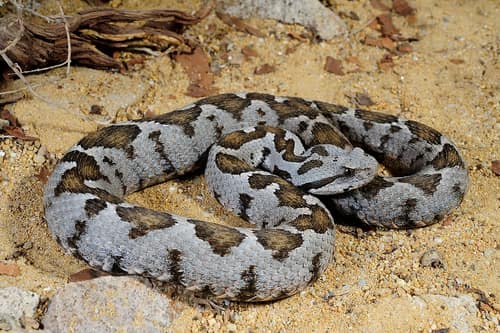
Close Relative Benny Trapp / CC BY 3.0 · cc-by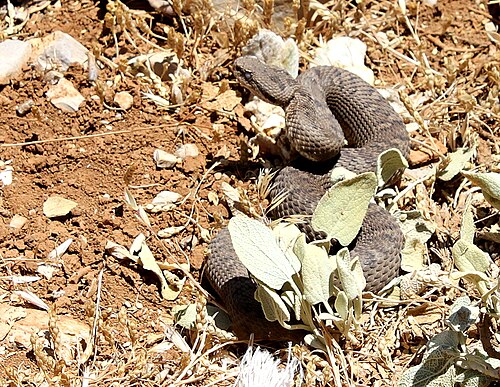
Close Relative Mickey Samuni-Blank / CC BY-SA 3.0 · cc-by-sa
Help improve the field guideSomething wrong?
Checking your Fauna account…Report a name, category, or profile issue for review.