
Bird · GBIF taxon 5789361
Saffron Toucanet
Pteroglossus bailloniAlso known as Bailloni's Toucanet, Saffron Toucan, Yellow Toucanet
Saffron toucanets travel through the Atlantic Forest canopy in small, vocal groups foraging for ripe palm fruits and insects. Unique among its kin, this striking bird displays glowing saffron-yellow body plumage contrasted against a dark olive back and bright red skin around the eyes. Nesting in natural tree hollows, pairs raise their young while acting as crucial seed dispersers for endemic palm species.
ColorfulFrugivoreForest Species
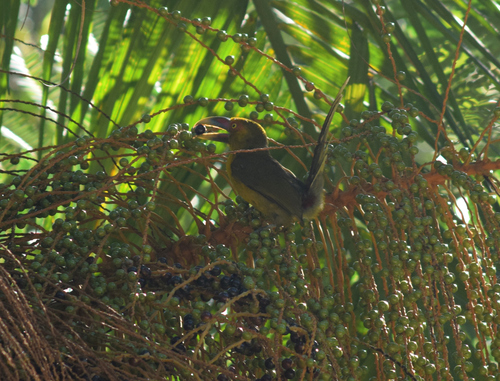
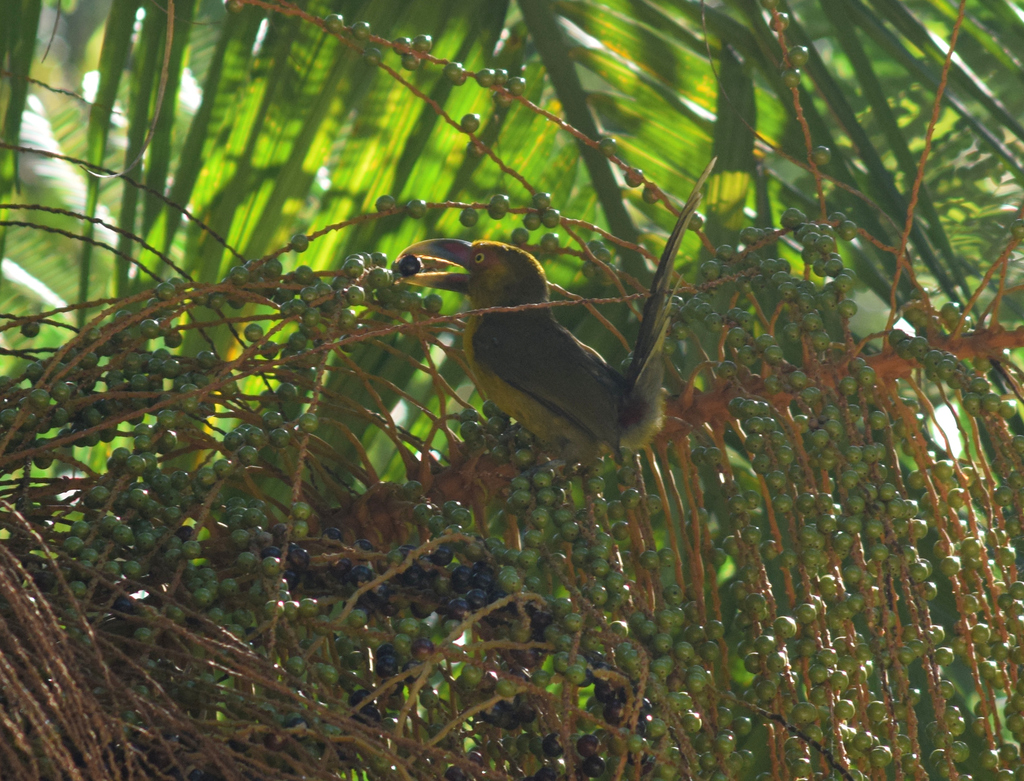
Licensed reference(c) Cajá-manga, some rights reserved (CC BY) · cc-by
—observations
—countries
—peak records
Near ThreatenedConservation statusIUCN Red List categoriesLCNTVUENCREWEXNear ThreatenedRed List categories, explained →
Diet & prey
- Palmberries
- Insects
- Tree frogs
Predators
- Raptors
- Snakes
- Arboreal mammals
ThreatsHabitat loss from forest fragmentation and illegal trade
HabitatsHumid canopy and midstory of lowland and montane Atlantic Forest
Life span10–15 years
Size / weightNot available
Classification
- FamilyRamphastidae
- SpeciesPteroglossus bailloni
Range data is not available yet.
Interaction riskLow
- Low
- Moderate
- High
- Very high
- Why interaction risk is low
- Safe to observe from a respectful distance in its natural forest habitat.
- What to notice
- Recognizable by its saffron-yellow body plumage, olive back, red ocular skin, and greenish bill.
- Support conservation
- Observe quietly from established forest trails without playing vocal recordings or disturbing nest trees.
Responsible observation
- Canopy Scanning: Look for flashes of vibrant yellow high in the Atlantic Forest canopy.
- Listen for Calls: Listen for repeated, dry, chattering call notes during early morning feeding hours.
- Fruiting Trees: Patiently watch fruiting palms or fig trees where small family groups assemble.
 Image unavailable
Host Plant Genus Relative 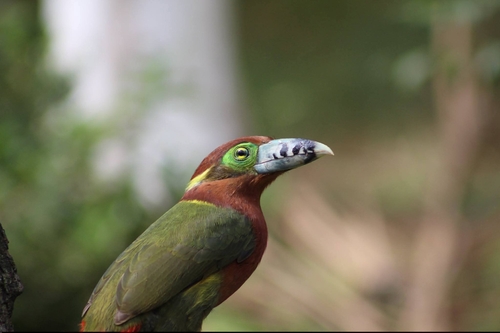
Close Relative (c) Eduardo Gomyde, some rights reserved (CC BY-SA) · cc-by-sa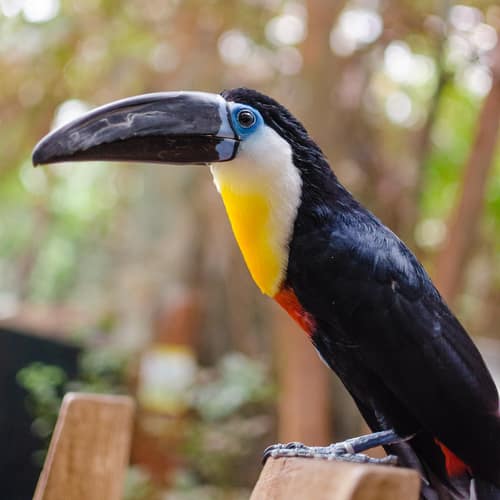
Family Relative "Channel-billed toucan" by Mathias Appel is marked with CC0 1.0. To view the terms, visit https://creativecommons.org/publicdomain/zero/1.0/. · cc0
Help improve the field guideSomething wrong?
Checking your Fauna account…Report a name, category, or profile issue for review.