
Mammal · GBIF taxon 5787518
Indian Flying Fox
Pteropus mediusAlso known as Greater Indian Fruit Bat, Indian Fruit Bat, Giant Indian Fruit Bat
Indian flying foxes are among the world's largest bats, gathering in massive, noisy roosts in the canopies of mature trees like banyans and tamarinds. These highly social mammals spend their days grooming, fanning themselves with their wings, and squabbling over prime branches before taking flight at dusk in spectacular streams to forage. Their extensive nightly travels make them critical pollinators and seed dispersers across the forests and orchards of the Indian subcontinent.
NocturnalFrugivorousSocial
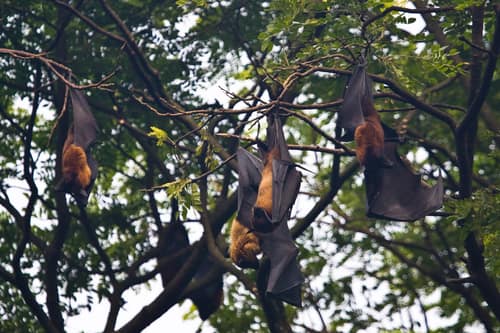
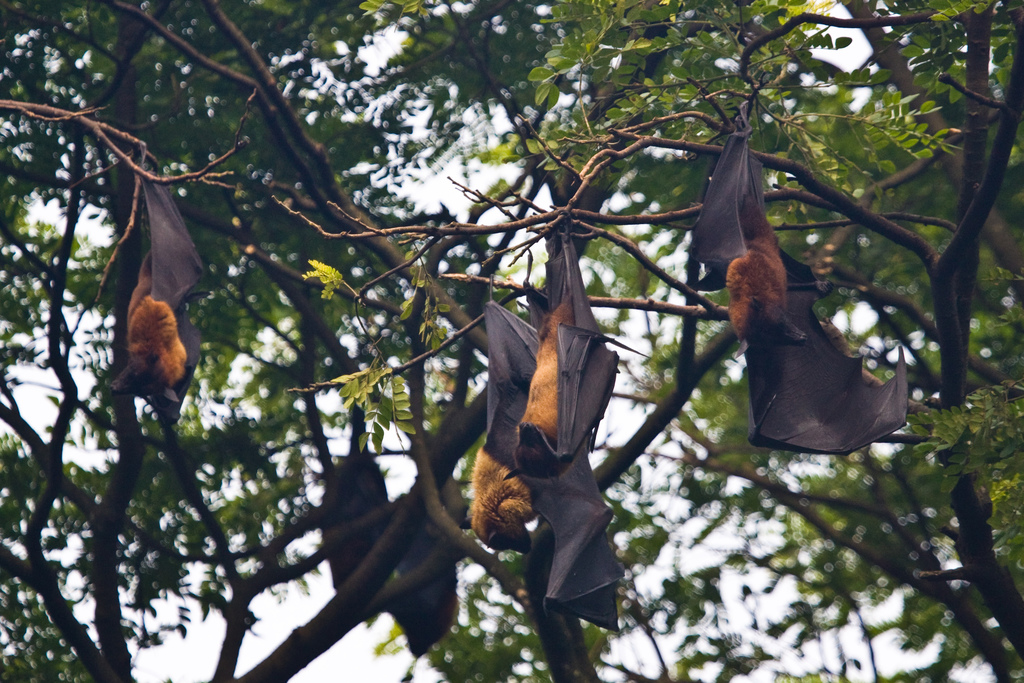
—observations
—countries
—peak records
Near ThreatenedConservation statusIUCN Red List categoriesLCNTVUENCREWEXNear ThreatenedRed List categories, explained →
Diet & prey
- Mangoes
- Bananas
- Figs
Predators
- Black kites
- Large owls
- Pythons
ThreatsHabitat loss, hunting for meat and traditional medicine, and persecution by fruit farmers
HabitatsTropical forests, wetlands, agricultural areas, and urban parks
Life span15 to 30 years in the wild
Size / weightNot available
Classification
- FamilyPteropodidae
- SpeciesPteropus medius
Native
Interaction riskModerate
- Low
- Moderate
- High
- Very high
- Why interaction risk is moderate
- Can carry zoonotic viruses like Nipah; observe roosts from a distance and never handle live or dead bats.
- Why it is dangerous
- Can transmit Nipah virus and other zoonotic pathogens through saliva, urine, or scratches, which can cause severe encephalitis in humans.
- How to recognize a risky encounter
- Distinguished by its massive size, dog-like face, golden-brown mantle, and lack of a tail.
- What to do
- Never touch or rescue a grounded bat; contact local wildlife authorities if an animal appears injured.
- What to notice
- Look for large, dark shapes hanging upside down in prominent, mature trees during the day.
- Support conservation
- Keep noise levels low when near roosting trees to avoid causing stressful mass-flushing events.
Responsible observation
- Sunset Watching: Position yourself near a known roost tree at dusk to watch the spectacular flyout as thousands take flight.
- Listen for Roosts: Locate their daytime camps by listening for loud, chattering vocalizations and flapping wings high in the canopy.
- Keep Your Distance: Avoid walking directly under active roosts to prevent contact with falling guano or urine.

Host Plant (c) jess n, some rights reserved (CC BY-SA) · cc-by-sa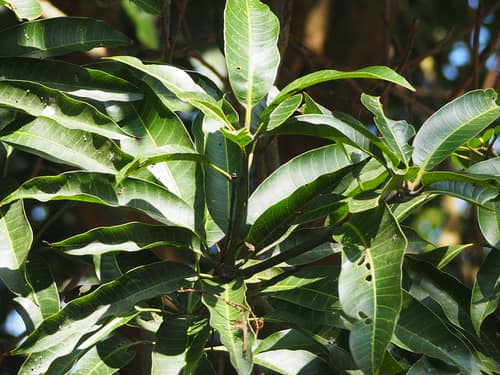
Prey no rights reserved, uploaded by 葉子 · cc0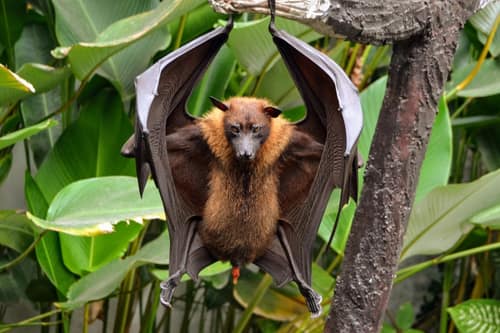
Close Relative (c) Pirataber, some rights reserved (CC BY), uploaded by Pirataber · cc-by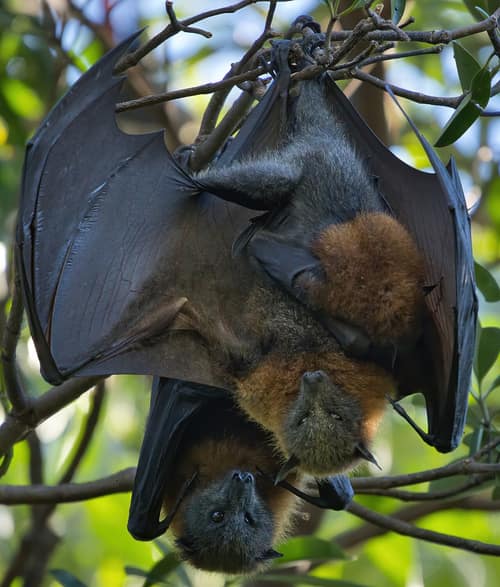
Close Relative Andrew Mercer (www.baldwhiteguy.co.nz) / CC BY-SA 4.0 · cc-by-sa
Help improve the field guideSomething wrong?
Checking your Fauna account…Report a name, category, or profile issue for review.