Also known as Sunda Islands Clouded Leopard, Bornean Clouded Leopard, Diard's Clouded Leopard, Enkuli
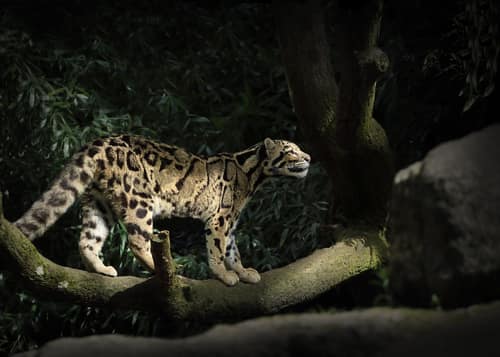
Sunda clouded leopards navigate the dense rainforest canopies of Borneo and Sumatra with remarkable arboreal agility, aided by flexible ankle joints that rotate backward to let them climb down tree trunks headfirst. Their exceptionally long canine teeth, measuring proportionately longer relative to skull size than those of any other living cat, deliver swift dispatching bites to canopy-dwelling monkeys and forest ungulates. Mainly active under cover of twilight and darkness, these solitary hunters rely on a darkly mottled, cloud-patterned coat to vanish seamlessly into dappled tropical foliage.
ThreatsSevere forest fragmentation driven by oil palm plantations, illegal commercial logging, poaching, and snares
HabitatsPrimary and secondary lowland tropical rainforests, peat swamps, and montane forests up to 2,000 meters elevation
Life span11 to 17 years in the wild
Classification
FamilyFelidae
SpeciesNeofelis diardi
Range & activity
Range data is not available yet.
Safe observation
Interaction riskHigh
Low
Moderate
High
Very high
Why interaction risk is high
Formidable carnivore capable of severe defensive bites if cornered; always keep a respectful distance.
Why it is dangerous
Equipped with massive, dagger-like canines and strong forepaws, capable of delivering crushing, disabling bites if trapped, cornered, or protecting cubs.
How to recognize a risky encounter
Look for a stocky, low-slung cat with dark, jagged cloud-like blotches, double stripes along the spine, and an exceptionally long, thick tail.
What to do
Never corner, pursue, or attempt to photograph at close range in the wild; back away quietly and maintain substantial distance.
What to notice
Easily mistaken for mainland clouded leopards or large civets; look for smaller, darker cloud rosettes with internal spots on island habitats.
Support conservation
Do not disclose precise GPS coordinates of sightings or camera-trap detections publicly to prevent alerting commercial poachers.
Responsible observation
Camera Trapping: Install motion-activated trail cameras along natural ridgelines and game trails where cats regularly travel.
Canopy Scanning: Use high-powered binoculars at dusk to check large horizontal branches where adults often rest.

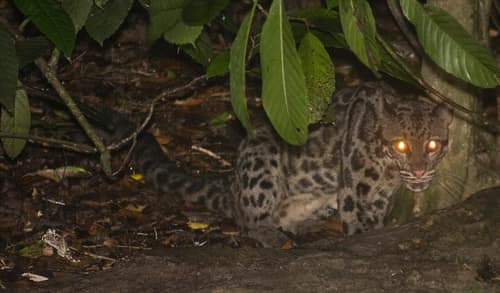
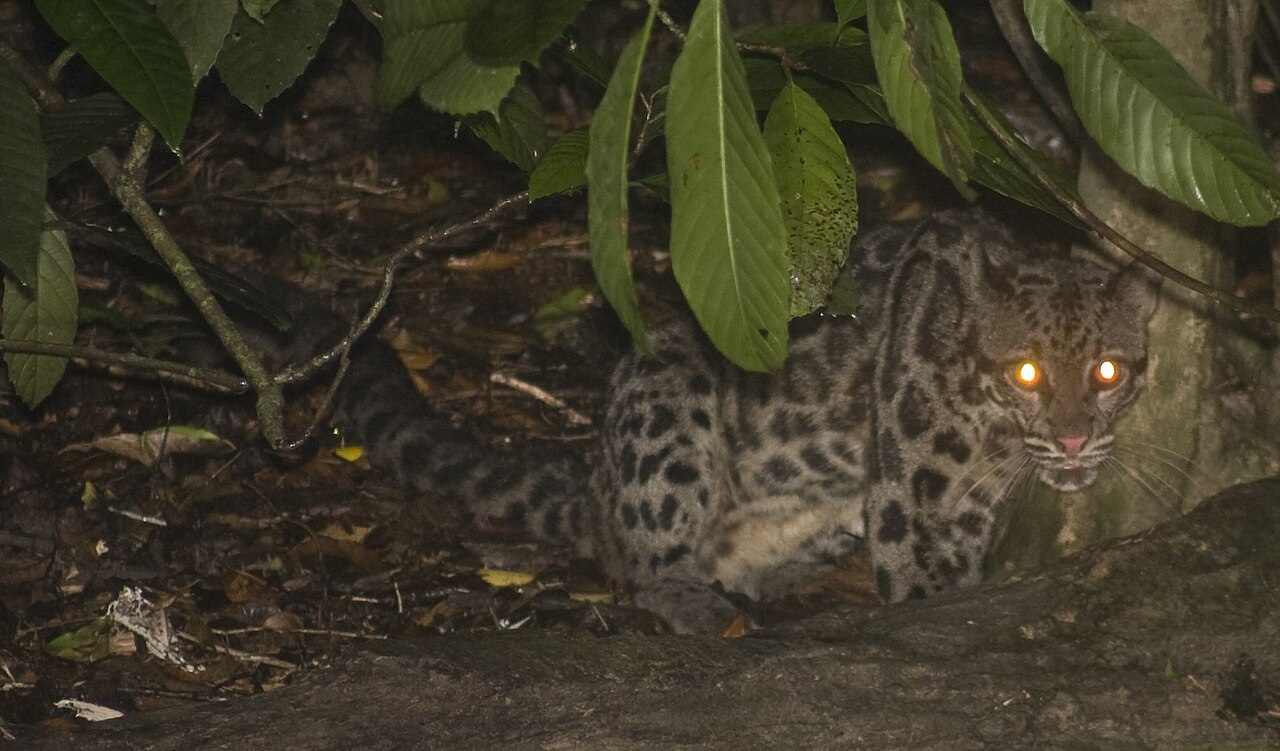
 Image unavailable