
Insect · GBIF taxon 5743122
European Stag Beetle
Lucanus cervusAlso known as Greater Stag Beetle
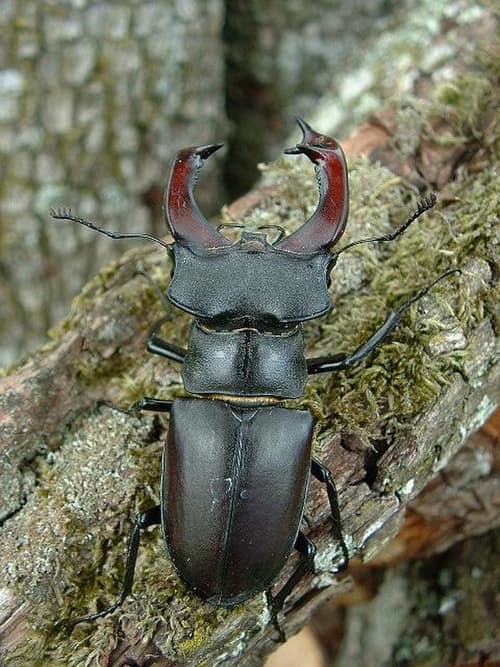
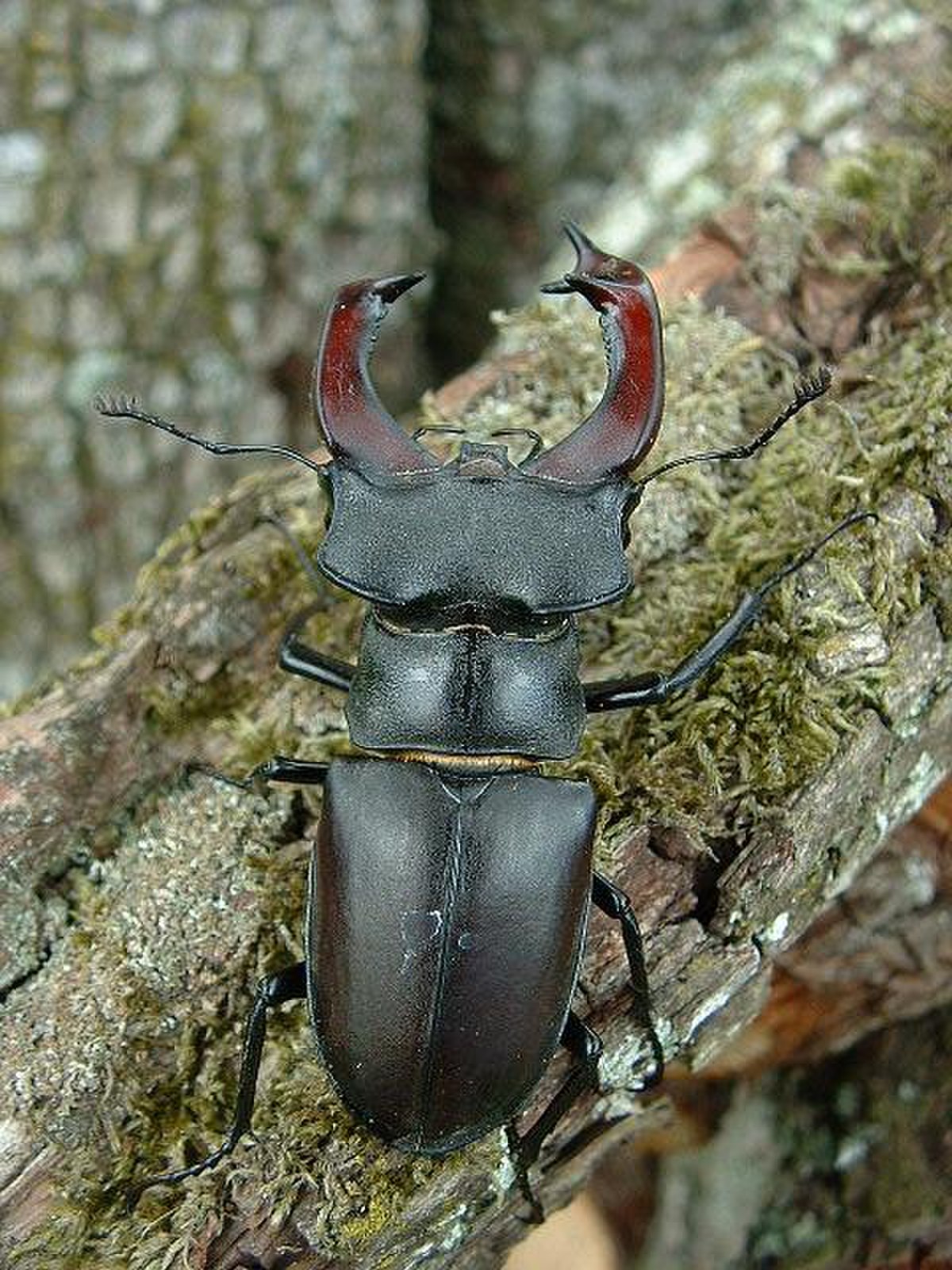
European Stag Beetles are massive dark beetles whose males carry enlarged antler-like mandibles. The larvae spend years developing inside buried decaying wood, while short-lived adults emerge in warm weather to seek mates.
stag beetledeadwood dependentlarge beetle
—observations
—countries
—peak records
Not EvaluatedConservation statusIUCN Red List categoriesLCNTVUENCREWEXNot Evaluated — not placed on the risk ladderRed List categories, explained →
Diet & prey
- Larvae consume decaying wood; adults take sap and other plant liquids
Predators
- birds
- foxes
- hedgehogs
ThreatsRemoval of stumps and dead wood, development, road traffic, and deliberate killing
HabitatsOld woodland, hedgerows, orchards, parks, and gardens with buried dead wood
Life spanLarvae develop for three to seven years; adults usually survive only a few weeks
Size / weightNot available
Classification
- FamilyLucanidae
- SpeciesLucanus cervus
Range data is not available yet.
Interaction riskLow
- Low
- Moderate
- High
- Very high
- Why interaction risk is low
- A handled beetle can pinch with its mandibles, especially a smaller-jawed female.
- Why it is dangerous
- Stag beetles are not aggressive, but a restrained adult can close its mandibles on skin.
- How to recognize a risky encounter
- Males have conspicuous antler-like jaws, while females are smaller with compact powerful mandibles.
- What to do
- Avoid handling; guide a beetle only when immediate traffic danger makes movement necessary.
Responsible observation
- Observe: Let walking adults cross safely without lifting them by the legs or jaws.
- Protect: Retain buried stumps and decaying wood where local guidance permits.
Help improve the field guideSomething wrong?
Checking your Fauna account…Report a name, category, or profile issue for review.