
Invertebrate
China Clam
Hippopus porcellanusAlso known as Porcelain Clam, Porcelain Giant Clam
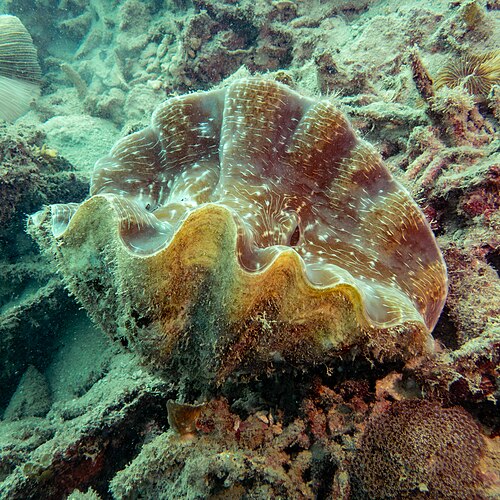
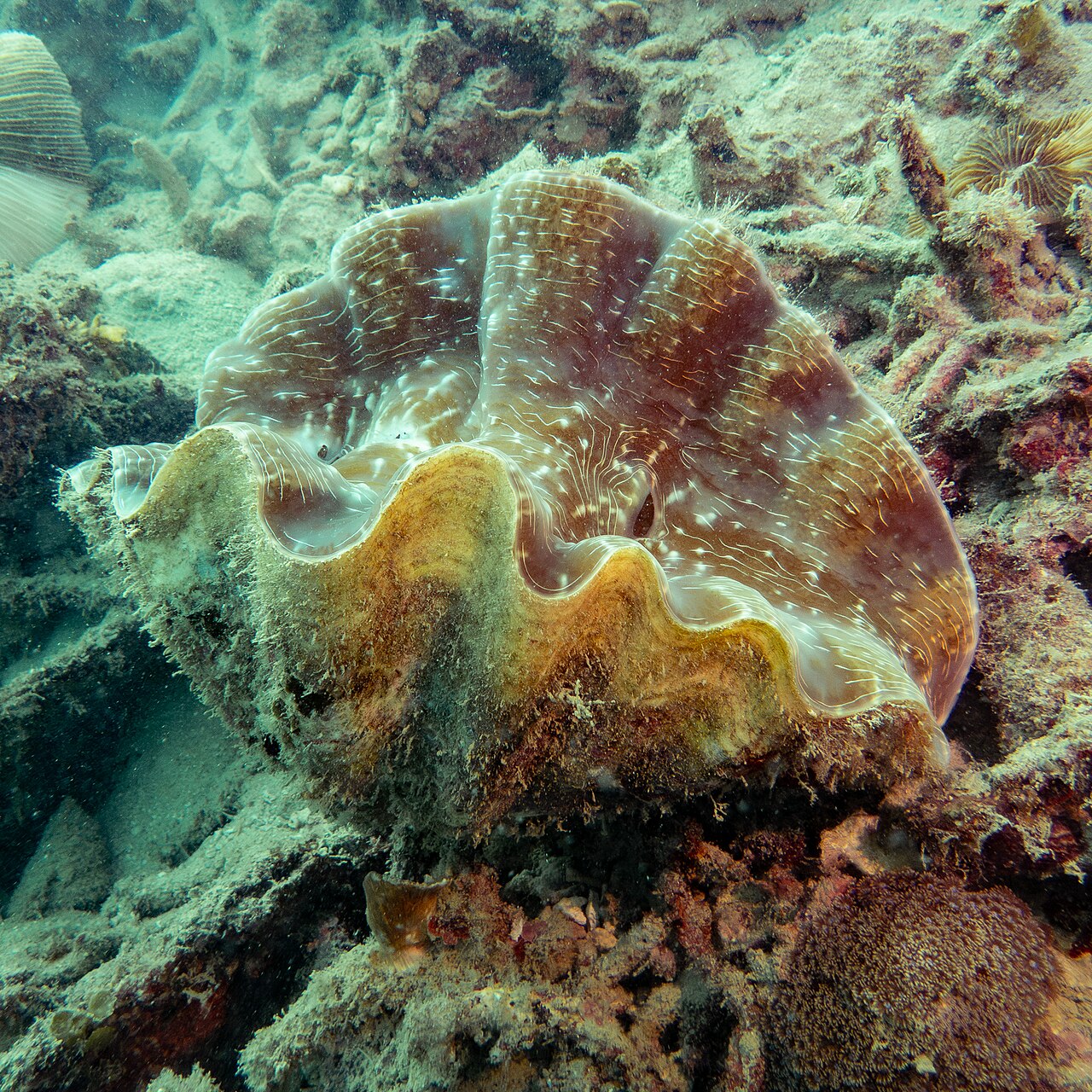
China clams are rare, heavy-shelled bivalves distinguished by their smooth, porcelain-like inner shell margins and tightly fitting, wavy valves. Unlike their giant clam relatives in the genus Tridacna, they possess a much narrower, slot-like opening that protects their colorful mantle. They live in shallow coral reef flats, relying on symbiotic algae to convert sunlight into energy.
MarineReef-DwellingSymbiotic
—observations
—countries
—peak records
VulnerableConservation statusIUCN Red List categoriesLCNTVUENCREWEXVulnerableRed List categories, explained →
Diet & preyPhytoplankton, Dissolved organic nutrients
Predators
- Octopuses
- Triggerfish
- Pyramidellid snails
ThreatsOverharvesting for the aquarium trade, shell collecting, and habitat degradation
HabitatsShallow coral reefs, sandy lagoons, and seagrass beds
Life spanUp to 30 to 50 years
Classification
- FamilyCardiidae
- SpeciesHippopus porcellanus
Range data is not available yet.
Interaction riskLow
- Low
- Moderate
- High
- Very high
- Why interaction risk is low
- Safe to observe at a distance; avoid touching or placing hands near the shell opening.
- What to notice
- Recognizable by its heavy, triangular shell with a relatively smooth, porcelain-white interior margin.
- Support conservation
- Never collect, move, or disturb these clams, and report any suspected poaching to local marine authorities.
Responsible observation
- Observe from above: Look for the smooth, pale mantle with green or brown patterns visible through the narrow shell opening.
- Do not touch: Avoid touching the mantle, as this causes the clam to abruptly retract and partially close its heavy valves.
- Maintain buoyancy: Keep off the seabed to avoid kicking up sediment that can smother the clam's photosynthetic mantle.
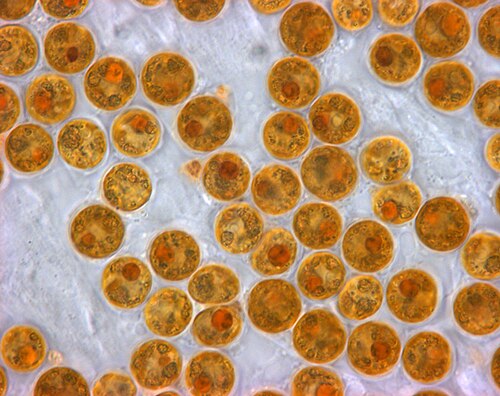
Symbiont Todd C. LaJeunesse / CC BY-SA 2.0 · cc-by-sa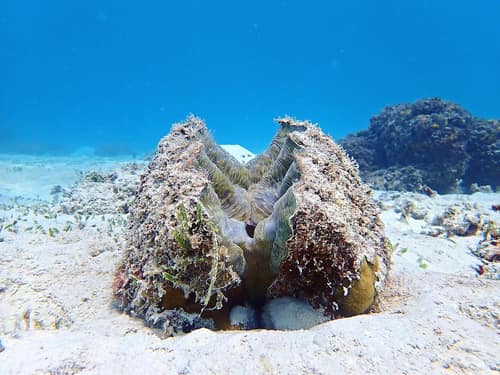
Close Relative Frédéric Ducarme / CC BY-SA 4.0 · cc-by-sa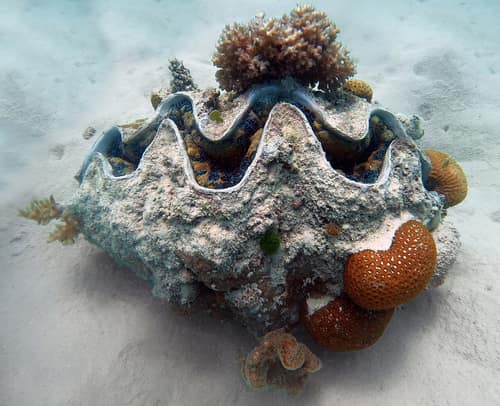
Close Relative Charles J. Sharp / CC BY-SA 4.0 · cc-by-sa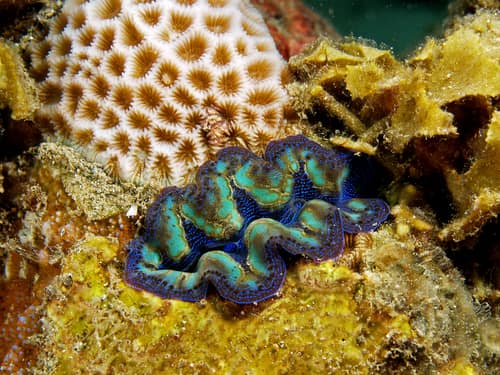
Close Relative (c) Nhobgood, some rights reserved (CC BY-SA) · cc-by-sa
Help improve the field guideSomething wrong?
Checking your Fauna account…Report a name, category, or profile issue for review.