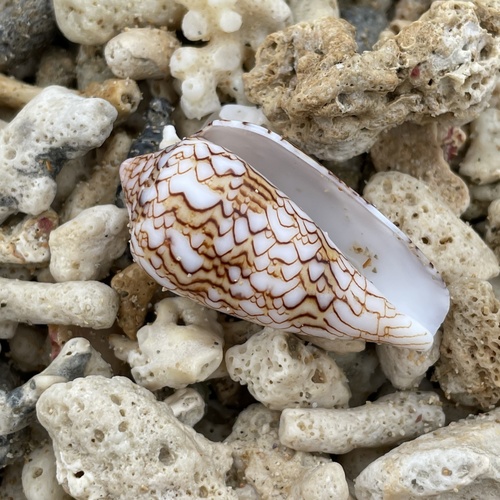
Black-and-white cone snails patrol shallow tropical reefs and intertidal benches at night, searching for polychaete worms hidden in crevices and sediment. When a target is detected, the snail extends a flexible proboscis and fires a modified, hollow radular tooth filled with paralyzing conopeptides. The resulting rapid immobilization allows this slow-moving gastropod to swallow elongate prey whole before retreating beneath coral rubble by sunrise.
ThreatsCoral reef degradation, coastal development, and overcollection
HabitatsIntertidal reef flats, shallow lagoons, and coral rubble
Life span10–20 years
Size / weightNot available
Classification
OrderNeogastropoda
FamilyConidae
GenusConus
SpeciesConus ebraeus
Range & activity
Range data is not available yet.
Safe observation
Interaction riskVery high
Low
Moderate
High
Very high
Why interaction risk is very high
Delivers a venomous sting via a concealed harpoon; never handle live specimens with bare hands.
Why it is dangerous
Fires a venom-charged radular tooth that delivers neurotoxic conopeptides, producing severe localized pain, tissue swelling, and possible systemic numbness.
How to recognize a risky encounter
Features a heavy, conical shell covered in alternating rows of distinct black, square-like patches on a white background.
What to do
Never pick up or pocket live cone snails, and use tongs or heavy forceps if moving one is unavoidable.
Responsible observation
Reef Walking: Watch footing carefully around shallow tide pools and rocky reef flats where shells hide under sand.
Hands Off: Admire the striking checkered pattern visually, but never pick up live individuals because they sting defensively.

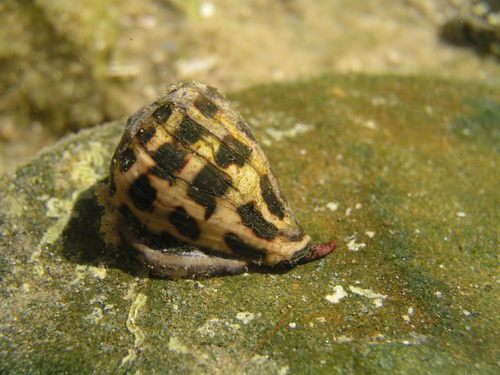
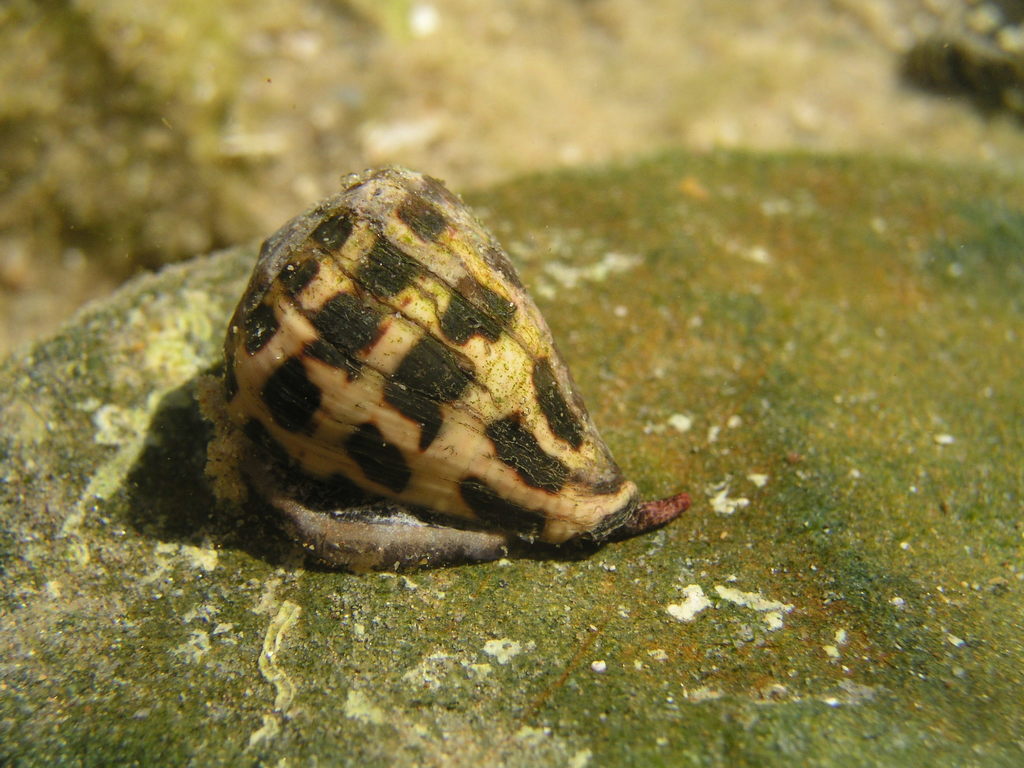
 Image unavailable