
Plant
Crassula falcata
Crassula falcataAlso known as Propeller Plant, Airplane Plant, Sickle Crassula, Scarlet Paintbrush
Sickle-shaped, grey-green leaves arrange in overlapping opposite pairs resembling spinning airplane propellers. Dense, flattened clusters of vibrant scarlet flowers erupt above the foliage in mid-to-late summer, releasing a subtle sweet scent that attracts butterflies. Adapted to semi-arid climes, this drought-resilient succulent relies on Crassulacean Acid Metabolism to open its stomata exclusively at night, conserving vital moisture under intense sun.
SucculentDrought-TolerantFlowering
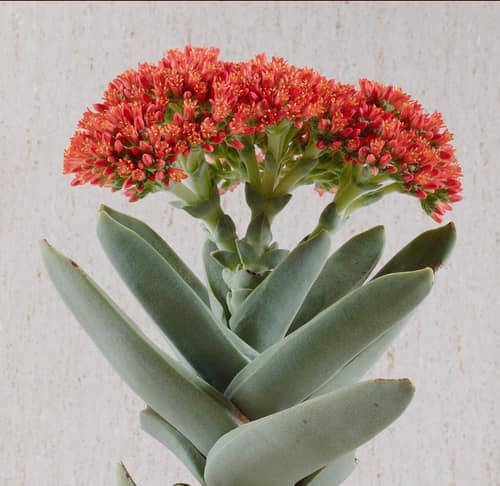
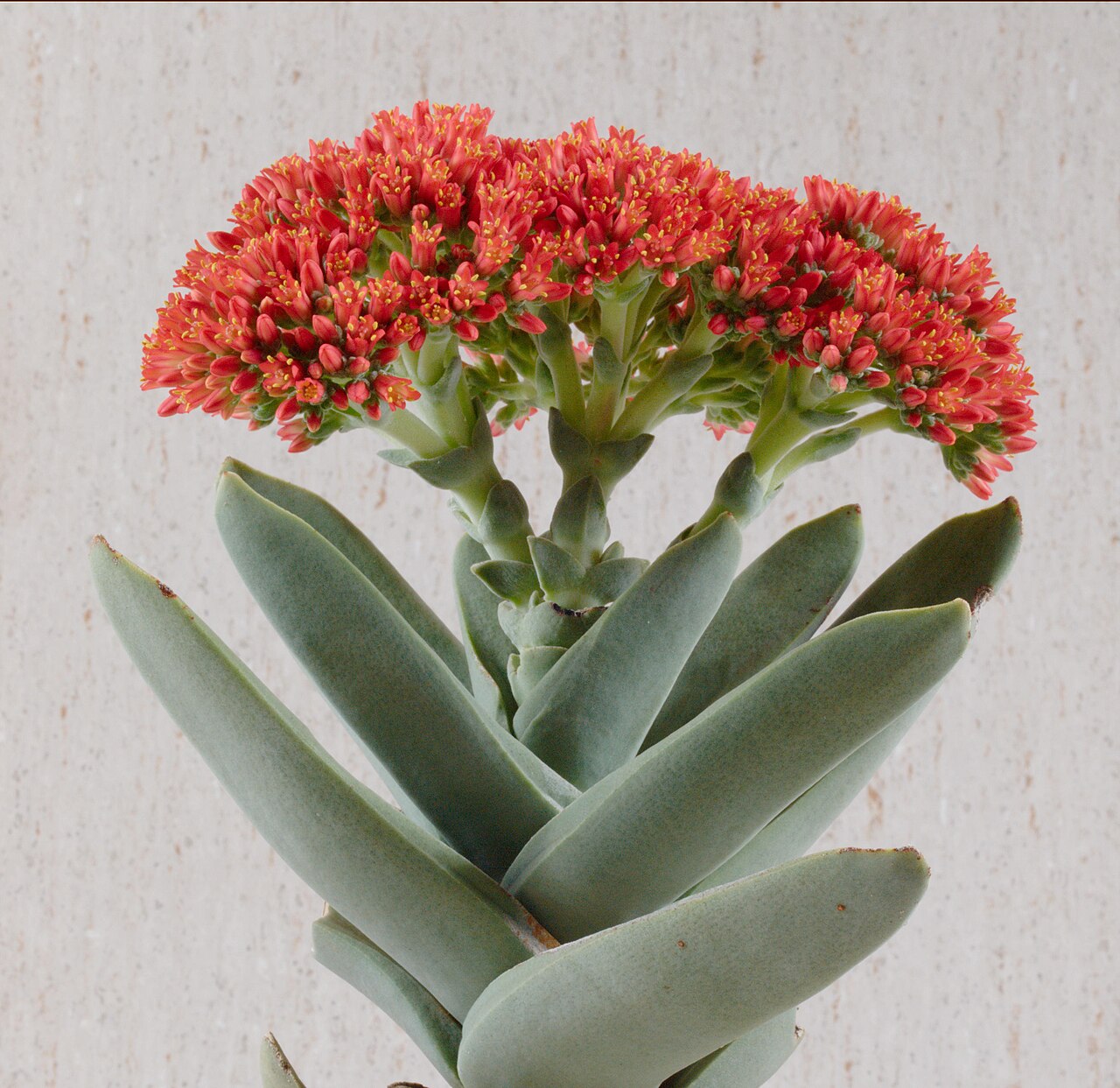
—observations
—countries
—peak records
Least ConcernConservation statusIUCN Red List categoriesLCNTVUENCREWEXLeast ConcernRed List categories, explained →
Diet & preySunlight, Atmospheric Carbon Dioxide, Soil Minerals
Predators
- Garden Snails
- Mealybugs
- Browsing Antelopes
ThreatsPoaching for horticulture, habitat clearance, and invasive weeds
HabitatsRocky outcrops, succulent thickets, and arid scrublands
Life span15–30 years
Classification
- OrderSaxifragales
- FamilyCrassulaceae
- GenusCrassula
- SpeciesCrassula falcata
Range data is not available yet.
Interaction riskHigh
- Low
- Moderate
- High
- Very high
- Why interaction risk is high
- Safe to observe at a normal distance.
Responsible observation
- Sun Exposure: Provide bright, direct sunlight to encourage tight leaf growth and vivid red blooms.
- Watering Moderation: Allow soil to dry completely between waterings to prevent root rot.
- Bloom Watching: Check developing flower clusters in midsummer for visits from native butterflies.
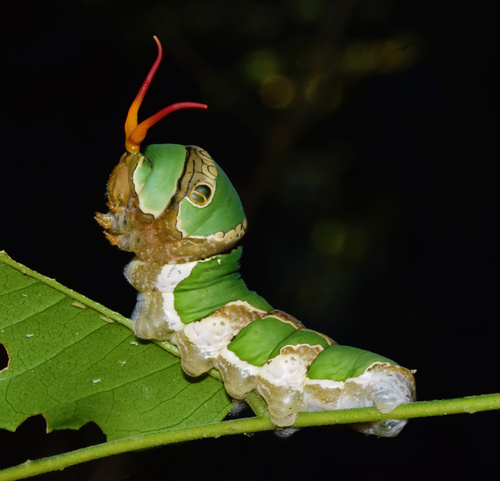
Pollinator (c) Sunčana Bradley, some rights reserved (CC BY), uploaded by Sunčana Bradley · cc-by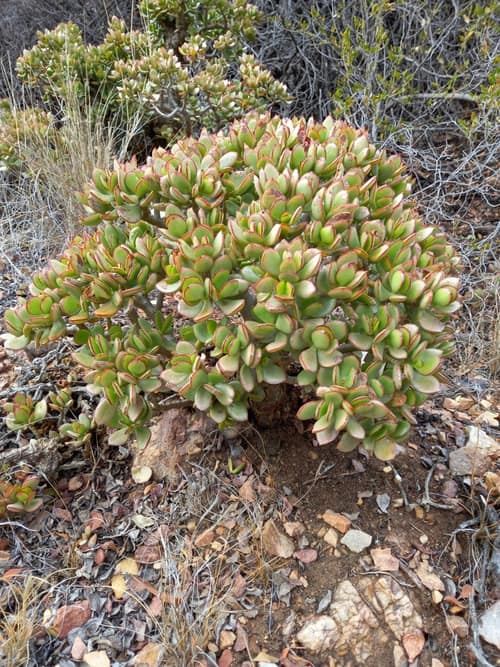
Close Relative (c) Christiaan Viljoen, some rights reserved (CC BY) · cc-by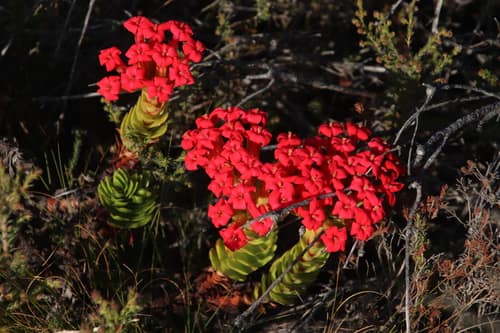
Close Relative (c) Tony Rebelo, some rights reserved (CC BY-SA), uploaded by Tony Rebelo · cc-by-sa Image unavailable
Close Relative
Help improve the field guideSomething wrong?
Checking your Fauna account…Report a name, category, or profile issue for review.