
Plant
Matagouri
Discaria toumatouAlso known as Tūmatakuru, Wild Irishman
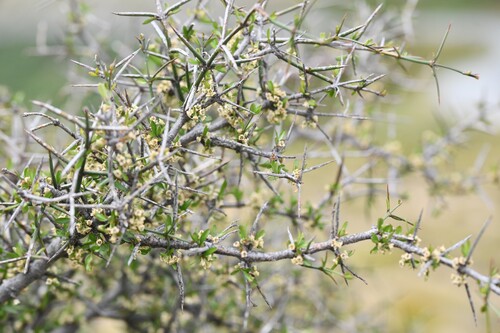
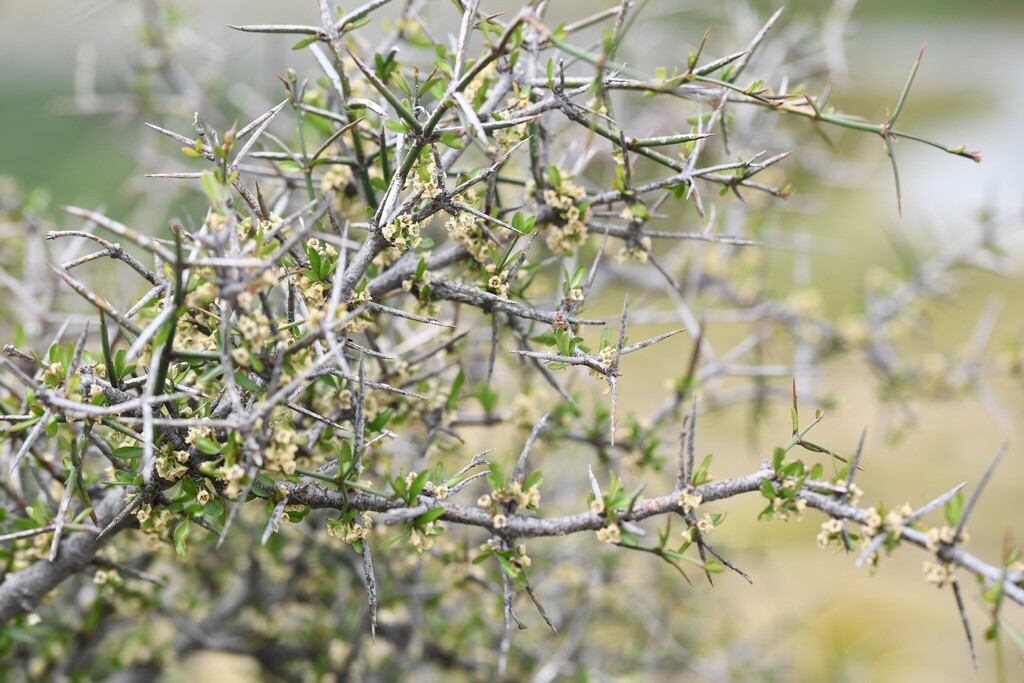
Matagouri forms dense, intricately tangled thickets armed with stiff, needle-sharp spine branches that once protected it from browsing moa. Tiny, highly fragrant cream blossoms appear along the spine bases in late spring, luring diverse assemblages of native flies, beetles, and moths. Through a symbiotic partnership with Frankia actinobacteria in its root nodules, this pioneer shrub fixes atmospheric nitrogen and enriches thin, stony soils across dry tussock basins.
ThornyEndemicNitrogen-Fixing
—observations
—countries
—peak records
Least ConcernConservation statusIUCN Red List categoriesLCNTVUENCREWEXLeast ConcernRed List categories, explained →
Diet & preySunlight, Water, Atmospheric Nitrogen
Predators
- Feral Goats
- European Rabbits
- Sheep
ThreatsAgricultural pasture conversion, land burning, herbicide spraying
HabitatsTussock grasslands, braided riverbeds, rocky scree slopes, sand dunes
Life span50–100 years
Classification
- FamilyRhamnaceae
- SpeciesDiscaria toumatou
Range data is not available yet.
Interaction riskLow
- Low
- Moderate
- High
- Very high
- Why interaction risk is low
- Safe to observe at a normal distance, though the rigid spines can readily puncture clothing.
Responsible observation
- Approaching Thickets: Wear heavy canvas trousers and sturdy boots because the woody spines easily penetrate light gear.
- Spring Identification: Check the spine axils between October and January to spot small clusters of fragrant white flowers.
- Reptile Watching: Scan inner deadwood on warm mornings to spot native geckos sheltering from predatory birds.
 Image unavailable
Frequent Companion Frequent Companion Competitor Close Relative
Help improve the field guideSomething wrong?
Checking your Fauna account…Report a name, category, or profile issue for review.