
Plant · GBIF taxon 5529644
Spiny Tree Fern
Alsophila spinulosaAlso known as Flying Spider-Monkey Tree Fern
Spiny tree ferns tower over humid forest floors across subtropical Asia, bearing a crown of massive feather-like fronds atop a single fibrous trunk. Sharp, prominent prickles cover the bases of the leaf stalks, offering protection and giving the plant its distinctive name. As living fossils from an ancient lineage, they thrive in shaded ravines where constant moisture and warm temperatures persist year-round.
Tree FernAncient LineageForest Understory
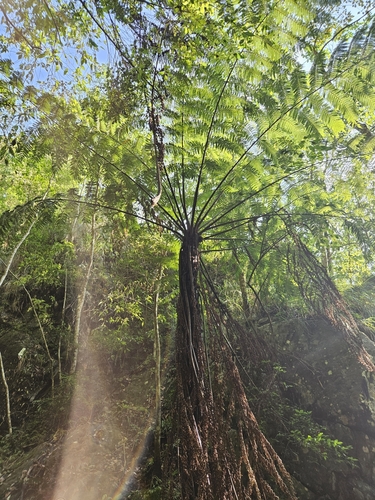
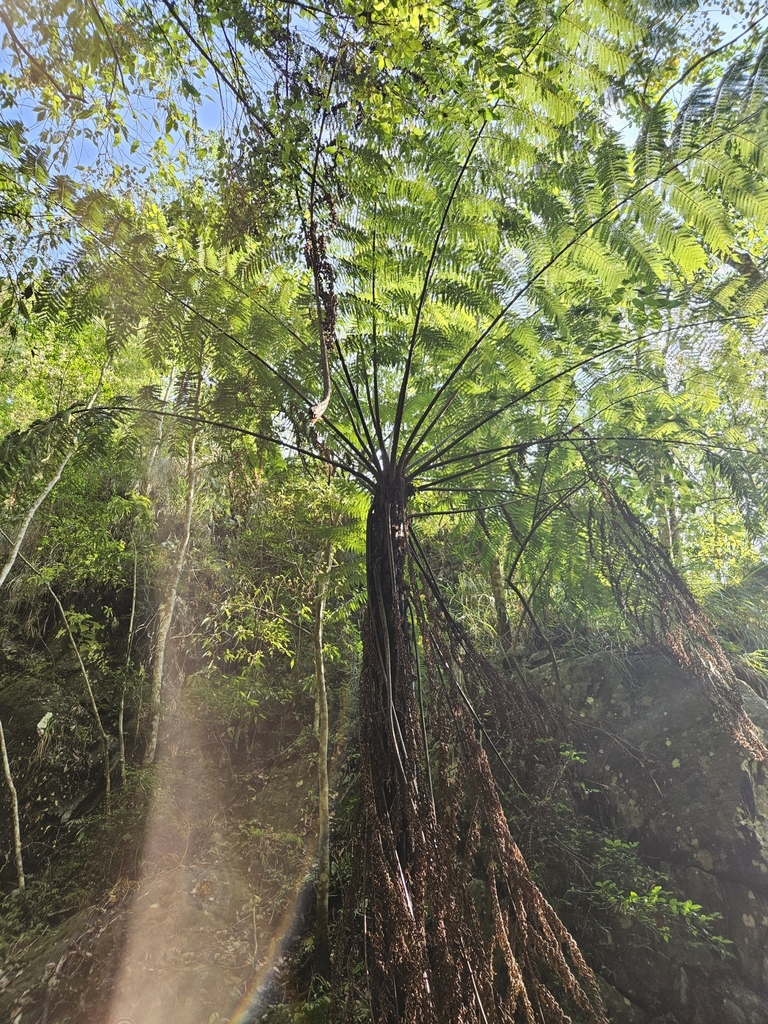
—observations
—countries
—peak records
Least ConcernConservation statusIUCN Red List categoriesLCNTVUENCREWEXLeast ConcernRed List categories, explained →
Diet & prey
- Autotrophic (Photosynthetic)
Predators
- Herbivorous Insects
ThreatsHabitat loss, forest clearing, over-harvesting for horticulture
HabitatsHumid subtropical and tropical forests, mountain ravines, stream banks
Life span50–100 years
Size / weightNot available
Classification
- FamilyCyatheaceae
- SpeciesAlsophila spinulosa
Range data is not available yet.
Interaction riskLow
- Low
- Moderate
- High
- Very high
- Why interaction risk is low
- Safe to observe at a normal distance.
- What to notice
- Recognized by its tall woody trunk topped with broad fronds and sharp spines along the lower leaf stems.
- Support conservation
- Observe from marked trails without damaging fronds or harvesting wild specimens.
Responsible observation
- Observing Spines: Examine the sharp prickles dense near the leaf stem bases with care.
- Habitat Spotting: Search in damp, forested gullies and along shaded mountain stream banks.
- Spore Inspection: Check the undersides of mature fronds for round sori containing reproductive spores.
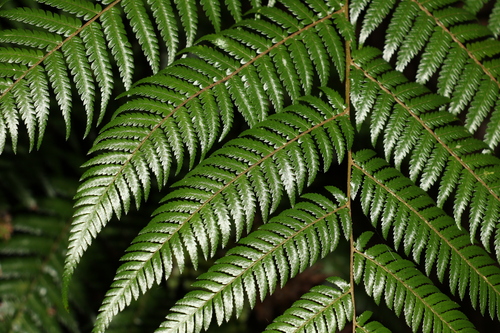
Close Relative (c) Greg Tasney, some rights reserved (CC BY-SA), uploaded by Greg Tasney · cc-by-sa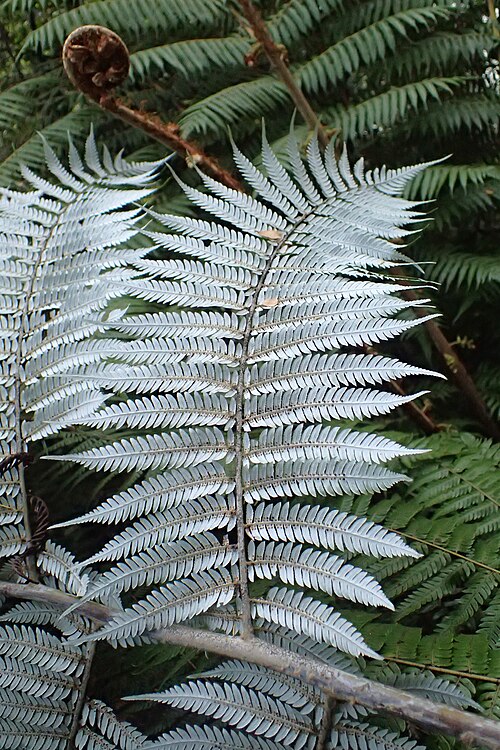
Close Relative Krzysztof Ziarnek, Kenraiz / CC BY-SA 4.0 · cc-by-sa
Help improve the field guideSomething wrong?
Checking your Fauna account…Report a name, category, or profile issue for review.