
Fungus
Gunpowder Amanita
Amanita onustaAlso known as Loaded Lepidella, Gunpowder Lepidella
Gunpowder Amanita emerges from deciduous forest soils crowned with distinctive ash-gray, pyramidal warts that resemble grains of black powder. The fungus forms a deeply rooted, turnip-shaped basal bulb anchored firmly within root-dense forest litter. As a mycorrhizal partner, it weaves its underground hyphae around tree rootlets, exchanging soil nutrients for tree-derived carbohydrates throughout the summer and autumn.
WoodlandMycorrhizalDecomposer
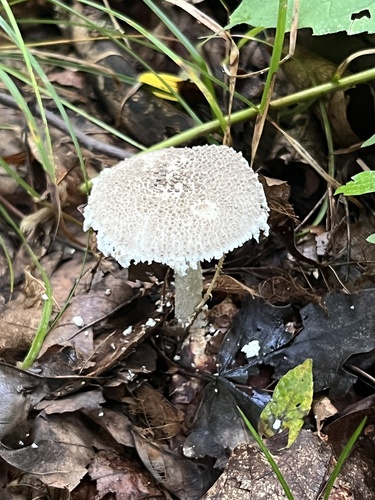
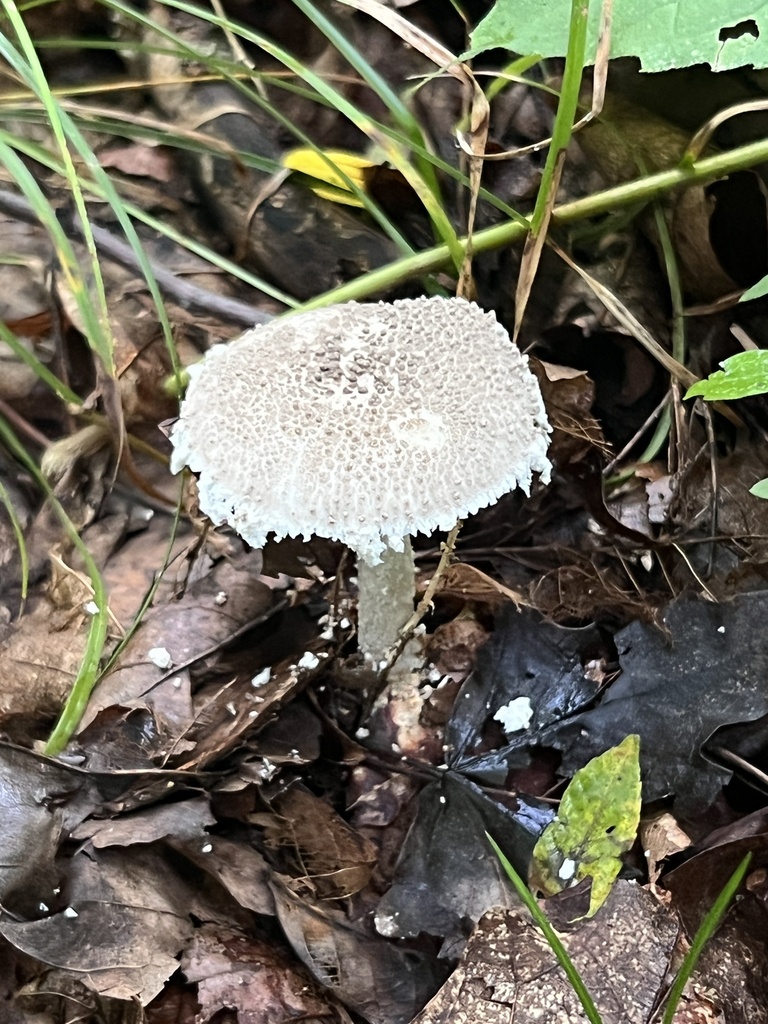
—observations
—countries
—peak records
Not EvaluatedConservation statusIUCN Red List categoriesLCNTVUENCREWEXNot Evaluated — not placed on the risk ladderRed List categories, explained →
Diet & preyMycorrhizal nutrient exchange
Predators
- Fungus gnats
- Woodland slugs
ThreatsDeforestation and woodland habitat fragmentation
HabitatsDeciduous and mixed oak-hickory forests
Life spanSeveral days as a fruit body; perennial underground mycelium
Classification
- OrderAgaricales
- FamilyAmanitaceae
- GenusAmanita
- SpeciesAmanita onusta
Range data is not available yet.
Interaction riskHigh
- Low
- Moderate
- High
- Very high
- Why interaction risk is high
- Suspected toxic; many mushrooms have deadly look-alikes, so never consume wild fungi based on app identification alone.
- Why it is dangerous
- Members of Amanita section Lepidella frequently contain nephrotoxic amino acids that can induce acute kidney or liver damage if consumed.
- How to recognize a risky encounter
- Recognizable by its whitish-gray cap covered in dense, charcoal-gray pyramidal warts and a rooting, turnip-shaped bulb.
- What to do
- Do not harvest for culinary use; leave specimens in place to protect the local mycelial network.
Responsible observation
- Examine Carefully: Inspect the dark, conical cap warts and deeply rooted spindle base without uprooting needlessly.
- Photograph Details: Take clear macro photos of the cap surface, partial veil remnants, and subterranean bulb.
- Practice Foraging Safety: Never consume wild Amanita species due to high toxicity risks and treacherous look-alikes.
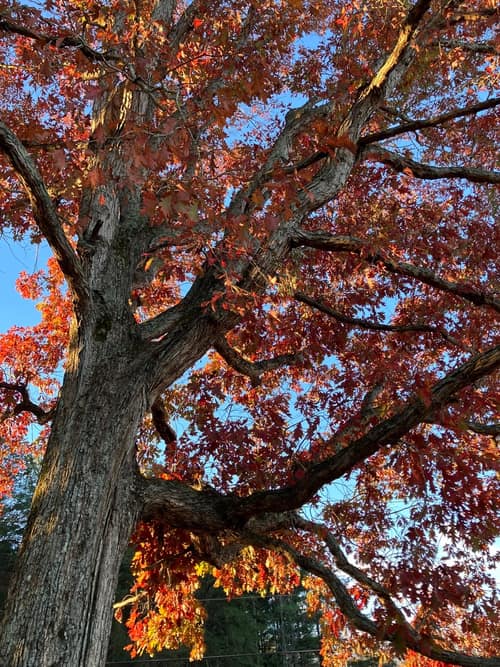
Symbiont (c) Alicia Ballard, some rights reserved (CC BY) · cc-by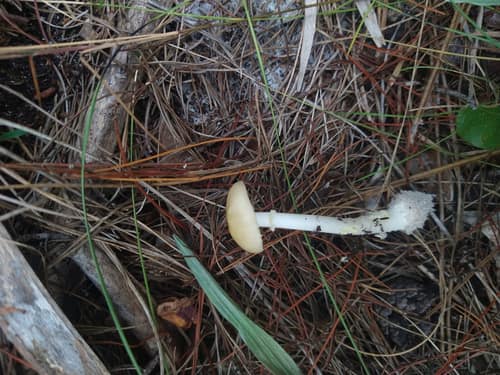
Frequent Companion (c) Matthew Rozanoff, some rights reserved (CC BY) · cc-by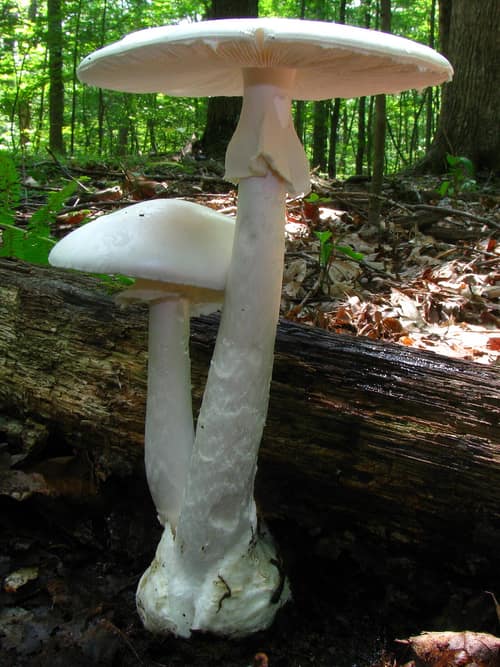
Close Relative Dan Molter (shroomydan) / CC BY-SA 3.0 · cc-by-sa
Help improve the field guideSomething wrong?
Checking your Fauna account…Report a name, category, or profile issue for review.