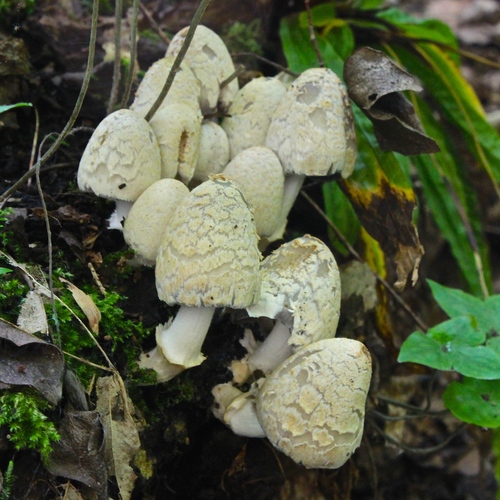
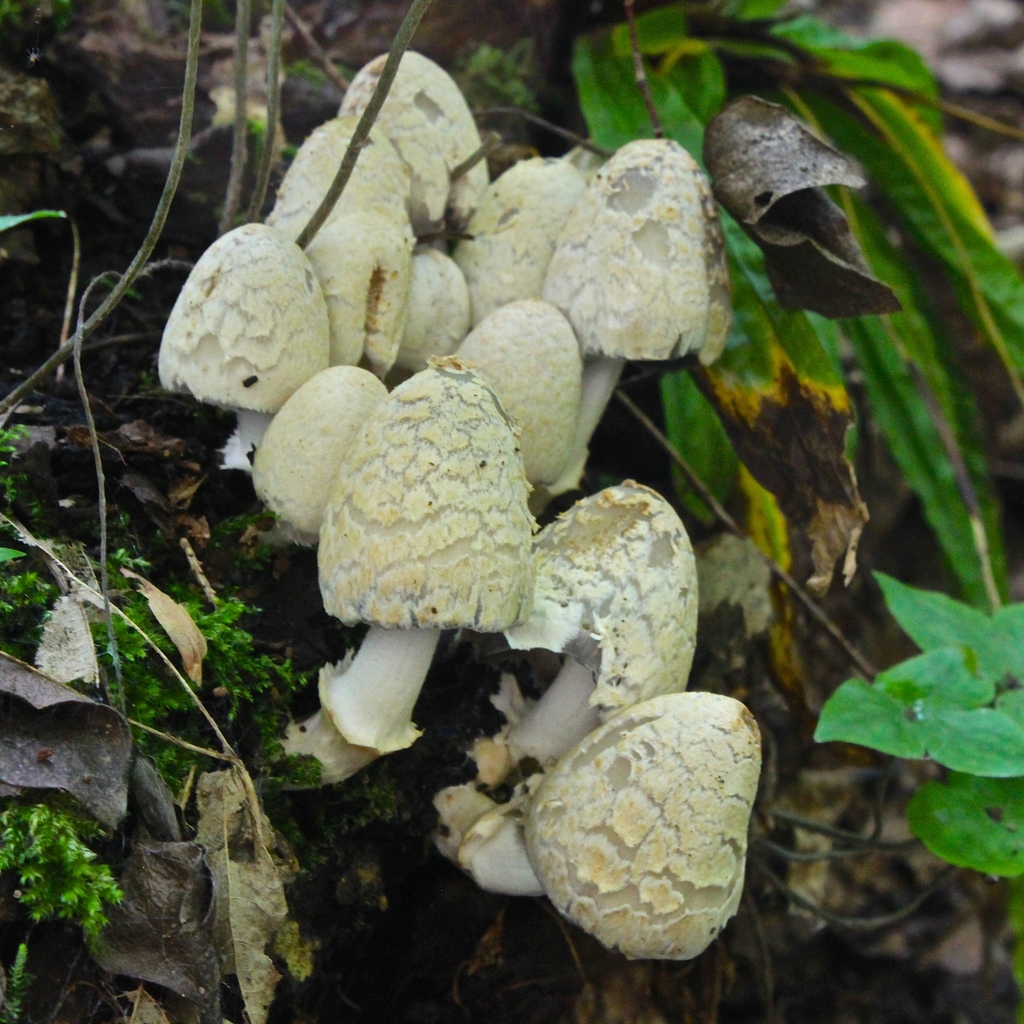
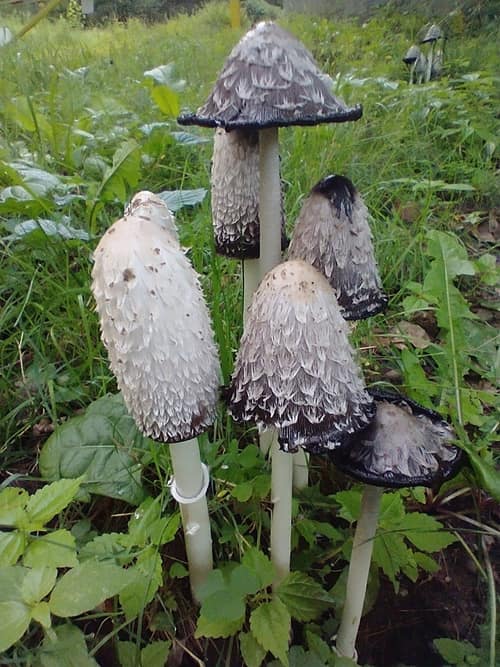
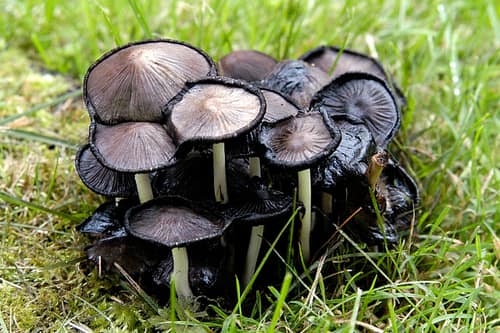
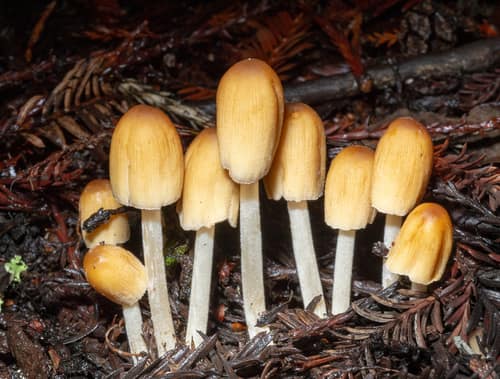
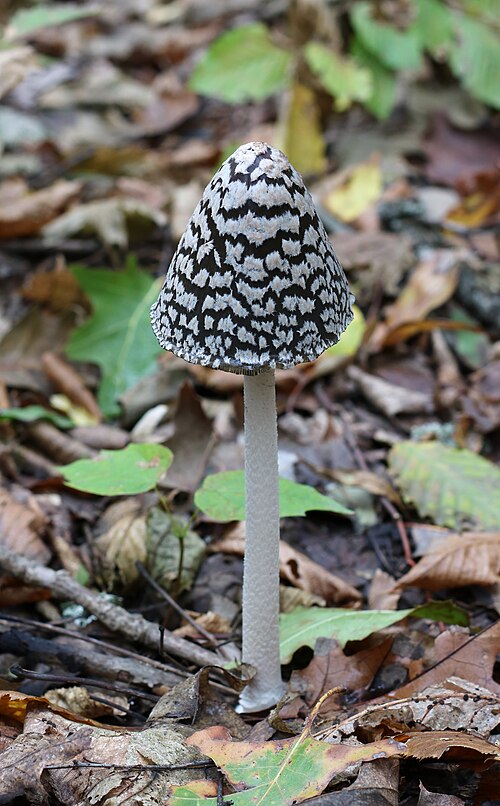
Scaly ink caps emerge in dense clusters on decaying hardwood, leaf litter, and buried wood throughout spring and summer. Young caps are covered in felt-like, woolly scales that fragment into distinct patches as the cap expands and darkens. As the mushroom matures, auto-digestion liquefies the gills into a thick, black, spore-laden ink that drips onto the surrounding substrate.
Life spanIndividual mushrooms last 1–3 days before deliquescing
Classification
OrderAgaricales
FamilyPsathyrellaceae
GenusCoprinopsis
SpeciesCoprinopsis variegata
Range & activity
Range data is not available yet.
Safe observation
Interaction riskHigh
Low
Moderate
High
Very high
Why interaction risk is high
Causes stomach distress; many wild mushrooms have toxic look-alikes, so never eat wild fungi based on app ID.
Why it is dangerous
Contains toxins that trigger significant gastrointestinal illness, including nausea, vomiting, and abdominal cramps, especially when combined with alcohol.
How to recognize a risky encounter
Look for felt-like yellowish or brownish scale patches on pale grayish caps that rapidly liquefy into dark ink.
What to do
Avoid picking or touching specimens unnecessarily, and wash hands after handling wild mushrooms.
Responsible observation
Observation: Check back after a few hours to watch the cap liquefy into black ink.
Photography: Capture the fibrous scaly cap patches on young fresh specimens before auto-digestion begins.
Identification: Inspect the substrate to confirm it is growing directly from decaying hardwood or buried wood.