
Species
Red Raspberry Slime Mold
Tubifera ferruginosaAlso known as Raspberry Slime Mold, Red Raspberry Slime
Red raspberry slime mold begins life as a mobile, single-celled plasmodium creeping silently over decaying wood to engulf bacteria and fungal spores. When ready to reproduce, it congregates into eye-catching clusters of tightly packed, cylindrical sporangia that resemble miniature raspberries. Over several days, the brilliant coral-pink or crimson globes mature, turning dull purplish-brown before releasing powdery brown spores on the wind.
ColorfulWoodlandDecomposer
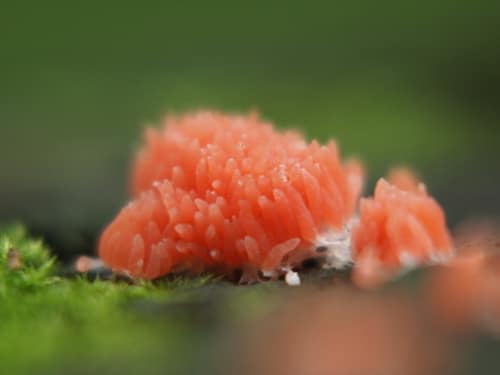
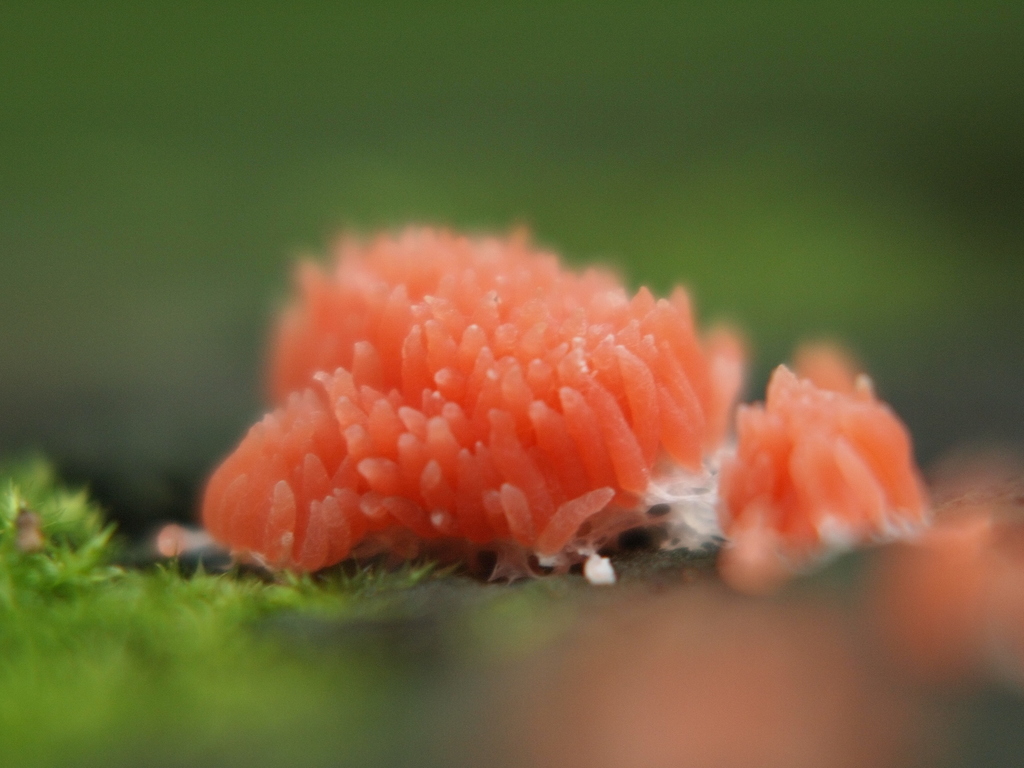
—observations
—countries
—peak records
Not EvaluatedConservation statusIUCN Red List categoriesLCNTVUENCREWEXNot Evaluated — not placed on the risk ladderRed List categories, explained →
Diet & preyBacteria, Fungal spores, Microscopic organic debris
Predators
- Slime mold beetles
- Slugs
- Snails
ThreatsSevere forest fires, logging, clear-cutting of old-growth coarse woody debris
HabitatsTemperate forests, damp woodlands, decaying conifer and hardwood logs
Life spanDays to weeks as a fruiting body; months in plasmodial or spore states
Classification
- FamilyTubiferaceae
- SpeciesTubifera ferruginosa
Range data is not available yet.
Interaction riskLow
- Low
- Moderate
- High
- Very high
- Why interaction risk is low
- Safe to observe at a normal distance.
Responsible observation
- Look on damp wood: Search shady, rotting logs and decaying stumps after humid summer rains.
- Observe color shifts: Revisit colonies over 48 hours to watch them transform from vivid pink to dull brown.
- Use a hand lens: Magnification reveals the fine, tightly bundled hexagonal tubes that form the cluster.
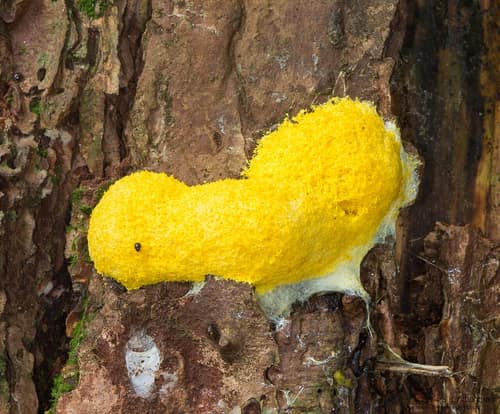
Ecological Neighbor Norbert Nagel / CC BY-SA 3.0 · cc-by-sa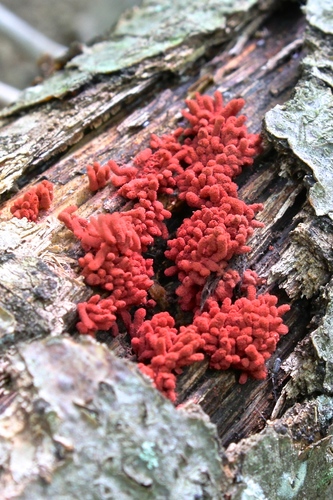
Ecological Neighbor (c) Fluff Berger, some rights reserved (CC BY-SA), uploaded by Fluff Berger · cc-by-sa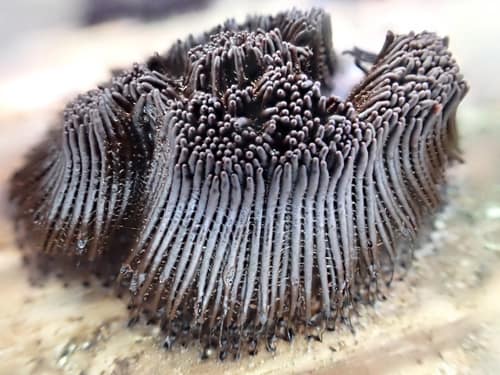
Ecological Neighbor (c) Johan Adler, some rights reserved (CC BY), uploaded by Johan Adler · cc-by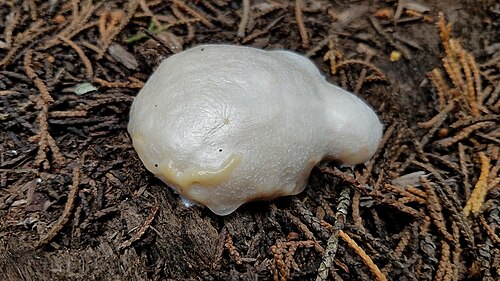
Close Relative Alan Rockefeller / CC BY-SA 4.0 · cc-by-sa
Help improve the field guideSomething wrong?
Checking your Fauna account…Report a name, category, or profile issue for review.