
Species
Chaos carolinense
Chaos carolinenseAlso known as Giant Amoeba, Carolina Amoeba
Chaos carolinense is a colossal freshwater amoeba that can reach up to five millimeters in length, making it distinctly visible to the naked human eye as an off-white speck gliding over benthic detritus. It moves through cytoplasmic streaming by extending broad, lobe-like pseudopodia and can harbor thousands of individual nuclei within its single-celled body. To hunt, it envelops unsuspecting ciliates, rotifers, and smaller protozoa through phagocytosis, sealing them into digestive vacuoles.
FreshwaterMicroscopicPredatory
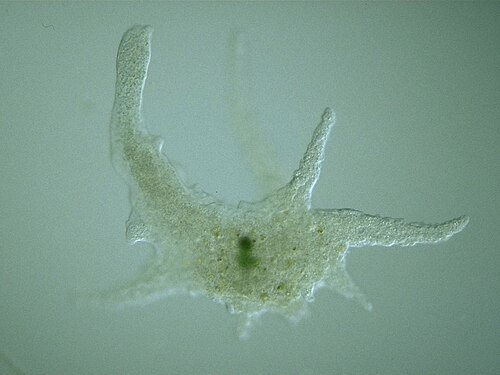
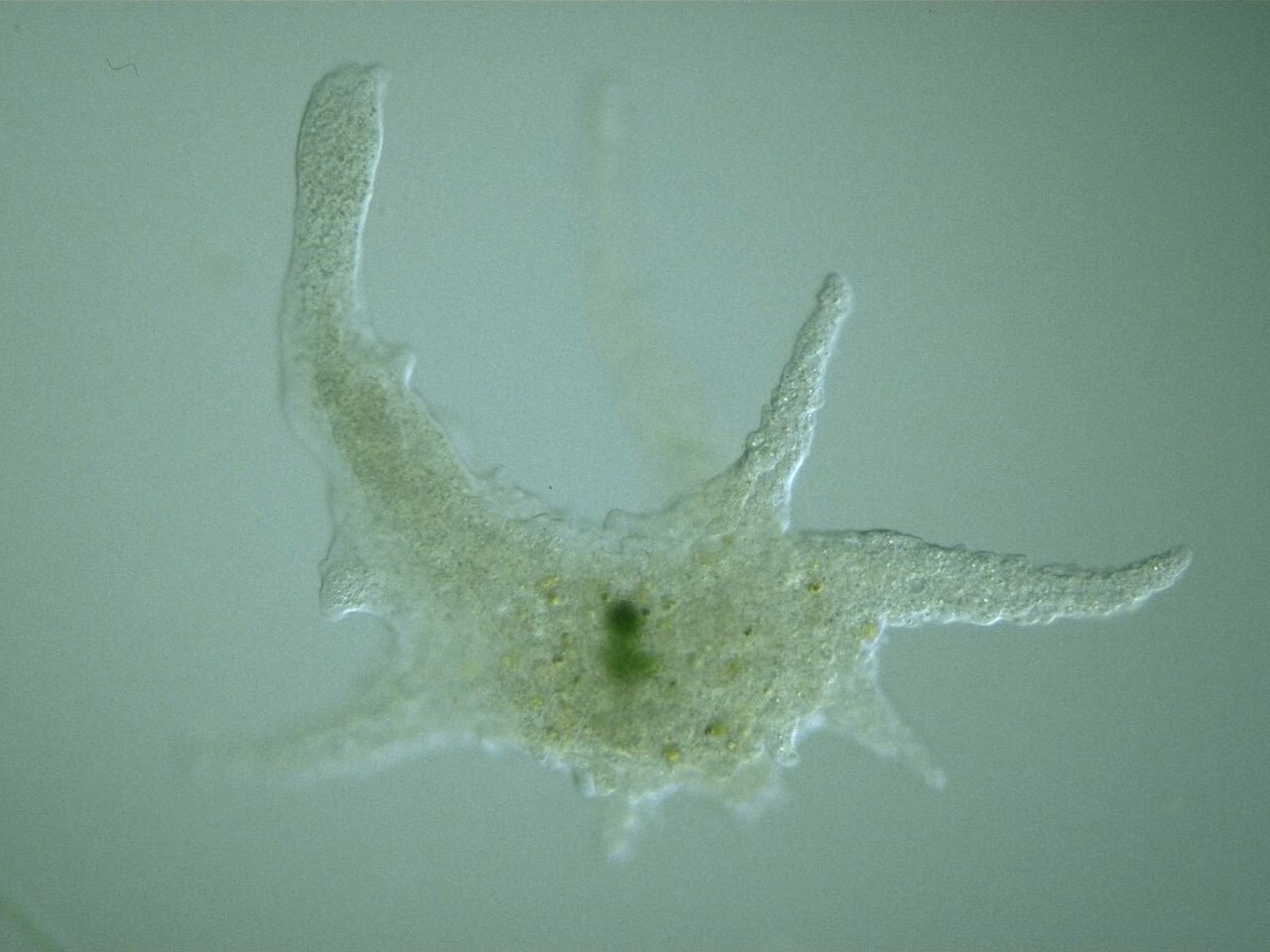
—observations
—countries
—peak records
Not EvaluatedConservation statusIUCN Red List categoriesLCNTVUENCREWEXNot Evaluated — not placed on the risk ladderRed List categories, explained →
Diet & preyParamecium caudatum, Freshwater rotifers, Flagellated protozoans
Predators
- Freshwater copepods
- Small aquatic insect larvae
- Turbellarian flatworms
ThreatsAquatic pollution, loss of wetland habitats, and chemical acidification
HabitatsFreshwater ponds, slow streams, and marsh sediment with abundant decaying organic matter
Life spanSeveral days to weeks between cell division cycles
Classification
- FamilyAmoebidae
- SpeciesChaos carolinense
Range data is not available yet.
Interaction riskLow
- Low
- Moderate
- High
- Very high
- Why interaction risk is low
- Harmless single-celled organism; safe to observe under a microscope or hand lens.
Responsible observation
- Sampling: Collect detritus and water from shaded pond edges where decaying plant matter accumulates.
- Microscopy: Use oblique lighting or darkfield illumination to view cytoplasmic granules and flowing pseudopodia.
- Culturing: Maintain collected specimens in spring water at room temperature away from direct sunlight.
 Image unavailable
Prey Look-alike Frequent Companion 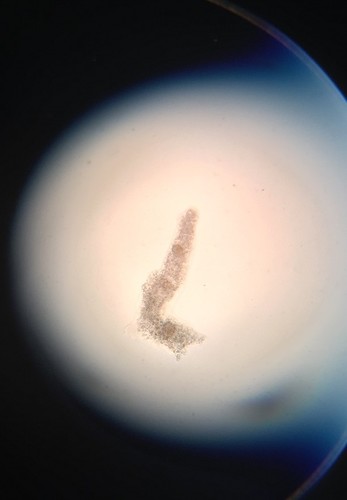
Close Relative (c) Dominic, some rights reserved (CC BY), uploaded by Dominic · cc-by
Help improve the field guideSomething wrong?
Checking your Fauna account…Report a name, category, or profile issue for review.