
Species
Coscinodiscus wailesii
Coscinodiscus wailesiiAlso known as Wailes' Diatom
Coscinodiscus wailesii is an exceptionally large, drum-shaped centric diatom capable of producing extensive mucilage during dense blooms. Floating as solitary cells or in loose aggregations in temperate coastal waters, it uses abundant golden-brown plastids to photosynthesize efficiently in surface currents. Dense populations can coat fishing nets and benthos in thick sheets of slime, causing significant disruption to coastal fisheries and seabed ecosystems where it has been introduced.
MarineMicroscopicPlanktonic
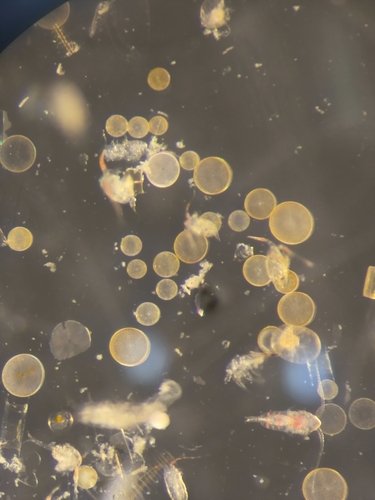
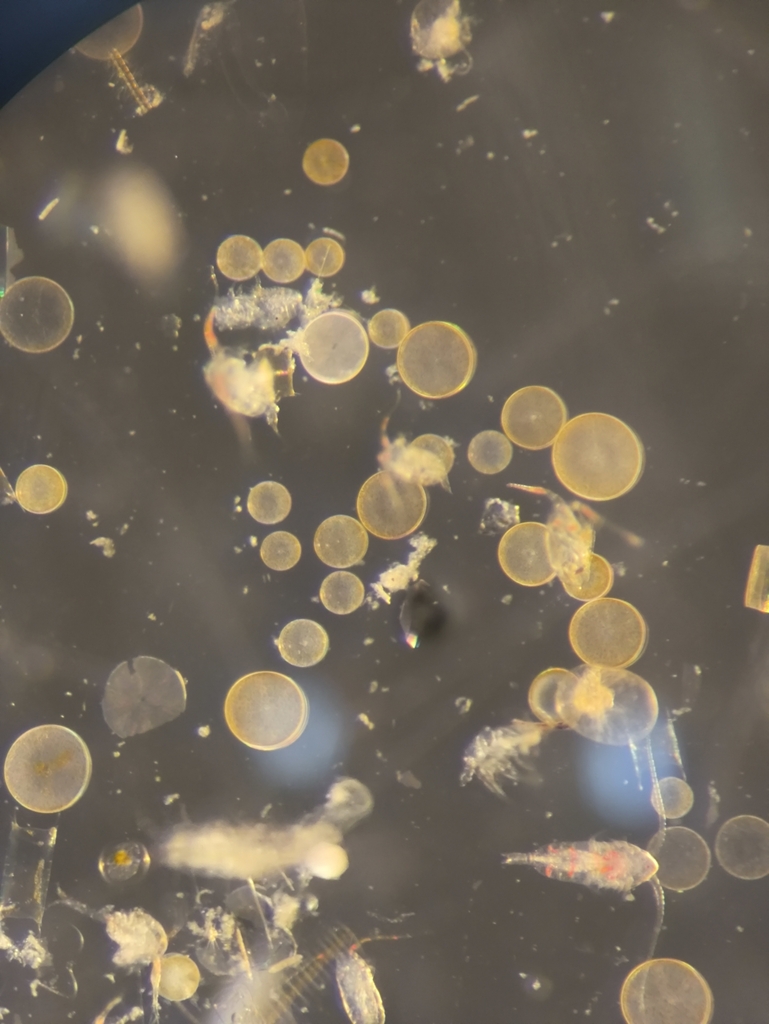
—observations
—countries
—peak records
Not EvaluatedConservation statusIUCN Red List categoriesLCNTVUENCREWEXNot Evaluated — not placed on the risk ladderRed List categories, explained →
Diet & preyPhotosynthetic autotroph (utilizes sunlight, carbon dioxide, silica, and dissolved nitrates and phosphates)
Predators
- Calanoid copepods
- Salps
- Ciliates
ThreatsOcean acidification, warming sea surface temperatures, and nutrient depletion
HabitatsTemperate coastal waters, bays, estuaries, and neritic marine plankton
Life spanDays to weeks per vegetative cell generation (silica frustules persist indefinitely)
Classification
- FamilyCoscinodiscaceae
- SpeciesCoscinodiscus wailesii
Range data is not available yet.
Interaction riskLow
- Low
- Moderate
- High
- Very high
- Why interaction risk is low
- Safe to observe at a normal distance.
Responsible observation
- Sampling: Collect surface seawater using a fine plankton net with mesh size of 60 to 100 micrometers.
- Microscopy: Mount on a wet slide and observe under low-power brightfield or darkfield illumination to view the puncta.
- Naked Eye: Look closely at dense sample vials in strong light, where cells appear as tiny shimmering translucent disks.
 Image unavailable
Predator Close Relative Close Relative
Help improve the field guideSomething wrong?
Checking your Fauna account…Report a name, category, or profile issue for review.