
Plant · GBIF taxon 5421391
Yellow Pitcher Plant
Sarracenia flavaAlso known as Trumpet Pitcher Plant, Yellow Pitcherplant, Yellow Trumpets, Trumpet Leaf
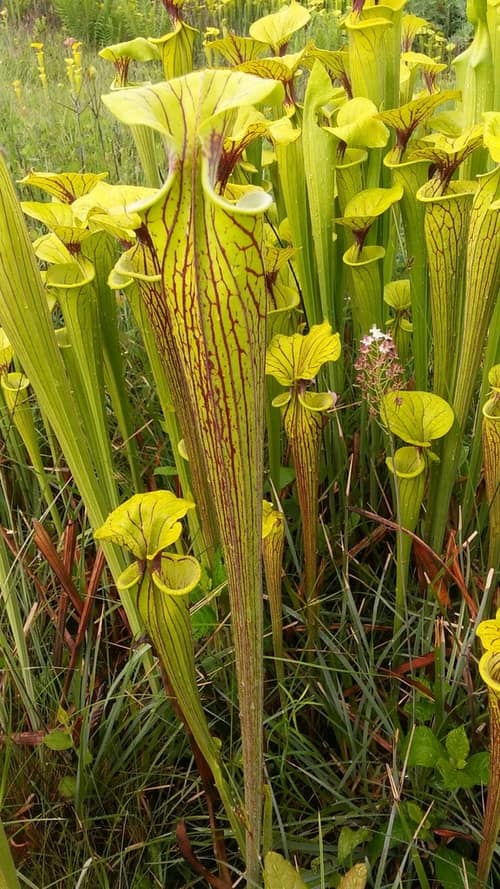
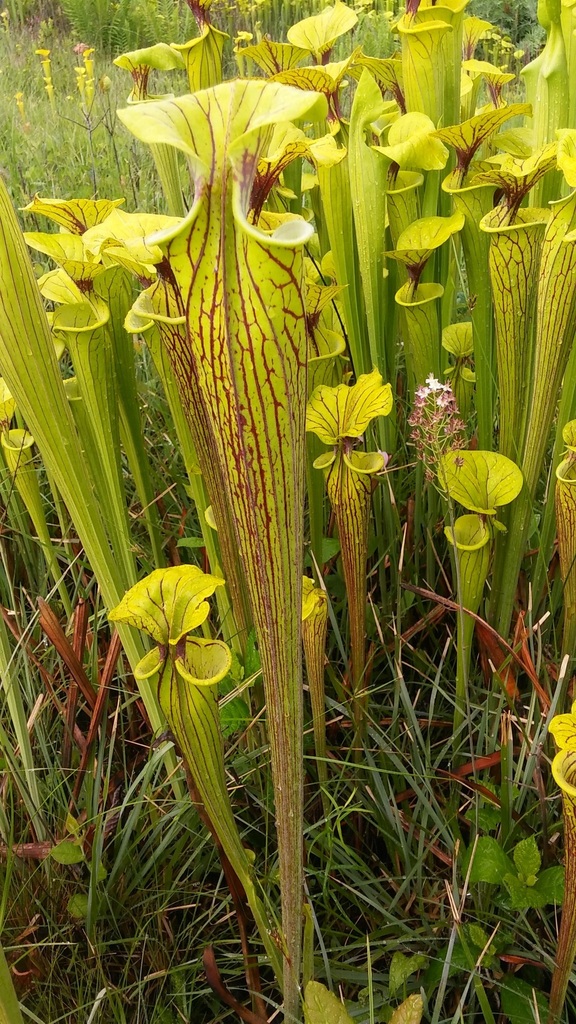
Tall, chartreuse pitchers rise dramatically from wet pine savannas each spring, secreting a sweet nectar laced with the paralyzing alkaloid coniine along their slippery rims. Unwary flies and wasps feast on the intoxicating droplets before tumbling down the slick interior tube, where downward-pointing hairs prevent escape and digestive fluid dissolves soft tissue. These specialized perennial leaves allow the plant to thrive in chronically nitrogen-poor, waterlogged soils maintained by frequent natural ground fires.
CarnivorousBog PlantPerennial
 1 / 7
1 / 7—observations
—countries
—peak records
Least ConcernConservation statusIUCN Red List categoriesLCNTVUENCREWEXLeast ConcernRed List categories, explained →
Diet & prey
- Flies
- Wasps
- Ants
Predators
- Pitcher Plant Mining Moth caterpillars
- Feral pig
- White-tailed deer
ThreatsWetland drainage, development, fire suppression, and illegal poaching
HabitatsWet pine savannas, seepage bogs, and coastal plain pocosins
Life span20–30+ years
Size / weightNot available
Classification
- OrderEricales
- FamilySarraceniaceae
- GenusSarracenia
- SpeciesSarracenia flava
Range data is not available yet.
Interaction riskLow
- Low
- Moderate
- High
- Very high
- Why interaction risk is low
- Safe to observe at a normal distance.
- What to notice
- Recognized by upright, fluted yellow-green trumpet tubes topped with an overhanging hood, growing in clusters in open bogs.
- Support conservation
- Observe strictly from boardwalks without stepping into saturated sphagnum, and never remove wild plants or seed heads.
Responsible observation
- Viewing Etiquette: Stick to designated boardwalks, as boggy soils compress easily and damage delicate root systems.
- Seasonal Timing: Visit in early spring to see the large, pendant yellow flowers emerge just before the new pitchers open.
- Ethical Observation: Never collect wild specimens; buy only nursery-propagated stock to protect vulnerable wild populations.
 Image unavailable
Specialist Herbivore 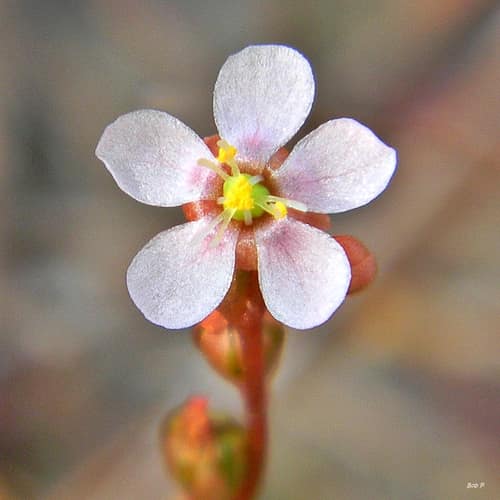
Frequent Companion (c) Bob Peterson, some rights reserved (CC BY) · cc-by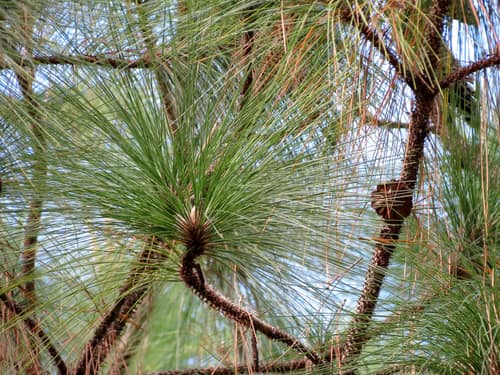
Canopy Companion (c) Katja Schulz, some rights reserved (CC BY) · cc-by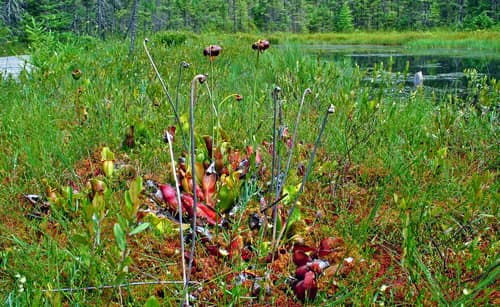
Close Relative (c) Aaron Carlson, some rights reserved (CC BY) · cc-by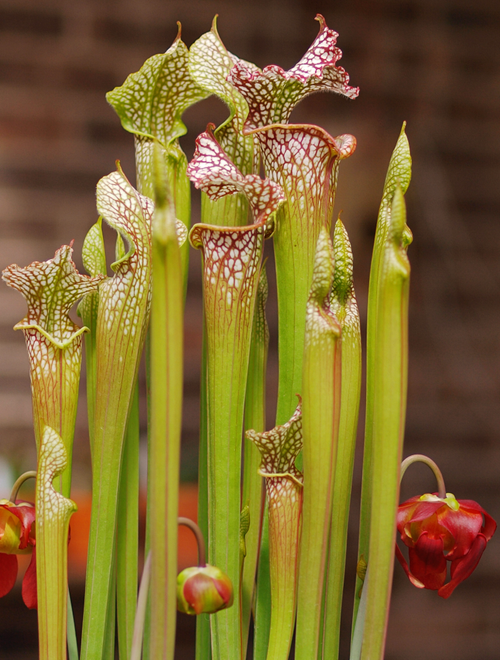
Close Relative (c) Xscd, some rights reserved (CC BY-SA) · cc-by-sa
Help improve the field guideSomething wrong?
Checking your Fauna account…Report a name, category, or profile issue for review.