
Plant
White Pitcher Plant
Sarracenia leucophyllaAlso known as Crimson Pitcherplant, Purple Trumpet-Leaf
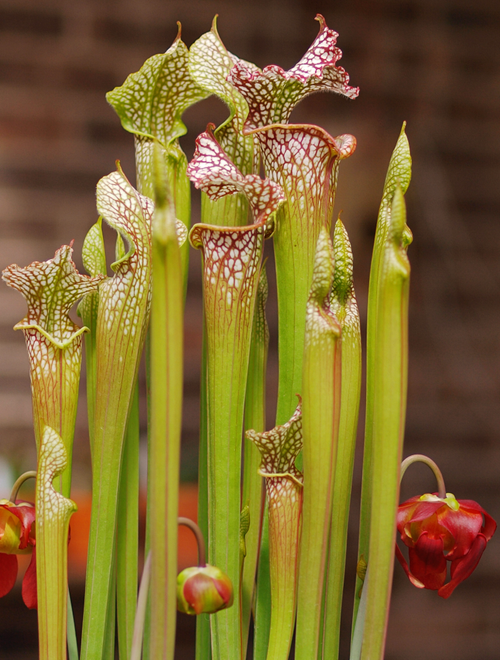
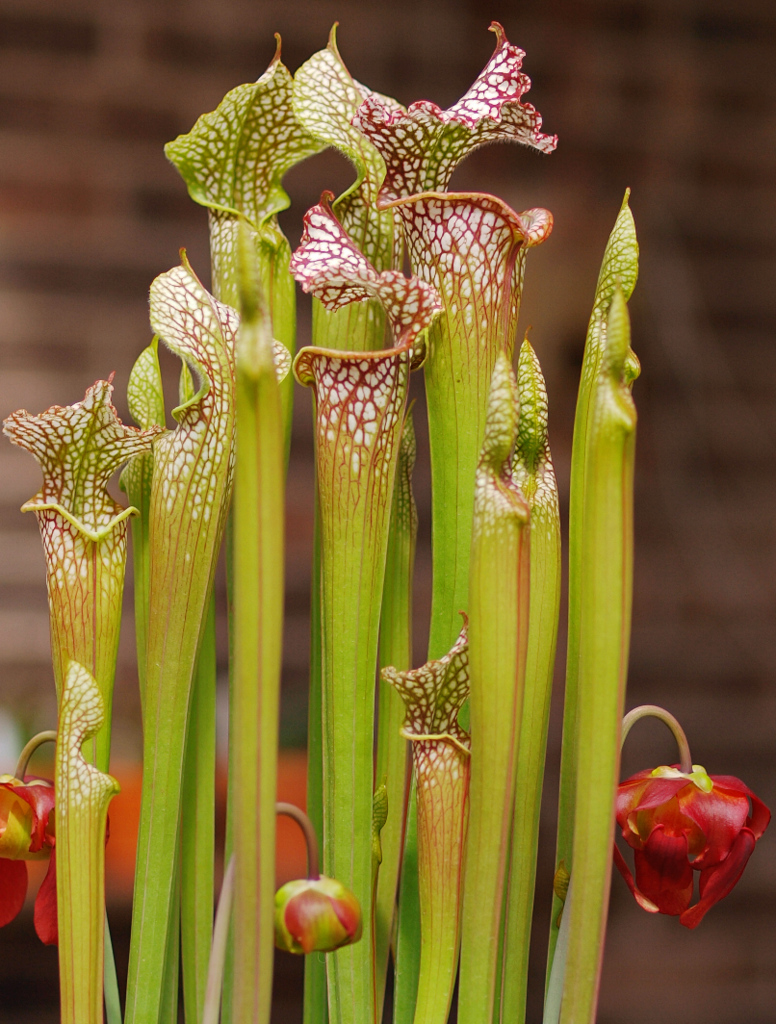
White pitcher plants lure flying insects into slick tubes using brilliant white patches that mimic open sky overhead. Downward-pointing hairs inside the pitcher force prey toward a pool of digestive fluid at the bottom, where nutrients are extracted to fuel growth in nutrient-poor bogs. These striking carnivorous plants rely on regular periodic fires to clear surrounding brush and maintain sunny wetland conditions.
CarnivorousPerennialBog Native
—observations
—countries
—peak records
VulnerableConservation statusIUCN Red List categoriesLCNTVUENCREWEXVulnerableRed List categories, explained →
Diet & preyWasp, Fly, Ant
Predators
- Pitcher Plant Mining Moth Larvae
ThreatsPoaching, wetland drainage, fire suppression
HabitatsLongleaf pine savannas, acidic bogs, wet prairies
Life span20+ years
Classification
- OrderEricales
- FamilySarraceniaceae
- GenusSarracenia
- SpeciesSarracenia leucophylla
Range data is not available yet.
Interaction riskLow
- Low
- Moderate
- High
- Very high
- Why interaction risk is low
- Safe to observe at a normal distance.
- What to notice
- Recognized by tall, upright pitchers featuring pure white upper tops netted with fine crimson or green veins.
- Support conservation
- Never collect wild plants or reveal exact micro-locations of wild stands; purchase only artificially propagated specimens.
Responsible observation
- Observe Pitchers: Look closely at the white-topped lids that mimic light patches to confuse flying insects.
- Protect Habitat: Stick to boardwalks in delicate bog ecosystems to avoid trampling sensitive roots.
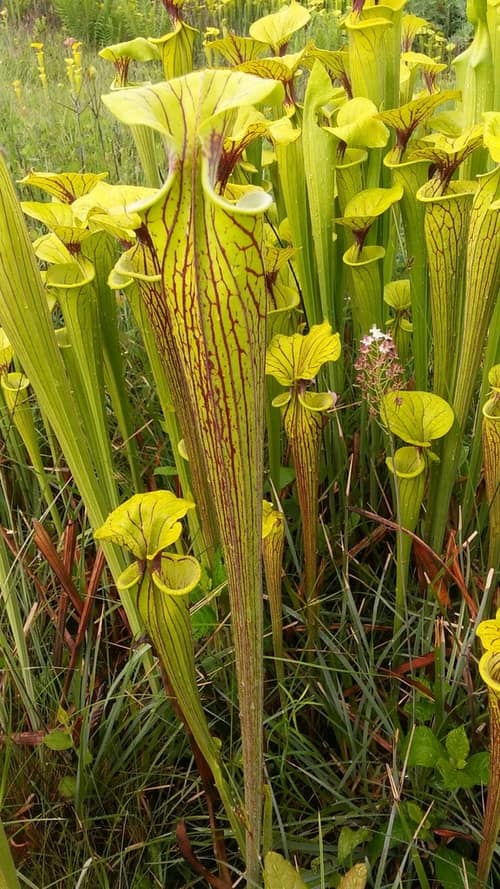
Close Relative (c) Alpha Wolf, some rights reserved (CC BY), uploaded by Alpha Wolf · cc-by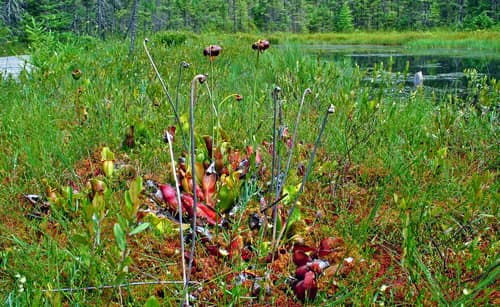
Close Relative (c) Aaron Carlson, some rights reserved (CC BY) · cc-by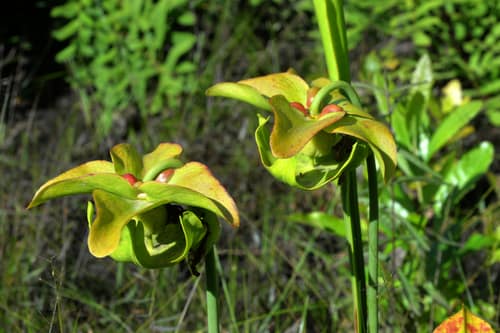
Close Relative (c) William L. Farr, some rights reserved (CC BY-SA) · cc-by-sa
Help improve the field guideSomething wrong?
Checking your Fauna account…Report a name, category, or profile issue for review.