Also known as Albany Red-flowering Gum, Scarlet Gum
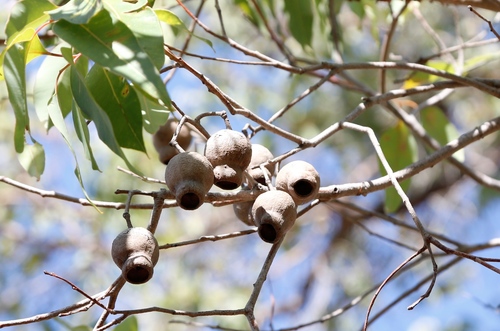
Masses of incandescent scarlet, vermilion, or pink blossoms blanket the dense crown throughout summer, drawing hordes of nectar-feeding lorikeets and honeyeaters. Following the floral display, heavily woody urn-shaped capsules develop, offering nutrient-rich seeds to native parrots. Although extensively cultivated along streets and gardens worldwide, wild stands cling to a remarkably tiny coastal pocket in southwestern Australia.
ThreatsCanker disease, land clearing, and altered fire frequencies
HabitatsCoastal sandy woodlands, low open forest, and cultivated urban landscapes
Life span50–100 years
Classification
OrderMyrtales
FamilyMyrtaceae
GenusCorymbia
SpeciesCorymbia ficifolia
Range & activity
Range data is not available yet.
Safe observation
Interaction riskHigh
Low
Moderate
High
Very high
Why interaction risk is high
Foliage and oils are toxic to dogs and cats if ingested; safe to observe at normal distance.
Why it is dangerous
Leaves and bark contain concentrated essential oils, terpenes, and cyanogenic compounds that induce gastrointestinal irritation, vomiting, and lethargy in domestic pets.
How to recognize a risky encounter
Recognized by its fibrous grey-brown bark, leathery ovate leaves, and massive clusters of brightly colored stamens.
What to do
Prevent dogs and cats from chewing on fallen branches, foliage, or woody seed capsules.
What to notice
Native stands occur strictly within sandy coastal heath and low forest reserves in extreme southwestern Western Australia.
Support conservation
Scrub and sanitize footwear before entering wild reserves to avoid introducing or spreading fungal pathogens.
Responsible observation
Peak Viewing: Look for explosive flowering displays across the upper canopy between December and February.
Bird Watching: Scan the blossoms in early morning when nectar-feeding birds actively congregate to feed.
Nut Identification: Examine the fallen woody capsules beneath the tree to confirm the urn-like shape.

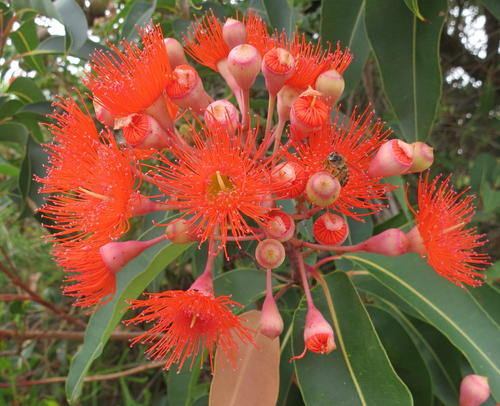
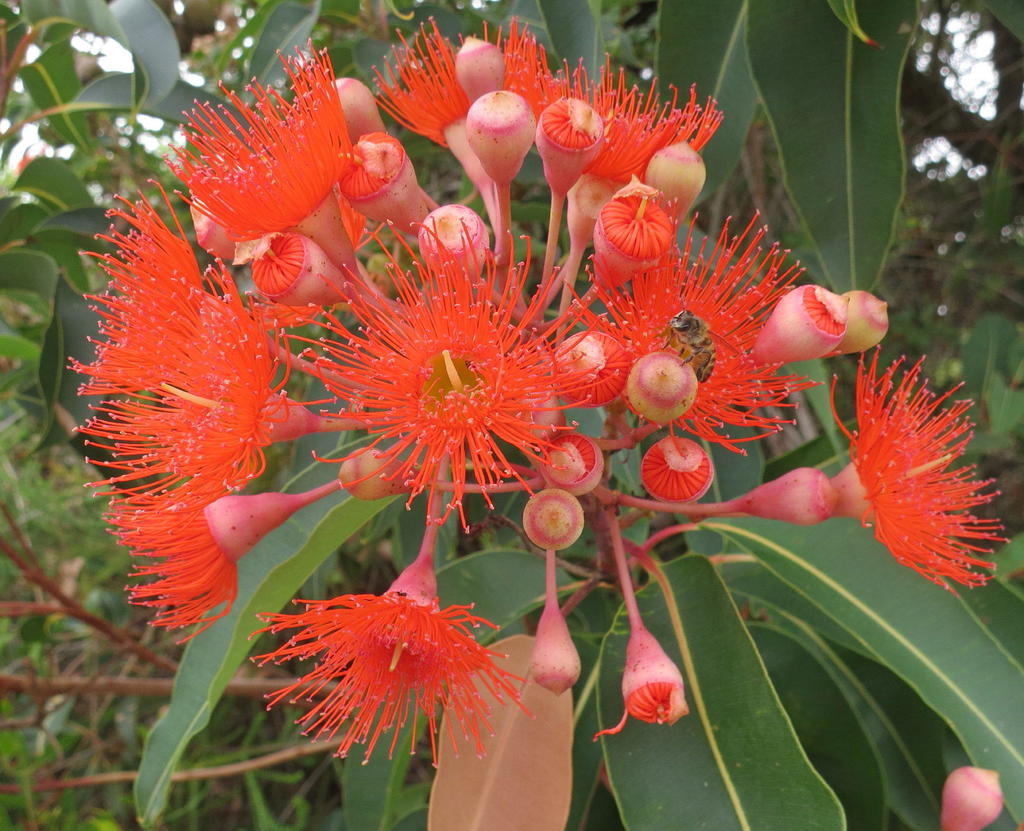
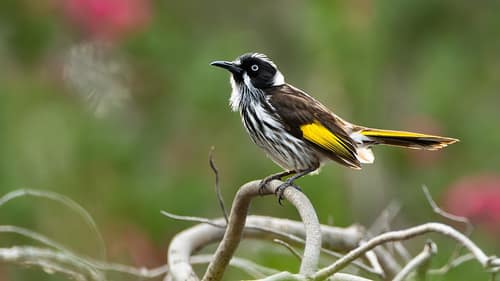
 Image unavailable