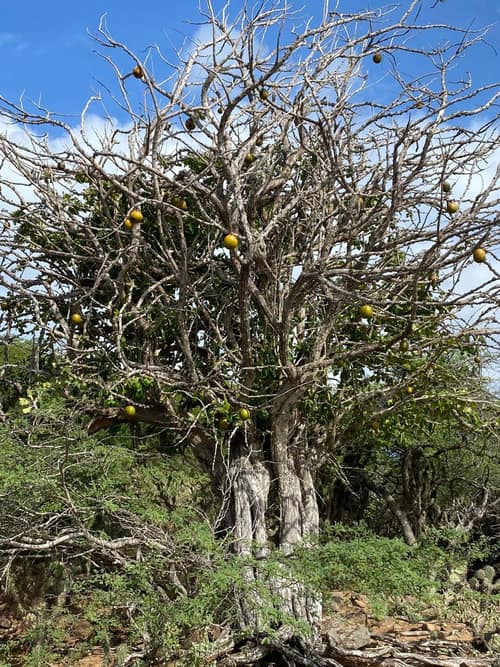
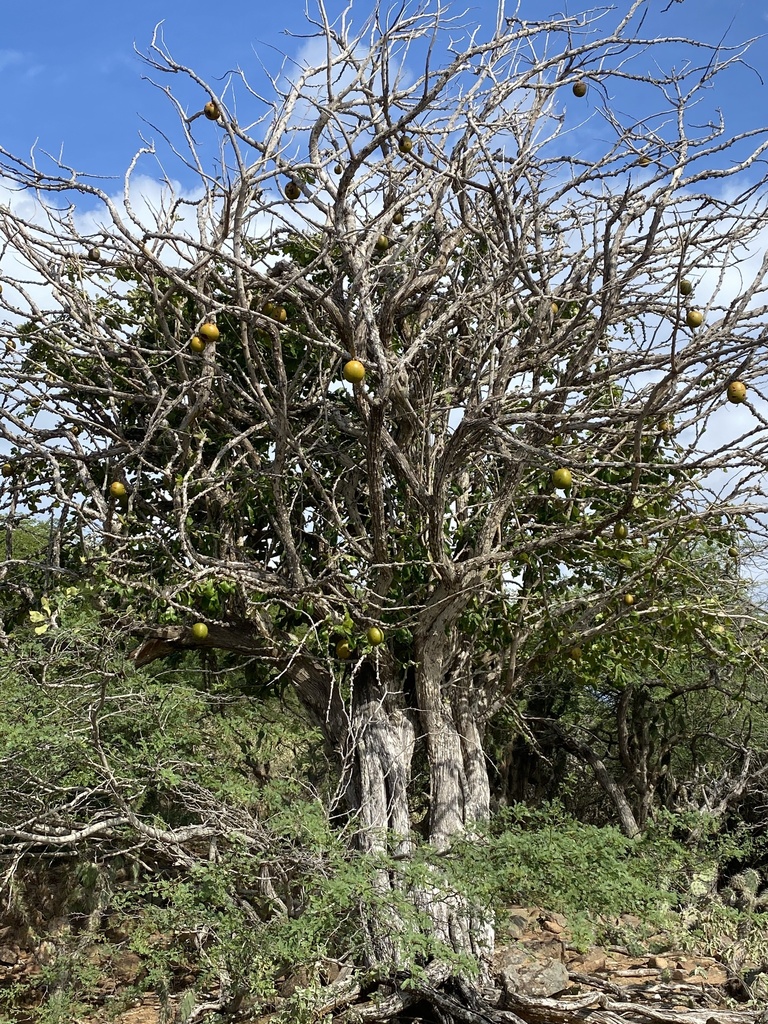
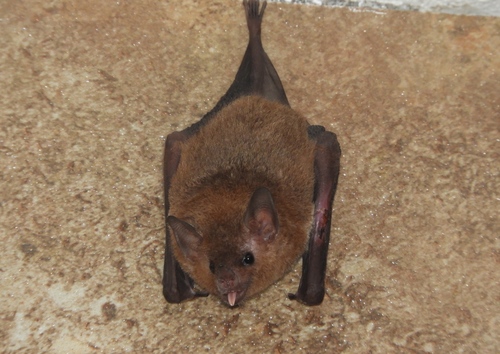
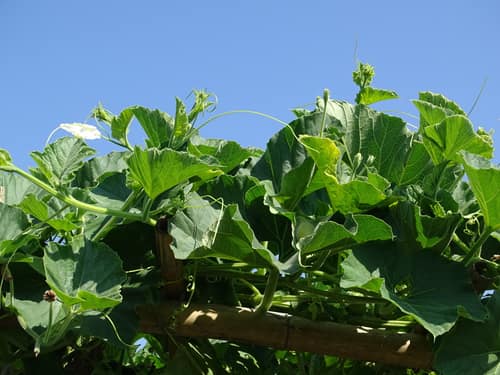
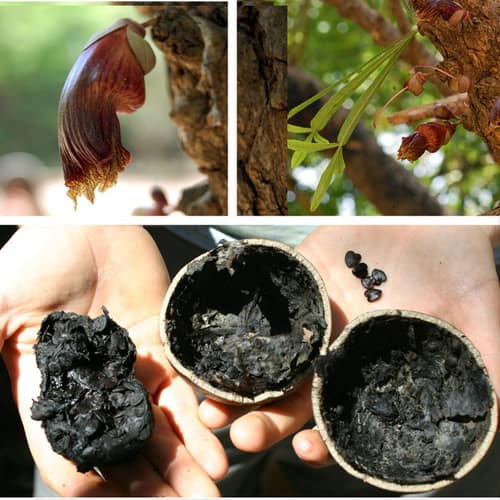
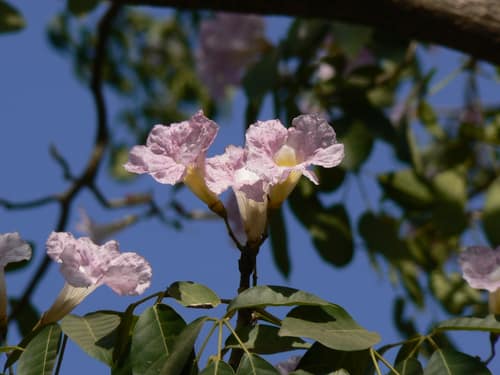
Calabash trees exhibit cauliflory, producing greenish-white, musky-scented blossoms that sprout directly from the woody bark of the trunk and older limbs. Nocturnal nectar-feeding bats serve as their primary pollinators, drawn to the foul, fermented aroma that opens after dusk. Following fertilization, the tree yields massive, spherical, gourd-like fruits with durable woody shells that historically provided waterproof vessels, musical instruments, and traditional carvings across the Neotropics.
Raw fruit pulp contains toxic purgatives; wild fruits have toxic look-alikes, never eat based on app identification alone.
Why it is dangerous
The raw fruit pulp contains iridoid glycosides and cyanogenic compounds that cause violent gastrointestinal irritation, vomiting, and severe diarrhea in humans and livestock.
How to recognize a risky encounter
Look for smooth, massive green to yellowish spherical fruits up to 30 cm across hanging directly from sturdy woody limbs.
What to do
Do not taste or ingest the bitter raw pulp; handle dried hollow shells safely for crafts once fully cured.
Responsible observation
Nighttime viewing: Visit flowering specimens after sunset with a red headlamp to observe bat pollinators at the cauliflorous blossoms.
Shell inspection: Tap dried fallen gourds to test the extraordinary hardness of their woody outer rind.