
Plant · GBIF taxon 5414566
Giant Milkweed
Calotropis proceraAlso known as Apple of Sodom
Giant milkweed is a drought-tolerant shrub with broad velvety gray-green leaves and clusters of waxy white-and-purple crown-shaped flowers. Broken tissues release persistent milky latex, while inflated pods later split to release windborne silky seeds.
toxic latex shrubdesert milkweedsilky seeds
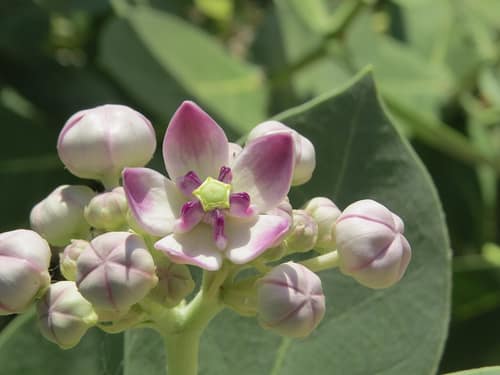
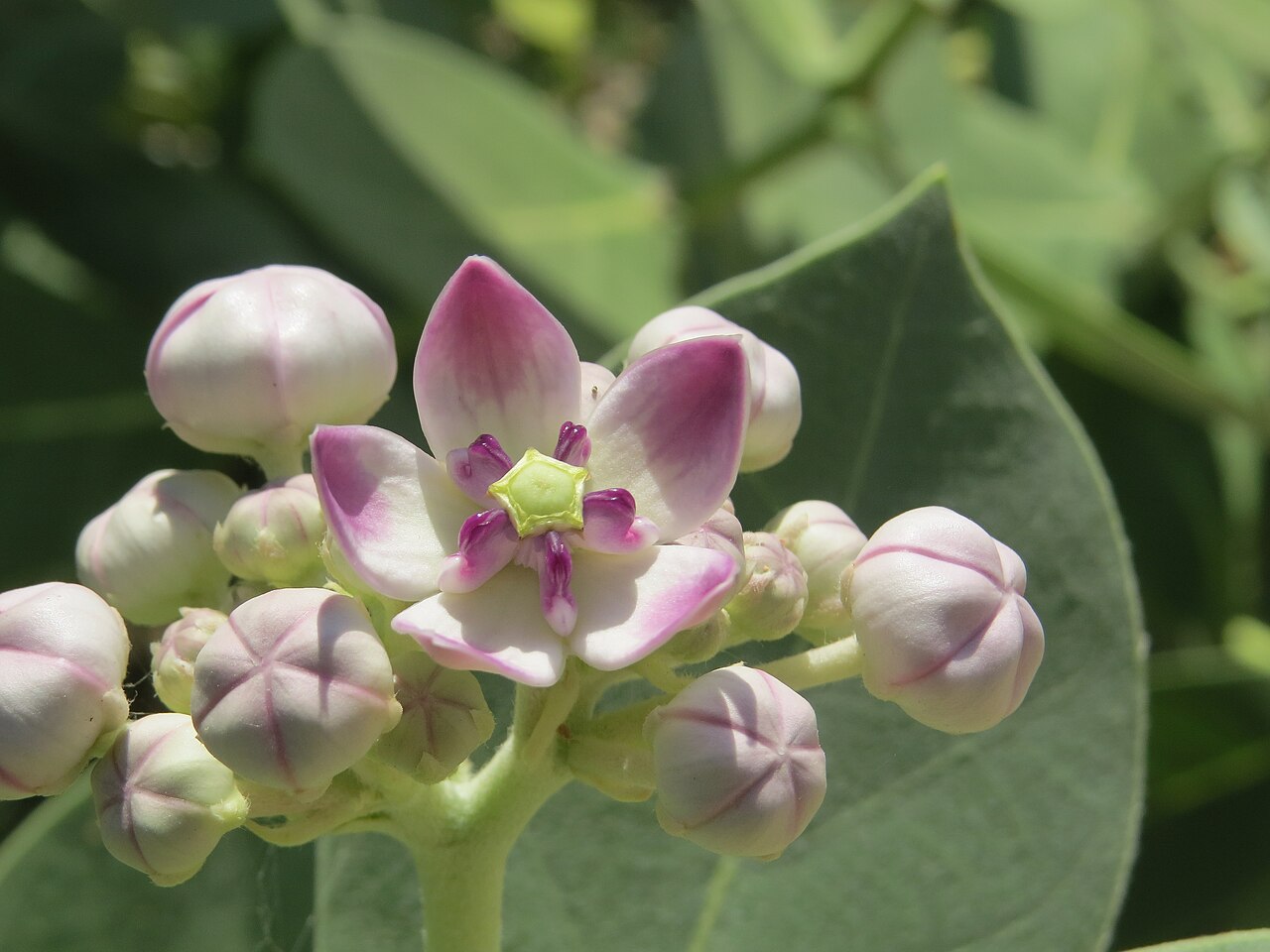
—observations
—countries
—peak records
Least ConcernConservation statusIUCN Red List categoriesLCNTVUENCREWEXLeast ConcernRed List categories, explained →
Diet & prey
- Photosynthesis; deep roots obtain water and minerals from arid and disturbed soils
Predators
- milkweed caterpillars
- aphids
- browsing livestock
ThreatsLand clearing, intensive control where invasive, severe frost, fire, and root disturbance
HabitatsDesert scrub, dry grassland, roadsides, rangeland, river flats, dunes, and disturbed ground
Life spanA woody perennial capable of persisting for many years
Size / weightNot available
Classification
- FamilyApocynaceae
- SpeciesCalotropis procera
Range data is not available yet.
Interaction riskHigh
- Low
- Moderate
- High
- Very high
- Why interaction risk is high
- Milky latex irritates skin and eyes, and all plant material can be toxic if swallowed.
- Why it is dangerous
- Cardiac glycosides and caustic latex can cause poisoning, skin irritation, and serious eye injury.
- How to recognize a risky encounter
- A large gray-green shrub with velvety opposite leaves, waxy crown-shaped flowers, and milky sap.
- What to do
- Do not touch broken tissue or ingest any part; keep sap from eyes and wash exposed skin promptly.
Responsible observation
- Latex: Observe intact plants and never break leaves, stems, or pods.
- Flowers: Look for waxy crown-shaped blooms with purple tips.
Help improve the field guideSomething wrong?
Checking your Fauna account…Report a name, category, or profile issue for review.