Also known as Common Holly, English Holly, Christmas Holly, Holly
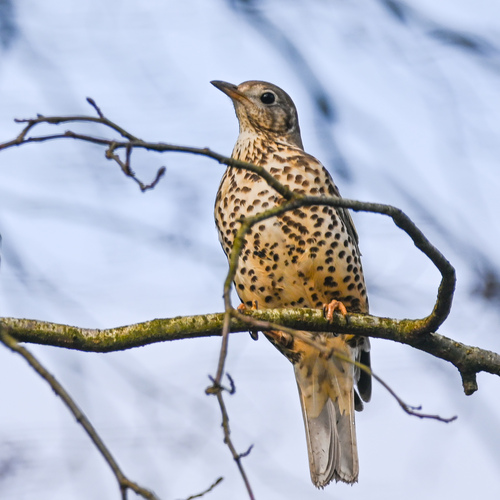
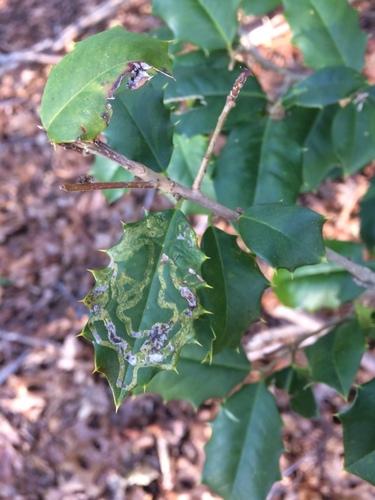
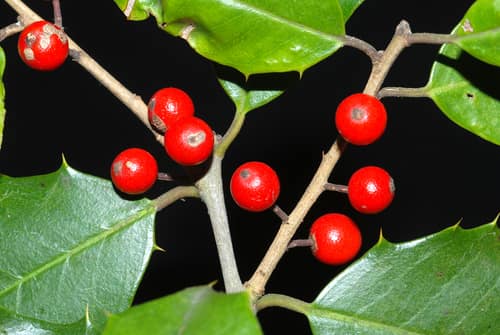
European holly is a hardy evergreen tree famous for its glossy, undulating leaves and vibrant scarlet drupes that persist throughout the depths of winter. Lower branches typically develop fierce spiny margins to deter browsing deer and livestock, while foliage higher up in the canopy often grows completely smooth. As a dioecious species, separate male and female plants are required for the iconic red berries to form, which serve as an essential cold-weather food reserve for foraging thrushes.
ThreatsHolly leaf blight, overgrazing of saplings, and invasive competition in non-native ranges
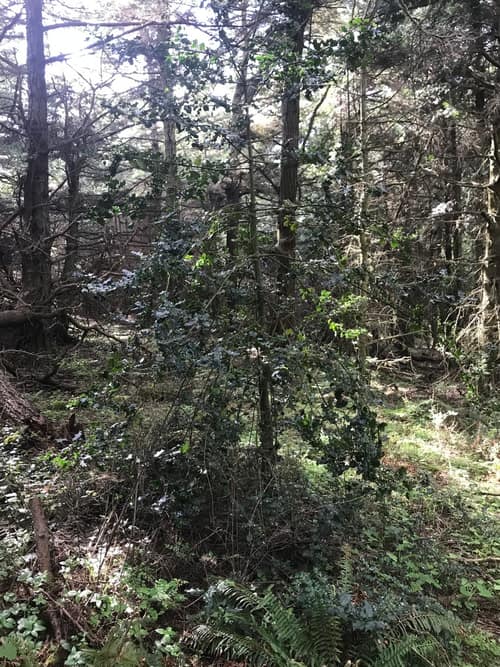
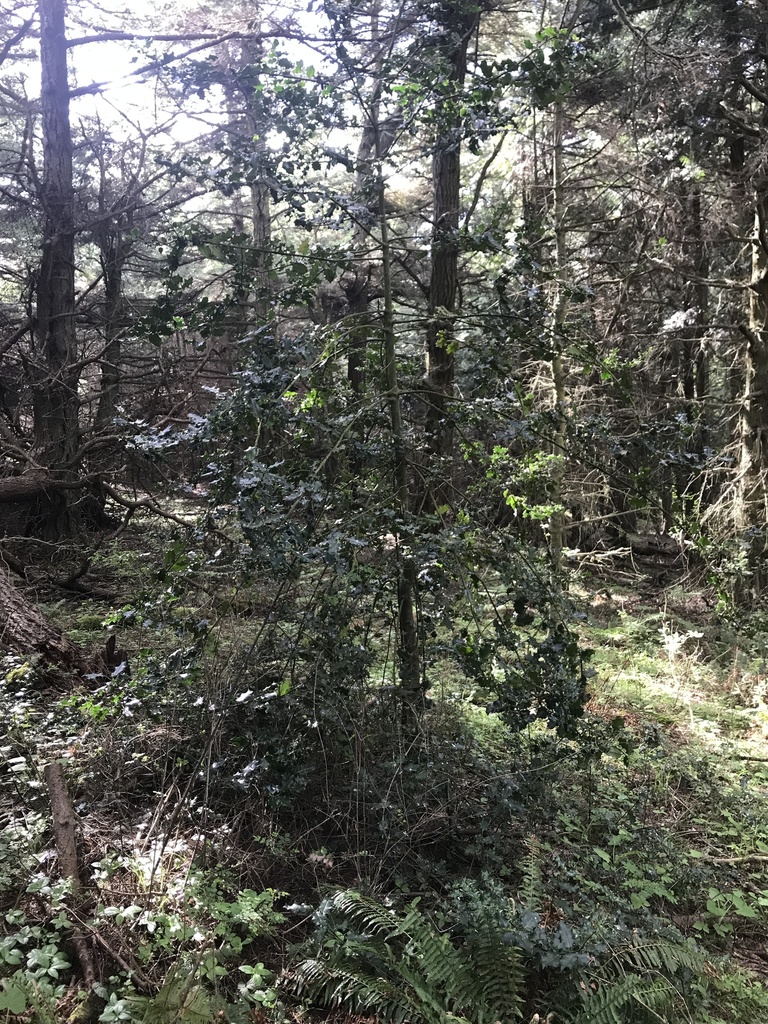
HabitatsDeciduous oak and beech woodlands, hedgerows, scrubland, and rocky forest margins
Life span100–300 years
Classification
OrderAquifoliales
FamilyAquifoliaceae
GenusIlex
SpeciesIlex aquifolium
Range & activity
Range data is not available yet.
Safe observation
Interaction riskHigh
Low
Moderate
High
Very high
Why interaction risk is high
Berries contain toxic saponins, and wild berries have toxic look-alikes; never ingest based on app identification alone.
Why it is dangerous
The bright red berries contain toxic saponins and triterpenes that cause severe vomiting, diarrhea, lethargy, and dehydration if ingested by humans or domestic pets.
How to recognize a risky encounter
Look for glossy, stiff evergreen leaves with sharp wavy spines and dense clusters of bright scarlet, pea-sized drupes along the twigs.
What to do
Admire the foliage and berries on the tree without harvesting for consumption, and keep fallen berries away from small children and pets.
Responsible observation
Pruning Gloves: Wear heavy puncture-resistant gloves when pruning or collecting clippings to avoid scratches from the stiff, spiny foliage.
Winter Foraging Watch: Check berry-laden trees quietly on frosty mornings to observe overwintering thrushes feeding among the boughs.
Pet Safety: Keep decorative cut boughs with berries well out of reach of domestic dogs and cats.