
Plant · GBIF taxon 5402874
Common Boneset
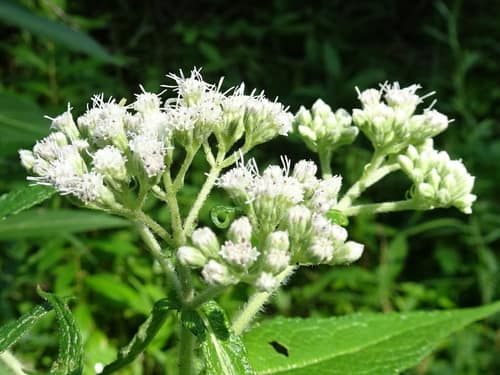
Eupatorium perfoliatumCommon boneset bears flat-topped clusters of fuzzy white flower heads above pairs of long, toothed leaves. Each leaf pair joins around the stem, creating the distinctive appearance of a stem passing through one broad leaf.
Wetland WildflowerLate BloomerPollinator Plant
 1 / 7
1 / 7—observations
—countries
—peak records
Least ConcernConservation statusIUCN Red List categoriesLCNTVUENCREWEXLeast ConcernRed List categories, explained →
Diet & prey
- Photosynthetic; roots draw moisture and nutrients from consistently damp soil
Predators
- Caterpillars
- Beetles
- Browsing mammals
ThreatsWetland drainage, mowing during bloom, herbicide use, and invasive vegetation
HabitatsMarsh edges, wet meadows, ditches, swales, floodplains, and damp thickets
Life spanA perennial herb that returns for multiple growing seasons
Size / weightNot available
Classification
- OrderAsterales
- FamilyAsteraceae
- GenusEupatorium
- SpeciesEupatorium perfoliatum
Range data is not available yet.
Interaction riskHigh
- Low
- Moderate
- High
- Very high
- Why interaction risk is high
- Boneset can cause harmful effects when consumed and should not be used as a wild remedy.
- Why it is dangerous
- Ingesting plant preparations can cause vomiting, diarrhea, and other toxic effects, especially at uncertain wild doses.
- How to recognize a risky encounter
- Look for opposite toothed leaves fused around the stem below broad clusters of small white flower heads.
- What to do
- Do not eat, brew, or self-medicate with collected plants; wash hands after handling crushed material.
Responsible observation
- Identify: Check that opposite leaf bases fully surround the hairy stem.
- Watch: Flower heads draw diverse bees, wasps, butterflies, and flies.
- Leave: Observe in place rather than collecting material for home use.
Help improve the field guideSomething wrong?
Checking your Fauna account…Report a name, category, or profile issue for review.