
Flower
Large-leaved Aster
Eurybia macrophyllaAlso known as Bigleaf Aster, Bigleaf Wood Aster, Largeleaf Aster
Dense colonies of large-leaved aster blanket northern hardwood and mixed forest floors with broad, rough-textured basal foliage. In late summer, rigid flowering stems rise above the leaf carpet, producing flat-topped clusters of pale violet to white rays surrounding centers that turn from yellow to reddish purple after pollination. Extensive rhizome networks allow these plants to persist for decades in dense shade, though flowering peaks when canopy gaps let in shafts of sunlight.
WildflowerWoodlandPerennial
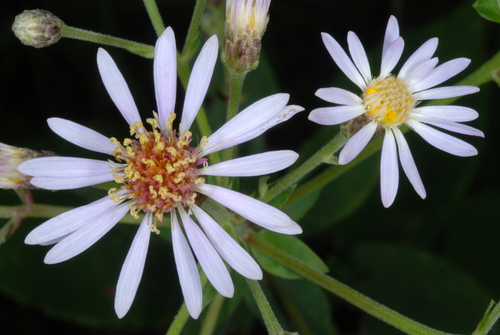
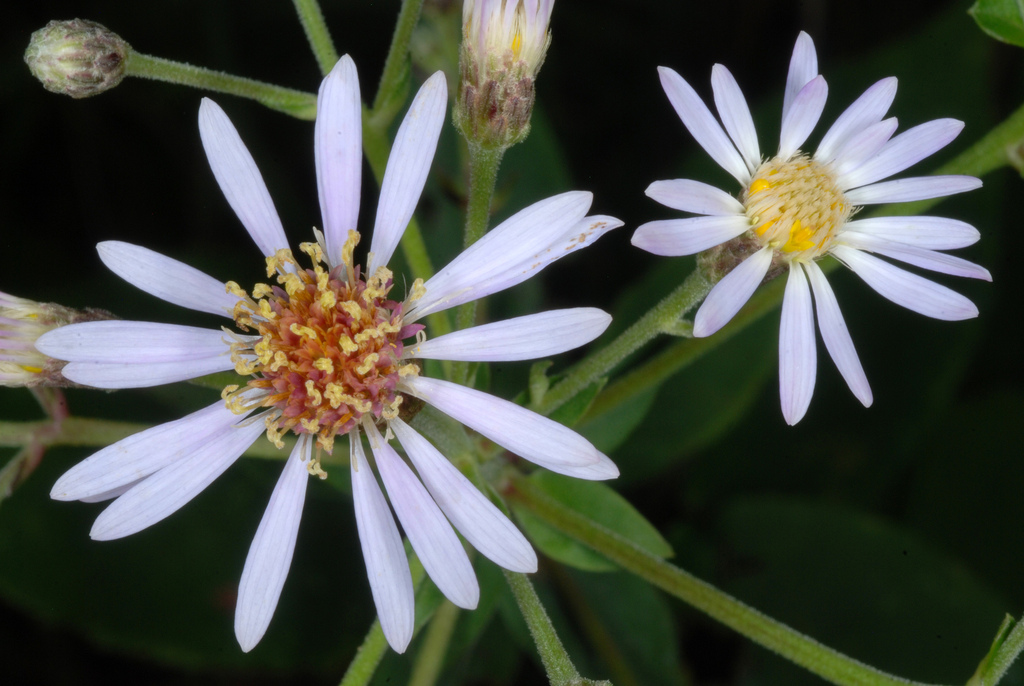
—observations
—countries
—peak records
Not EvaluatedConservation statusIUCN Red List categoriesLCNTVUENCREWEXNot Evaluated — not placed on the risk ladderRed List categories, explained →
Diet & preySunlight, Water, Soil nutrients
Predators
- White-tailed Deer
- Wild Turkey
- Ruffed Grouse
ThreatsCanopy closure, invasive woodland weeds, and overbrowsing by white-tailed deer
HabitatsDeciduous and mixed forests, woodland borders, clearings, and rocky slopes
Life spanPerennial (clones can persist for decades)
Classification
- OrderAsterales
- FamilyAsteraceae
- GenusEurybia
- SpeciesEurybia macrophylla
Range data is not available yet.
Interaction riskLow
- Low
- Moderate
- High
- Very high
- Why interaction risk is low
- Safe to observe at a normal distance.
Responsible observation
- Identification: Look for large, heart-shaped basal leaves that feel coarse like fine sandpaper.
- Pollinator spotting: Inspect flower clusters on warm September afternoons to observe native solitary bees and hoverflies.
- Habitat etiquette: Stay on designated woodland trails to avoid compacting the shallow, spreading rhizome mats.
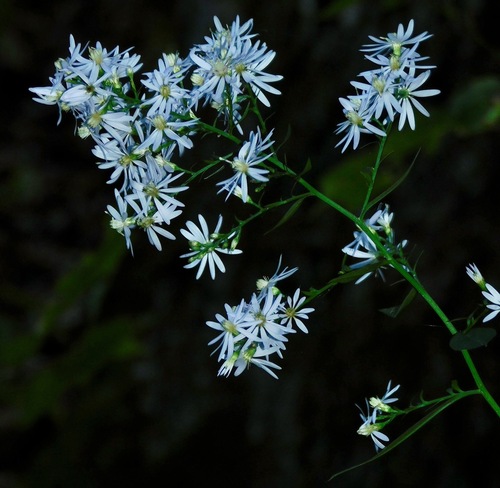
Ecological Companion (c) Michael J. Papay, some rights reserved (CC BY), uploaded by Michael J. Papay · cc-by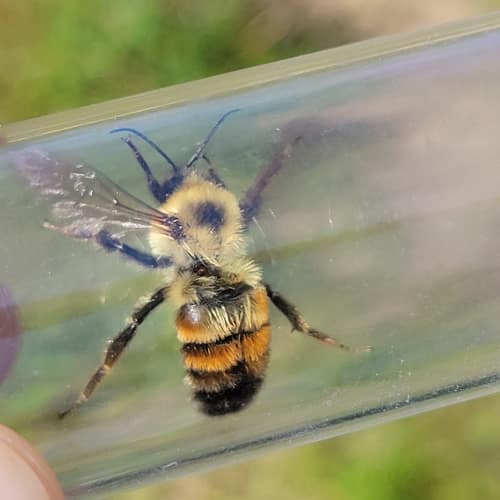
Pollinator (c) Matt Pelikan, some rights reserved (CC BY), uploaded by Matt Pelikan · cc-by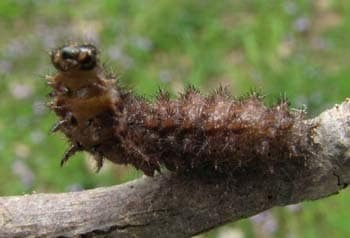
Herbivore Host (c) Beatriz Moisset, some rights reserved (CC BY-SA) · cc-by-sa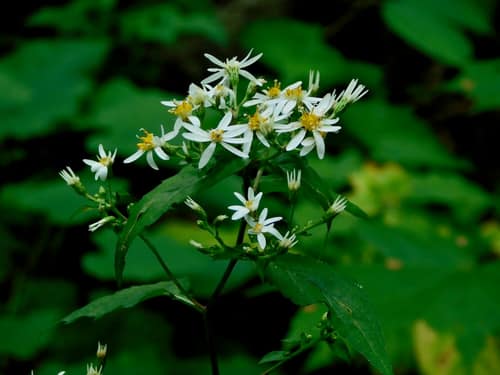
Close Relative (c) Michael J. Papay, some rights reserved (CC BY), uploaded by Michael J. Papay · cc-by
Help improve the field guideSomething wrong?
Checking your Fauna account…Report a name, category, or profile issue for review.