
Plant · GBIF taxon 5393103
Lesser Burdock
Arctium minusAlso known as Little Burdock, Louse-Bur, Common Burdock, Button-Bur
Lesser burdock forms massive rosette leaves in its first year before sending up a tall, branched stalk lined with purple thistle-like flower heads in its second year. The hooked burs cling tenaciously to animal fur and clothing, a seed dispersal mechanism that famously inspired the invention of Velcro. Found widely along disturbed roadsides, pastures, and woodland edges, it serves as a critical late-summer nectar source for bees and butterflies.
BiennialFloweringRoadside
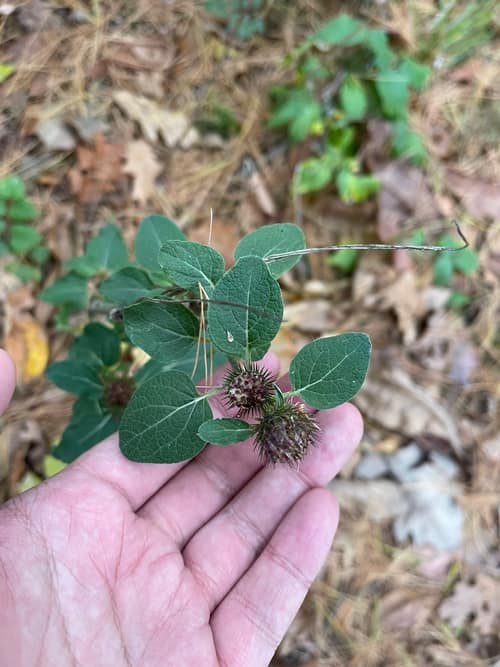
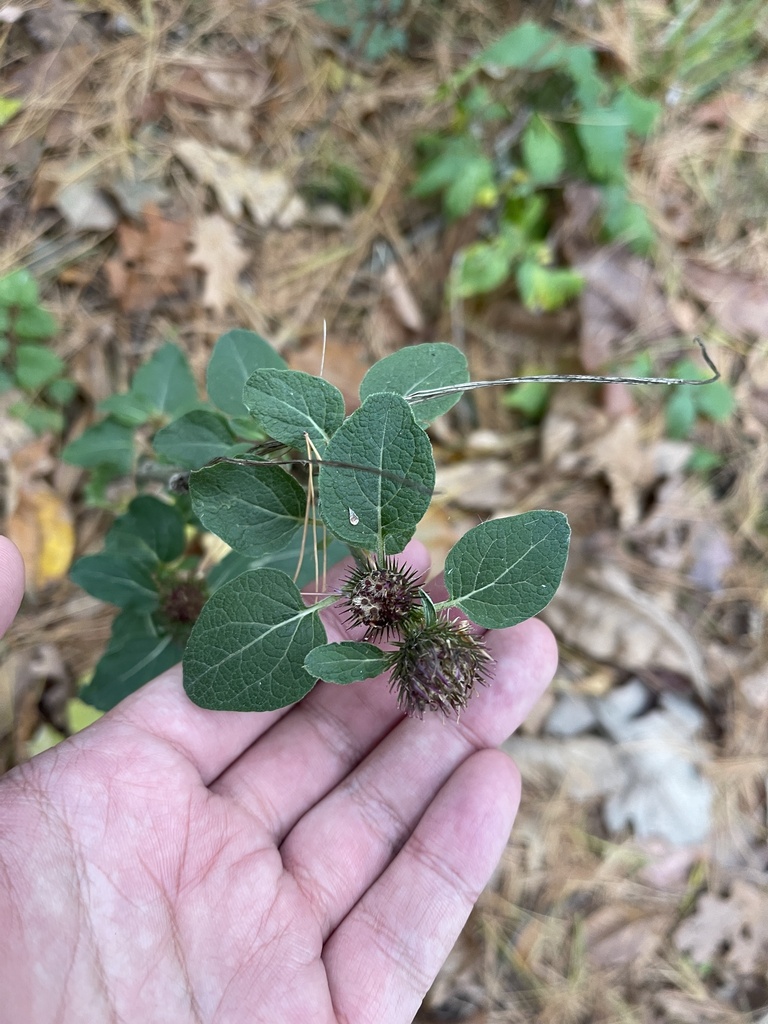
—observations
—countries
—peak records
Least ConcernConservation statusIUCN Red List categoriesLCNTVUENCREWEXLeast ConcernRed List categories, explained →
Diet & prey
- Autotrophic (Photosynthetic)
Predators
- Caterpillars
- Mice
- Snails
ThreatsHerbicide application, intensive land management
HabitatsDisturbed ground, roadsides, pastures, waste places, forest edges
Life span2 years (Biennial)
Size / weightNot available
Classification
- OrderAsterales
- FamilyAsteraceae
- GenusArctium
- SpeciesArctium minus
Range data is not available yet.
Interaction riskLow
- Low
- Moderate
- High
- Very high
- Why interaction risk is low
- Safe to observe at a normal distance; hooked burs easily attach to clothing and fur.
Responsible observation
- Identification: Check for hollow leaf stalks to distinguish this species from greater burdock.
- Handling: Wear smooth fabrics when hiking near mature plants to prevent seed burs from clinging.
- Observation: Visit flowering stalks on warm summer afternoons to spot a wide array of native pollinators.
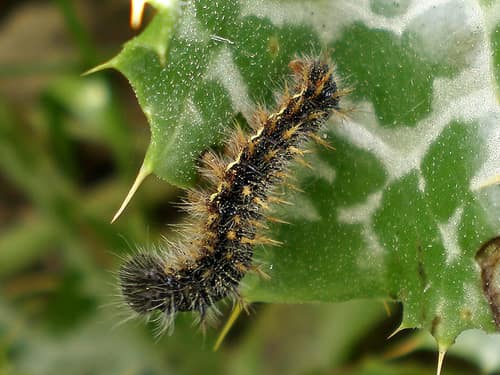
Herbivore no rights reserved, uploaded by Joan C. Hinojosa · cc0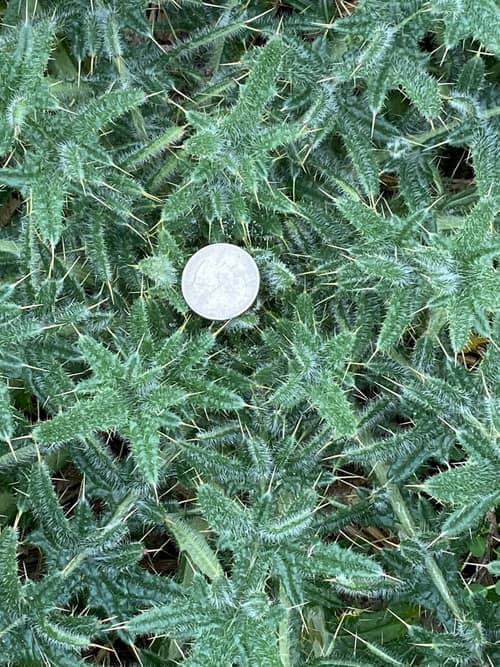
Competitor (c) Sandy Wolkenberg, some rights reserved (CC BY), uploaded by Sandy Wolkenberg · cc-by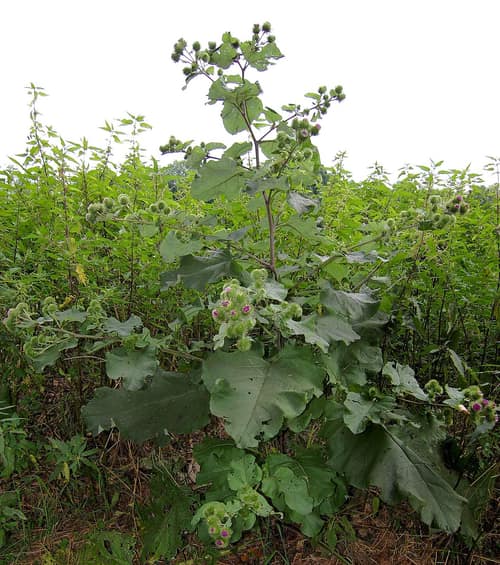
Close Relative Christian Fischer / CC BY-SA 3.0 · cc-by-sa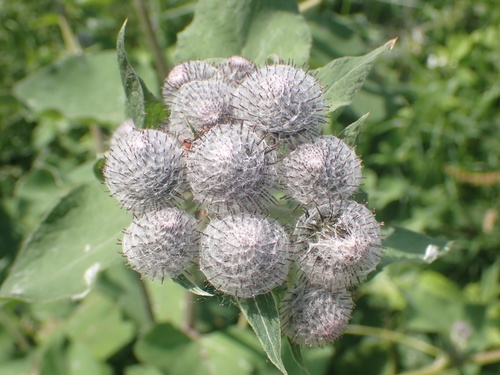
Close Relative no rights reserved · cc0
Help improve the field guideSomething wrong?
Checking your Fauna account…Report a name, category, or profile issue for review.