
Plant · GBIF taxon 5387142
Garden Dahlia
Dahlia pinnataAlso known as Common Dahlia, Wild Dahlia
Garden dahlias produce vibrant, multi-layered flower heads in almost every color except true blue, arising from fleshy underground tubers. Native to the high mountain valleys of Mexico, these bushy perennials rely on pollinators like bumblebees and butterflies while serving as a centerpiece of ornamental gardens worldwide. Their pinnate foliage and hollow stems yield blooms ranging from modest single blossoms to massive pompons.
FloweringOrnamentalPerennial
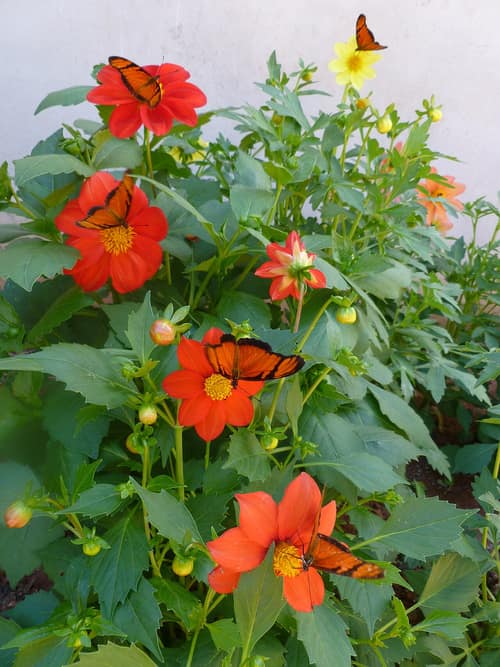
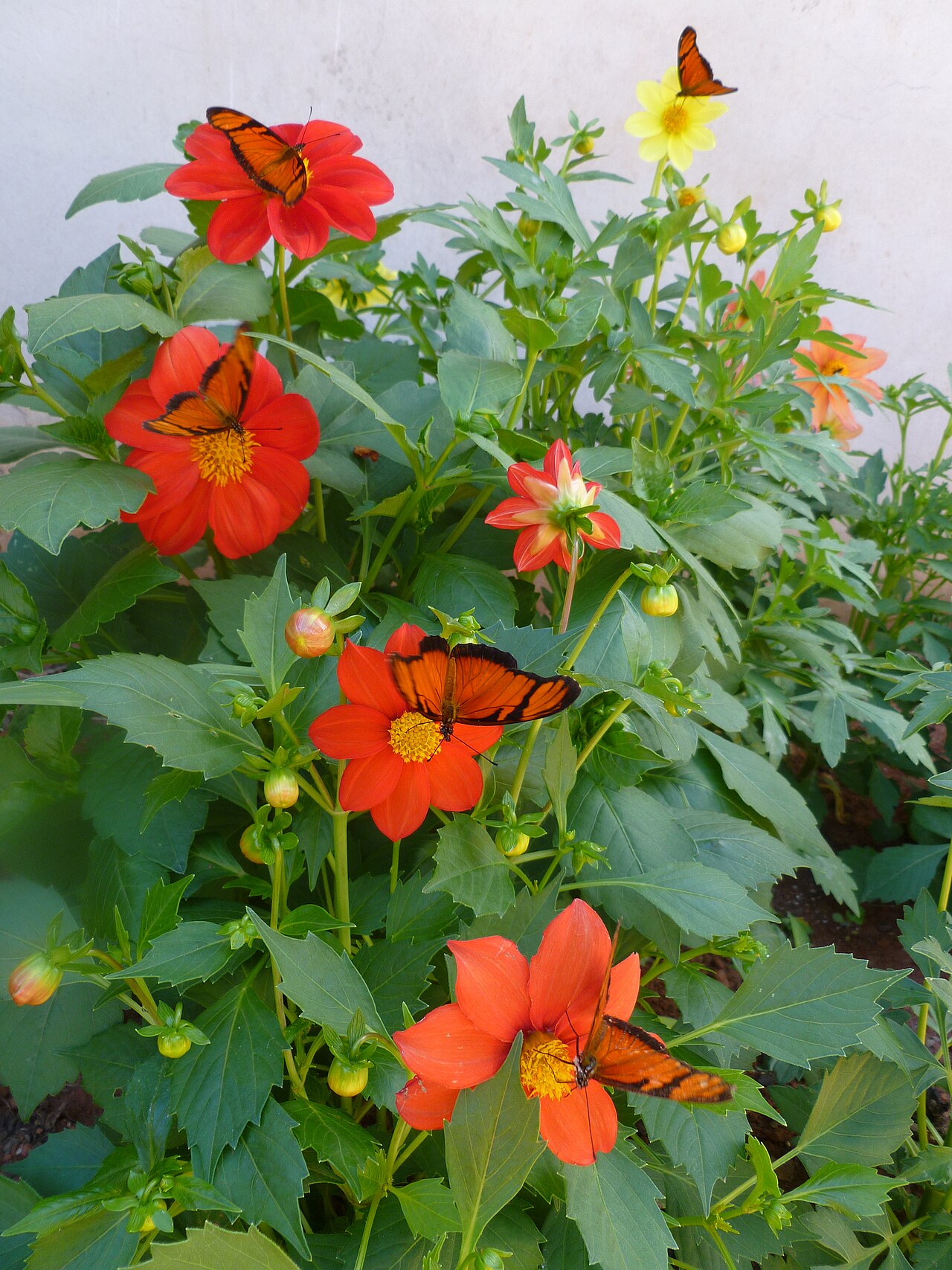
—observations
—countries
—peak records
Not EvaluatedConservation statusIUCN Red List categoriesLCNTVUENCREWEXNot Evaluated — not placed on the risk ladderRed List categories, explained →
Diet & prey
- Autotrophic (Photosynthesis)
Predators
- Slugs
- Snails
- Aphids
ThreatsFungal blights, severe frost, garden pests
HabitatsGardens, cultivated landscapes, pine-oak forest clearings
Life spanPerennial (tubers survive many years if protected from freezing)
Classification
- OrderAsterales
- FamilyAsteraceae
- GenusDahlia
- SpeciesDahlia pinnata
Range data is not available yet.
Interaction riskHigh
- Low
- Moderate
- High
- Very high
- Why interaction risk is high
- Toxic to dogs and cats if ingested, and sap may cause skin irritation; handle with care.
- Why it is dangerous
- Contains toxic principles and phototoxic compounds that cause mild contact dermatitis in humans and gastrointestinal distress in pets.
- How to recognize a risky encounter
- Recognized by bushy green stems, pinnate leaves, and large multi-petaled flower heads growing from underground tubers.
- What to do
- Wear gardening gloves when handling cut stems or tubers, and keep all plant parts out of reach of domestic pets.
Responsible observation
- Tuber Care: Lift underground tubers before the first autumn freeze in cold climates to store indoors.
- Deadheading: Snip off spent flower heads regularly to encourage continuous blooms throughout late summer.
- Pest Protection: Monitor young shoots closely for slugs and earwigs, which frequently chew tender new leaves.
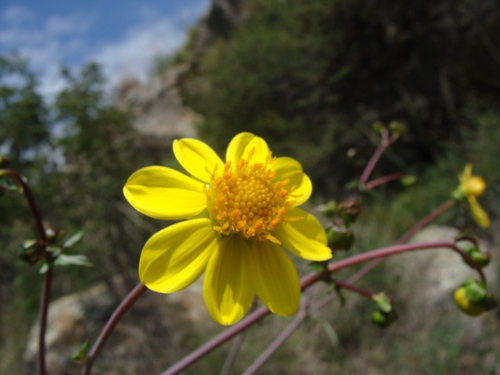
Parent Species (c) Alexis López Hernández, some rights reserved (CC BY), uploaded by Alexis López Hernández · cc-by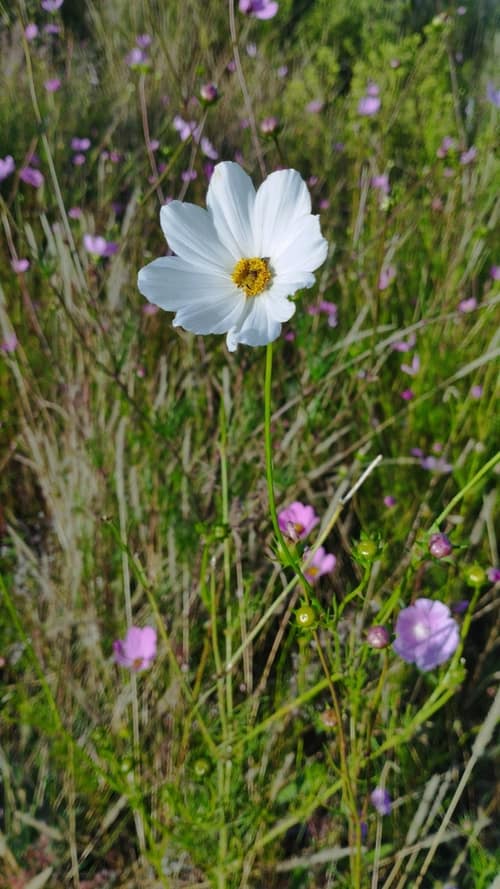
Frequent Companion (c) Irving Merino, some rights reserved (CC BY) · cc-by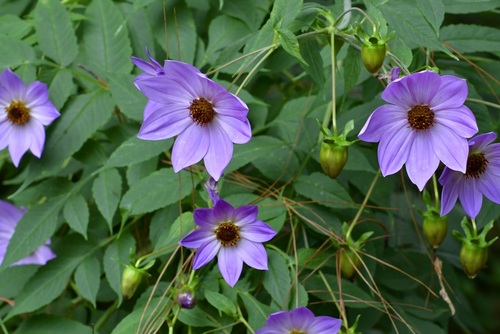
Close Relative (c) Neptalí Ramírez Marcial, some rights reserved (CC BY), uploaded by Neptalí Ramírez Marcial · cc-by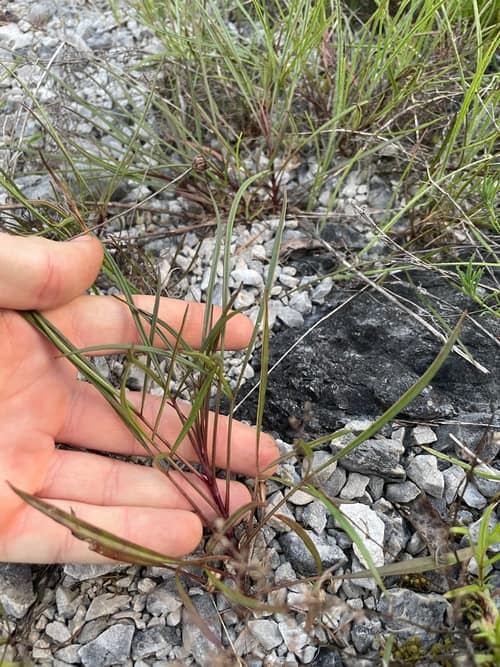
Family Member no rights reserved · cc0
Help improve the field guideSomething wrong?
Checking your Fauna account…Report a name, category, or profile issue for review.