
Plant
Palmer's Amaranth
Amaranthus palmeriAlso known as Carelessweed, Dioecious Amaranth, Palmer Amaranth, Palmer's Pigweed
Palmer amaranth is a fast-growing dioecious annual herb capable of shooting upward by several centimeters a day under direct summer sunlight. Female plants produce elongated flowering spikes packed with stiff, prickly bracts and can shed up to half a million tiny black seeds in a single season. Highly adaptable across riparian washes and disturbed agricultural soils, it has evolved widespread resistance to common herbicides, transforming it from a regional native into a formidable agricultural competitor.
AnnualFast-GrowingWind-Pollinated
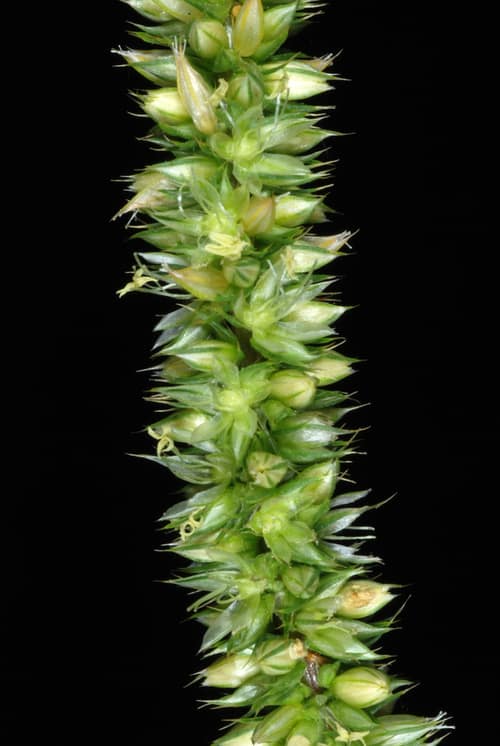
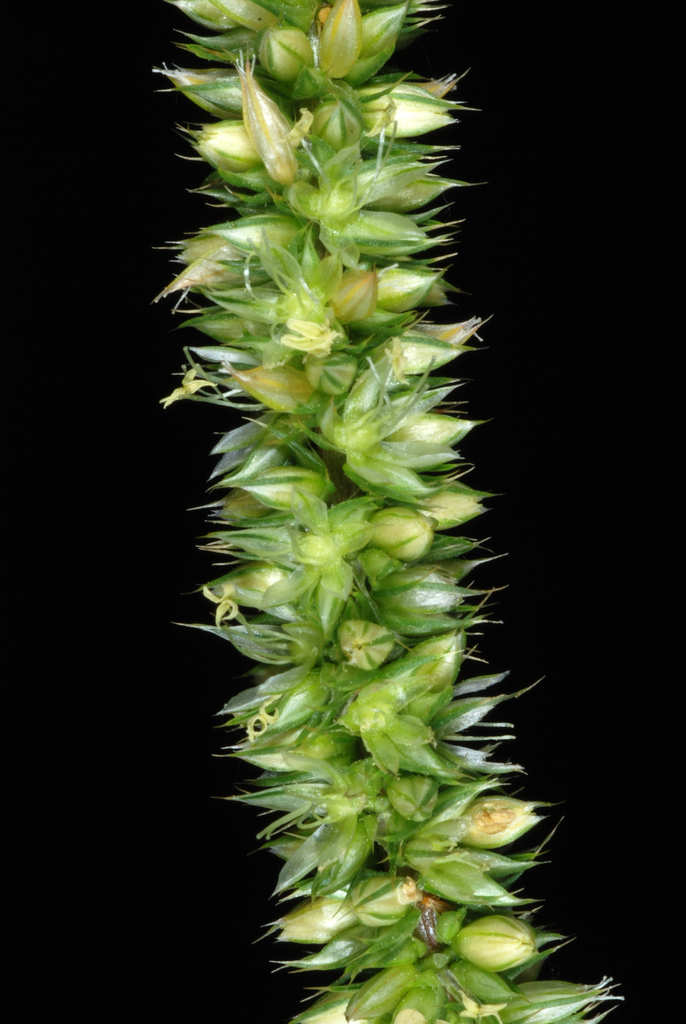
—observations
—countries
—peak records
Least ConcernConservation statusIUCN Red List categoriesLCNTVUENCREWEXLeast ConcernRed List categories, explained →
Diet & preyAutotrophic (photosynthesis)
Predators
- Pigweed flea beetle (Disonycha glabrata)
- Mourning dove (Zenaida macroura)
- Granivorous ground beetles
ThreatsHerbicide applications, mechanical tillage, crop competition, and seed predation
HabitatsAgricultural fields, roadsides, disturbed soils, riverbanks, and arid washes
Life spanAnnual (4–8 months)
Classification
- OrderCaryophyllales
- FamilyAmaranthaceae
- GenusAmaranthus
- SpeciesAmaranthus palmeri
Range data is not available yet.
Interaction riskHigh
- Low
- Moderate
- High
- Very high
- Why interaction risk is high
- Safe to observe at a normal distance.
Responsible observation
- Petiole Check: Bend a mature leaf back toward the stem; if the leaf stalk is distinctly longer than the blade, it points to Palmer amaranth.
- Spike Examination: Look at the terminal flowering spike to tell soft pollen-bearing males from stiff, prickly female seed-heads.
- Equipment Hygiene: Clean mud and debris from boots and gear after walking near infestations to avoid transporting the minute seeds.
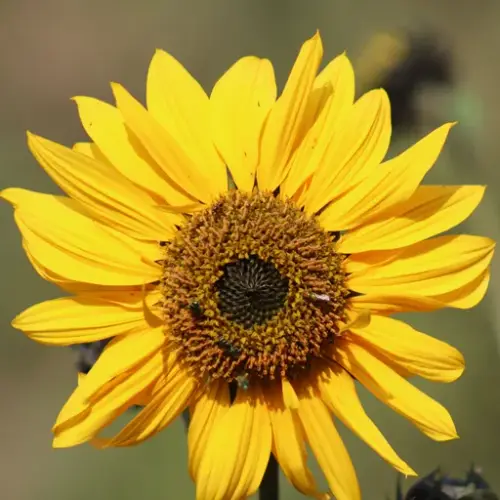
Competitor Dr Photographer / PUBLIC DOMAIN · public domain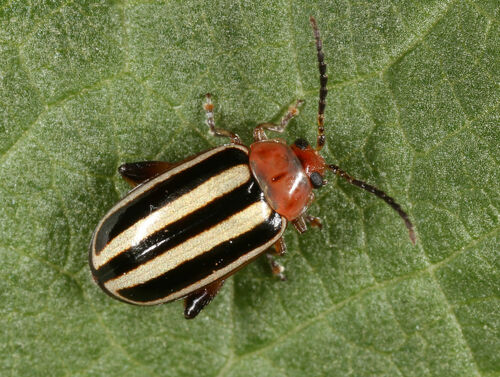
Herbivore (c) jcowles, some rights reserved (CC BY), uploaded by jcowles · cc-by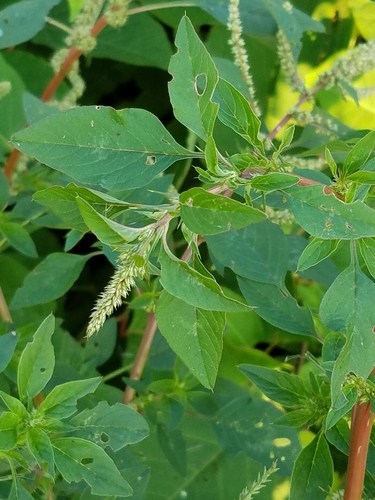
Close Relative no rights reserved, uploaded by Lottery Discountz · cc0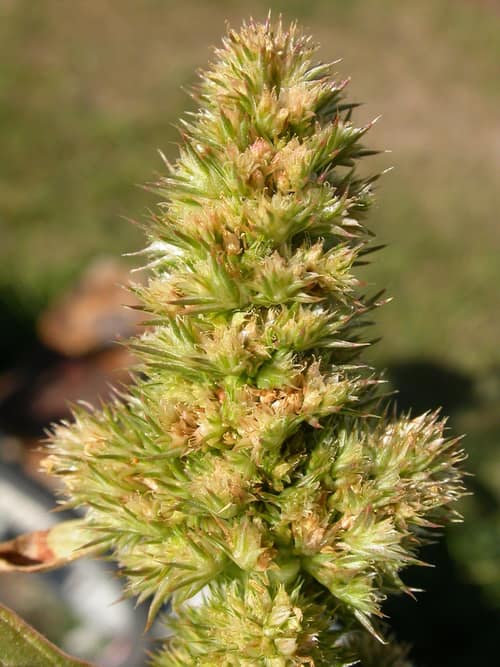
Close Relative (c) Matt Lavin, some rights reserved (CC BY-SA) · cc-by-sa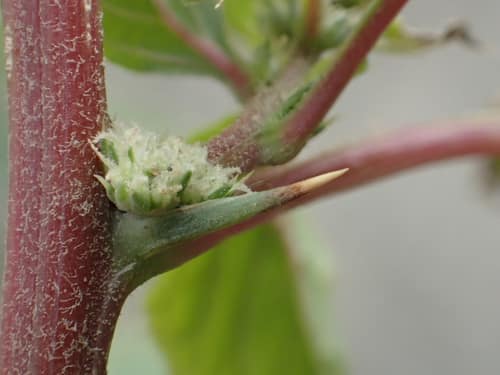
Close Relative no rights reserved, uploaded by 葉子 · cc0
Help improve the field guideSomething wrong?
Checking your Fauna account…Report a name, category, or profile issue for review.