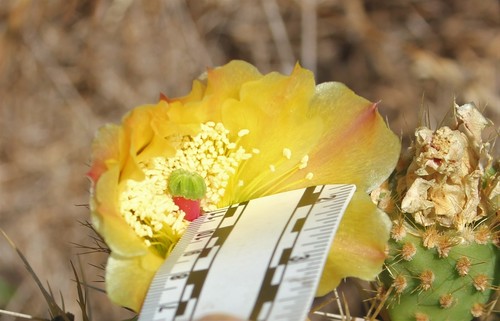
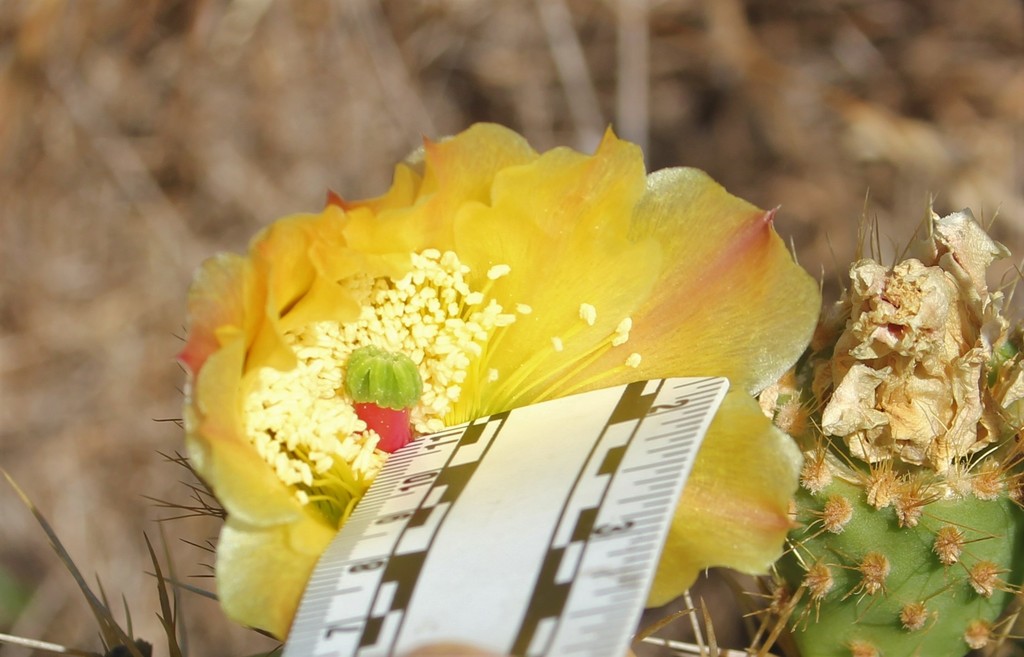
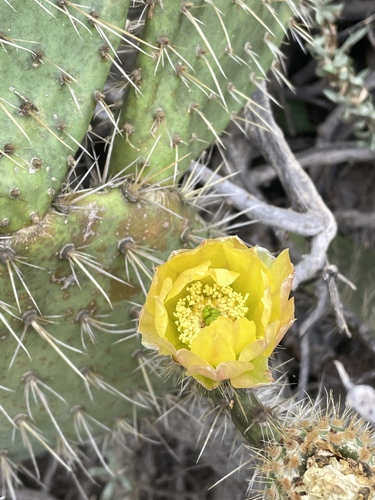
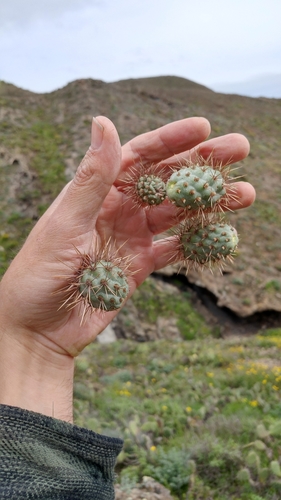
Chaparral prickly pear forms sprawling, multi-branched thickets across coastal Southern California and northern Baja California, providing vital nesting refuges for scrubland birds. Its rounded green pads bear stout yellowish spines surrounded by minute, needle-sharp glochids that easily dislodge onto passing wildlife. Bright yellow blossoms flush across the branches in late spring, ripening into spherical red fruits that nourish small mammals through dry summer months.
ThreatsUrban coastal development, frequent wildfire, and non-native invasive grasses
HabitatsCoastal sage scrub, chaparral slopes, and maritime bluffs
Life span20–50 years
Classification
OrderCaryophyllales
FamilyCactaceae
GenusOpuntia
SpeciesOpuntia oricola
Range & activity
Range data is not available yet.
Safe observation
Interaction riskLow
Low
Moderate
High
Very high
Why interaction risk is low
Barbed glochids cause painful skin irritation; wild fruits have toxic look-alikes, so never forage from apps alone.
Why it is dangerous
Tiny, barbed glochids readily penetrate skin upon the slightest contact, embedding deeply to cause painful foreign-body dermatitis and localized inflammation.
How to recognize a risky encounter
Look for rounded, paddle-shaped green segments clustered with long yellow spines and dense mounds of short, fuzzy bristles.
What to do
Do not touch pads or fruit bare-handed; use adhesive tape or fine tweezers to extract dislodged bristles if brushed.
Responsible observation
Trail Clearance: Keep a generous distance on narrow paths to avoid brushing against clothing-snagging glochids.
Bloom Watching: Scan flowering branches in May and June for specialized native bees and hummingbirds.
Birding: Watch inner thicket branches for hidden nests of coastal cactus wrens and thrashers.