
Plant
Kana
Panda oleosaAlso known as Panda Tree, Bofenge, Ebon
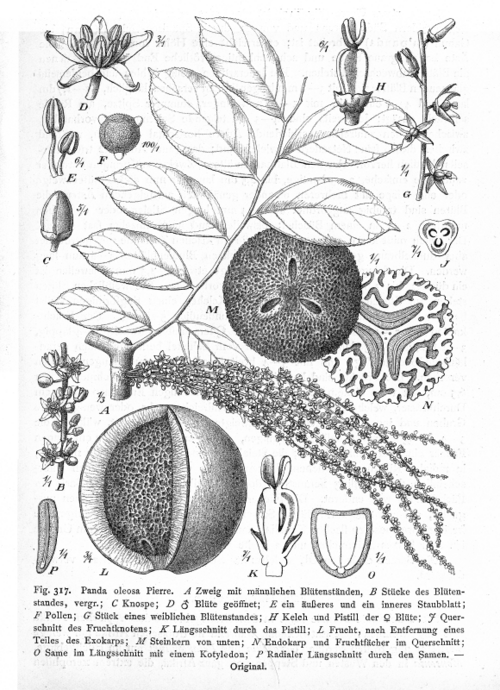
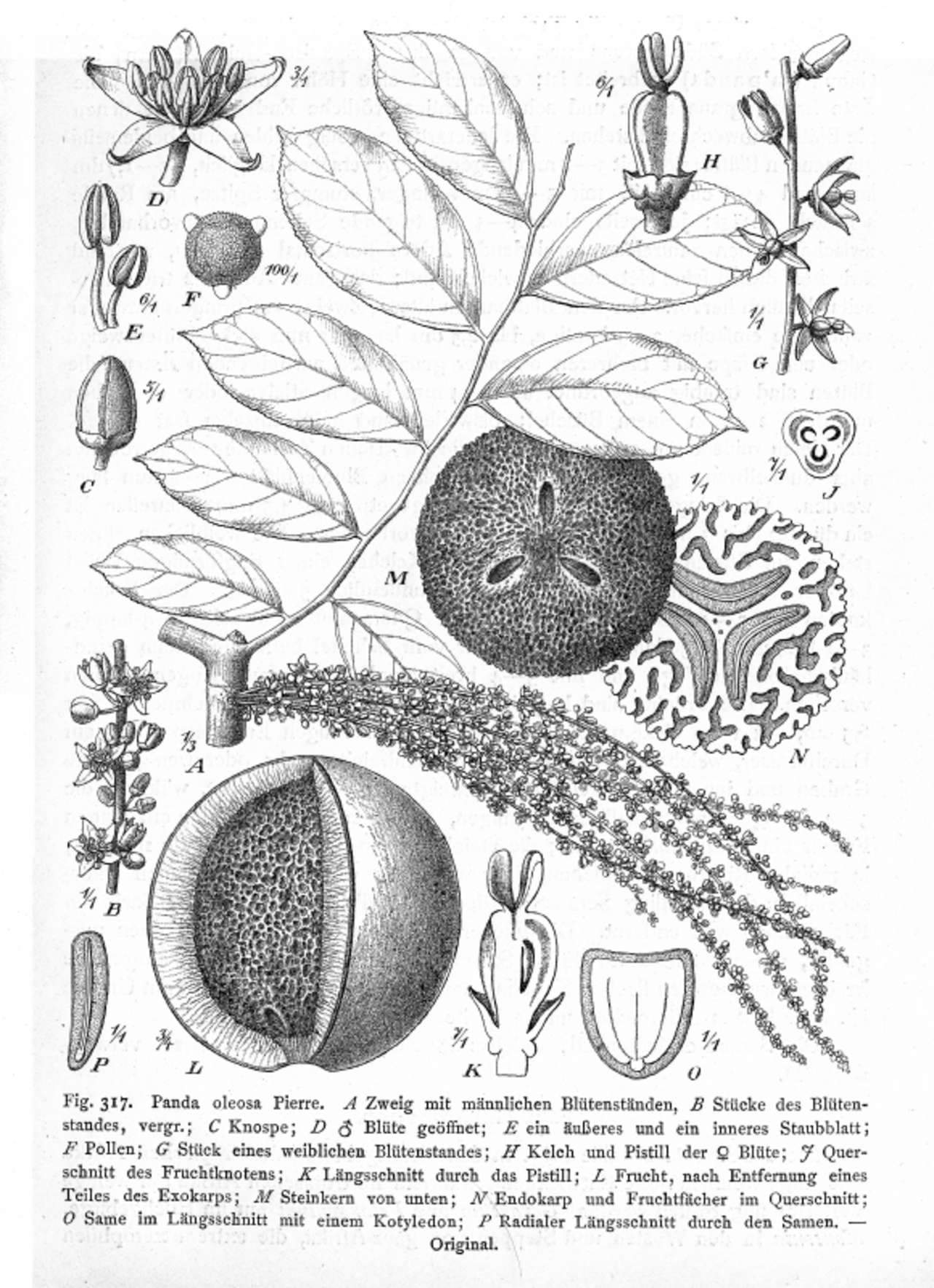
Kana is a dense canopy tree endemic to the equatorial rainforests of West and Central Africa, easily recognized by its thick, rough bark and pendulous clusters of yellowish-pink flowers. It produces exceptionally hard, fibrous drupes that house lipid-rich seeds protected by a nearly impenetrable woody endocarp. These durable nuts play a vital ecological role, relying almost exclusively on African forest elephants to swallow and disperse them intact, as well as chimpanzees who famously pound them open using heavy hammerstones.
RainforestCanopy TreeHardwood
—observations
—countries
—peak records
Least ConcernConservation statusIUCN Red List categoriesLCNTVUENCREWEXLeast ConcernRed List categories, explained →
Diet & preySunlight, Water, Soil nutrients
Predators
- Wood-boring beetles
- Fungal rot pathogens
ThreatsDeforestation, selective timber logging, decline of seed-dispersing megafauna
HabitatsPrimary lowland rainforests, riverine gallery forests
Life span100–200 years
Classification
- FamilyPandaceae
- SpeciesPanda oleosa
Range data is not available yet.
Interaction riskLow
- Low
- Moderate
- High
- Very high
- Why interaction risk is low
- Wild fruits and seeds have toxic look-alikes; never eat based on app identification alone.
Responsible observation
- Nut Spotting: Scan the forest floor for fibrous, tennis-ball-sized drupes scarred with pits.
- Chimp Anvils: Inspect large roots and flat stones nearby for clusters of smashed nut casings.
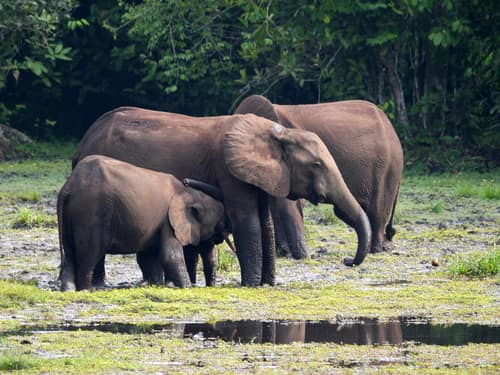
Disperser (c) Matt Muir, some rights reserved (CC BY), uploaded by Matt Muir · cc-by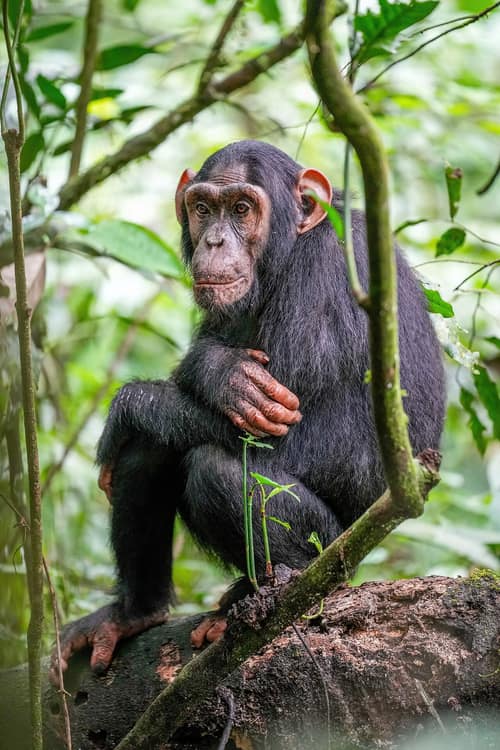
Seed Predator Giles Laurent / CC BY-SA 4.0 · cc-by-sa Image unavailable
Same Family Same Family
Help improve the field guideSomething wrong?
Checking your Fauna account…Report a name, category, or profile issue for review.