
Plant · GBIF taxon 5361919
Indian Banyan
Ficus benghalensisAlso known as Banyan
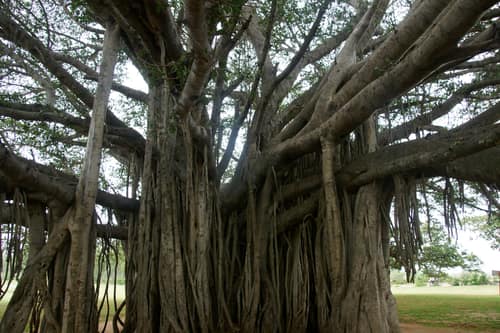
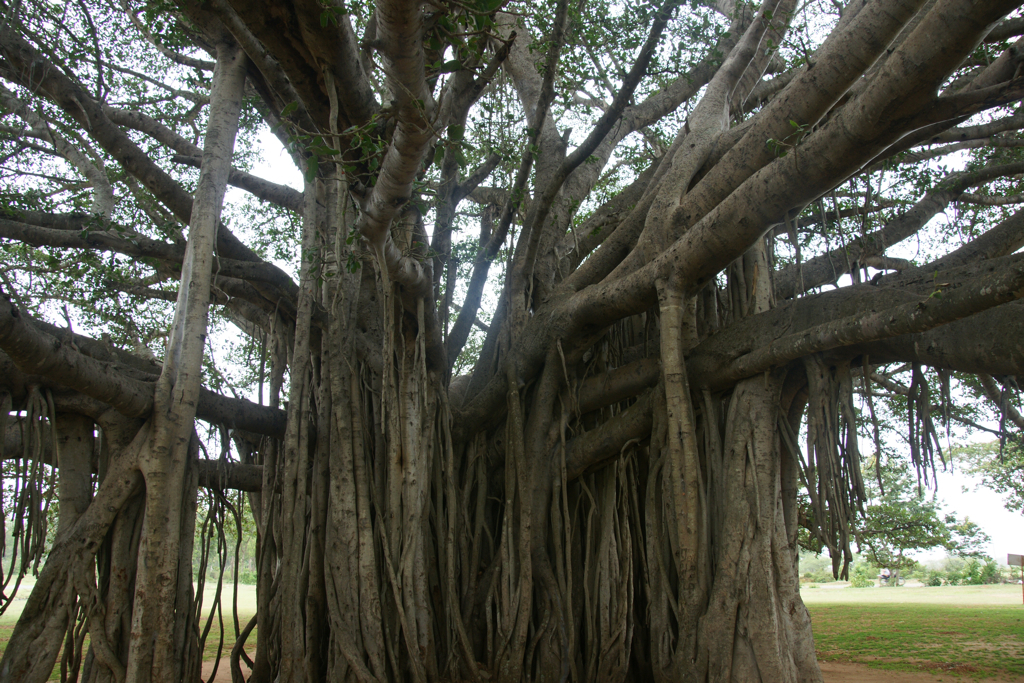
Indian banyan is a vast evergreen fig whose branches send pillar-like aerial roots to the ground. A mature crown can spread across a remarkable area and create a shaded habitat beneath interlinked trunks.
Aerial RootsCanopy TreeWildlife Resource
—observations
—countries
—peak records
Not EvaluatedConservation statusIUCN Red List categoriesLCNTVUENCREWEXNot Evaluated — not placed on the risk ladderRed List categories, explained →
Diet & prey
- Photosynthesis; roots absorb water and mineral nutrients
Predators
- Fig wasps
- Leaf-feeding insects
- Browsing mammals
ThreatsLarge-tree removal, soil compaction, drought, and damage to aerial roots
HabitatsTropical woodland, plains, temple grounds, parks, and village edges
Life spanOften several centuries
Size / weightNot available
Classification
- OrderRosales
- FamilyMoraceae
- GenusFicus
- SpeciesFicus benghalensis
Range data is not available yet.
Interaction riskLow
- Low
- Moderate
- High
- Very high
- Why interaction risk is low
- Milky latex may irritate skin and eyes; avoid broken tissue and wash after contact.
- Why it is dangerous
- Broken leaves and stems release latex that can irritate sensitive skin and eyes.
- How to recognize a risky encounter
- Confirm a broad-crowned fig with leathery leaves and numerous descending aerial roots.
- What to do
- Do not cut living tissue; avoid latex contact and rinse exposed skin or eyes promptly.
Responsible observation
- Roots: Follow hanging roots that thicken into supporting columns.
- Canopy: Observe from outside the root zone to prevent compaction.
Help improve the field guideSomething wrong?
Checking your Fauna account…Report a name, category, or profile issue for review.