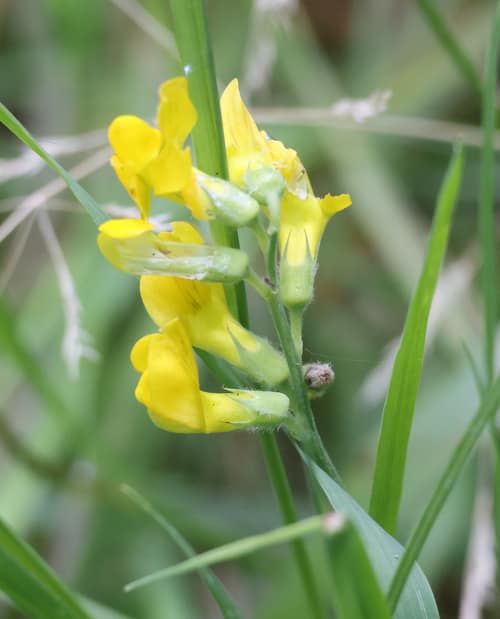
Also known as Perennial Pea, Everlasting Pea, Perennial Peavine, Broad-leaved Everlasting-pea
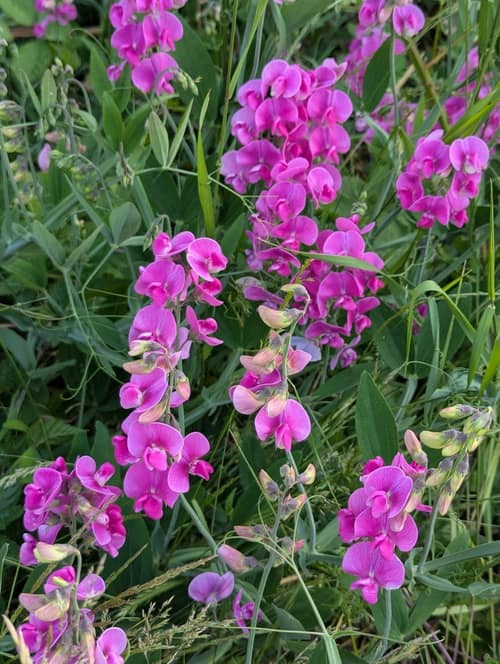
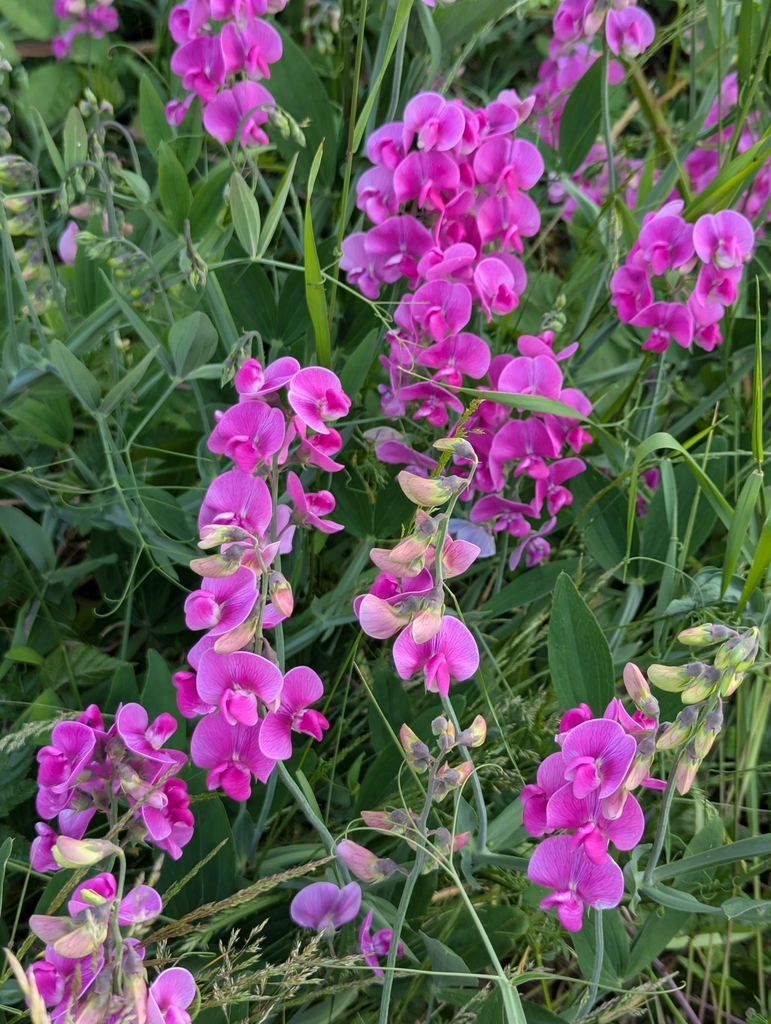
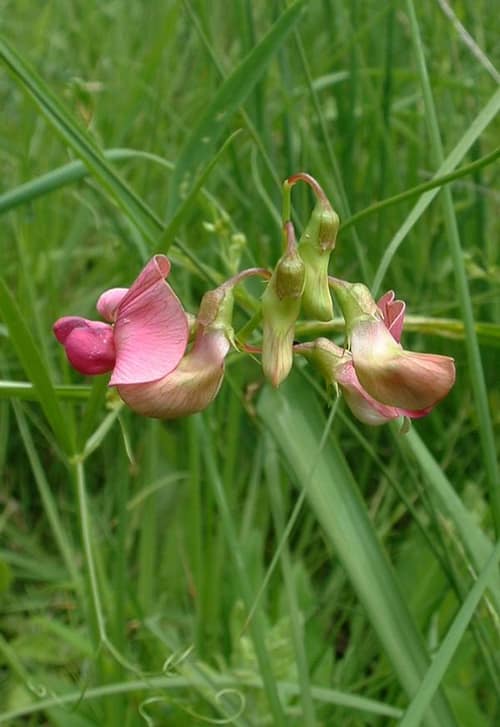
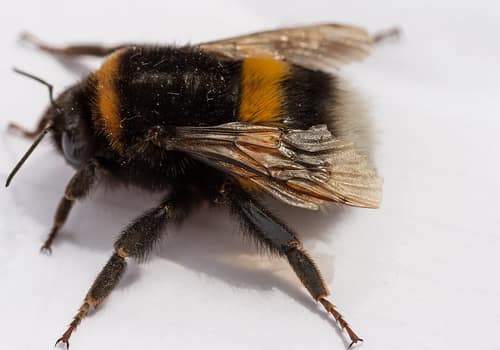
Broad-leaved sweet pea climbs vigorously across fences, shrubs, and roadside embankments by means of branched leaf tendrils and winged green stems. Dense racemes of odorless magenta to pale pink blooms open throughout summer, relying on bumblebees heavy enough to force open the keel petal for pollination. Its deep taproots allow it to thrive in poor, drought-prone soils, often forming dense thickets that crowd out native herbaceous vegetation.
ThreatsHerbicide spraying and invasive weed control measures in non-native ranges
HabitatsRoadsides, railway banks, waste ground, hedgerows, and coastal grasslands
Life span5–15 years
Size / weightNot available
Classification
OrderFabales
FamilyFabaceae
GenusLathyrus
SpeciesLathyrus latifolius
Range & activity
Range data is not available yet.
Safe observation
Interaction riskHigh
Low
Moderate
High
Very high
Why interaction risk is high
Seeds contain toxic amino acids causing lathyrism if eaten; do not ingest any plant parts.
Why it is dangerous
Seeds contain toxic amino derivatives including beta-aminopropionitrile, which can cause lathyrism, paralysis, and skeletal weakness when ingested in quantity.
How to recognize a risky encounter
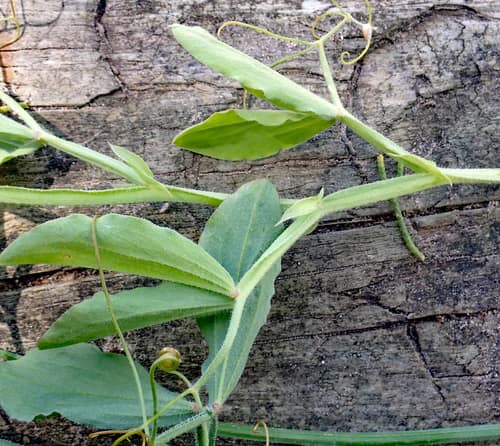
Look for prominent flattened, winged margins running down the green stems and broad, paired leaflets ending in branched tendrils.
What to do
Do not consume wild pea pods or seeds, and supervise children and pets around roadside patches.
Responsible observation
Look-alike awareness: Distinguish from edible garden peas by its winged stems, tough seedpods, and odorless blooms.
Garden cultivation: Provide a sturdy trellis or fence line to support its extensive, sprawling vine growth.