Also known as Jequirity Bean, Crab's Eye, Jumbie Bead, Weather Plant
Rosary pea is a slender, high-climbing perennial vine that twines aggressively through shrubs and trees across warm tropical and subtropical zones. Clusters of small, pale pink to violet pea blossoms yield dry pods that split open in autumn to reveal glossy, brilliant scarlet seeds capped with jet-black spots. While birds safely ingest and pass the hard, intact seeds unharmed, chewed seeds release one of the most potent plant toxins known in nature.
Seeds contain deadly abrin; ingest only after crushing poses lethal risk. Keep away from children and pets.
Why it is dangerous
Contains abrin, a ribosome-inactivating protein that halts cellular protein synthesis, causing severe nausea, vomiting, organ failure, and potential death if chewed seeds are swallowed.
How to recognize a risky encounter
Recognized by its dry brown clusters of seed pods splitting open to reveal strikingly glossy, bright red seeds with a distinctive black spot at the hilum.
What to do
Do not touch broken seeds or handle pods without gloves, and never allow children or pets near plants with open seed pods.
Responsible observation
Visual Identification: Look for pinnate leaves with 10 to 15 pairs of oblong leaflets and papery pods displaying bicolored red-and-black seeds.
Pet Safety: Ensure dogs and livestock do not browse near wild thickets where fallen seed pods accumulate.
Handling Precaution: Avoid making jewelry or crafts from the seeds, as accidental ingestion or dust from drilling is hazardous.

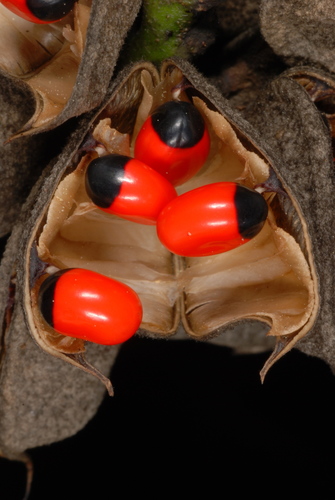
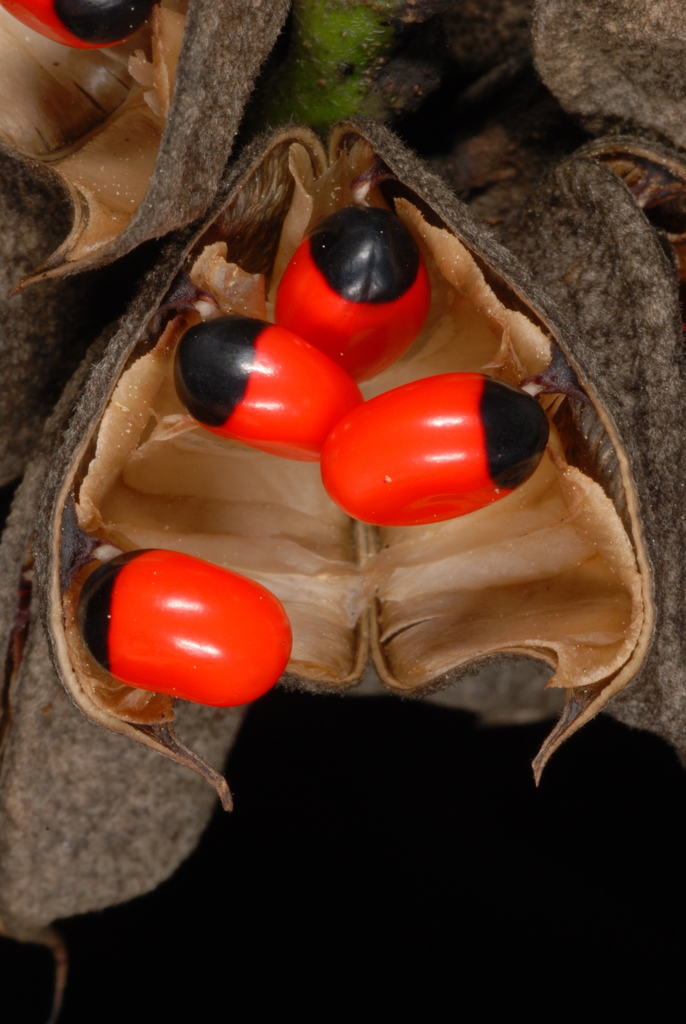
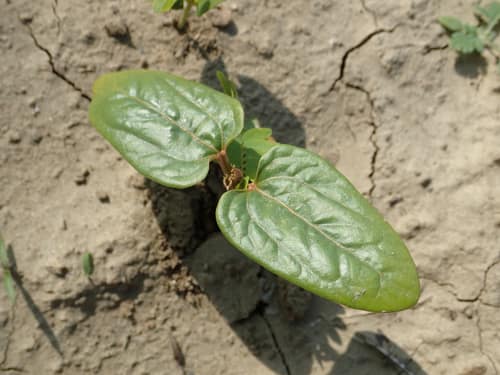
 Image unavailable