Also known as Boat Milkvetch, Canoe-pod Milk-vetch
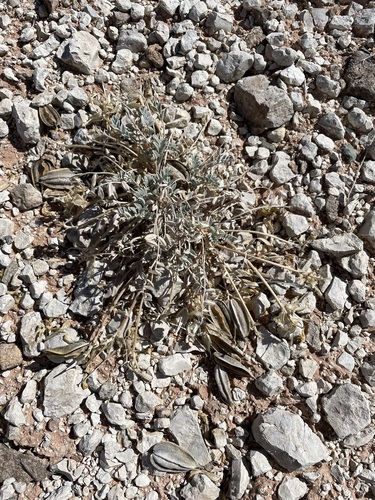
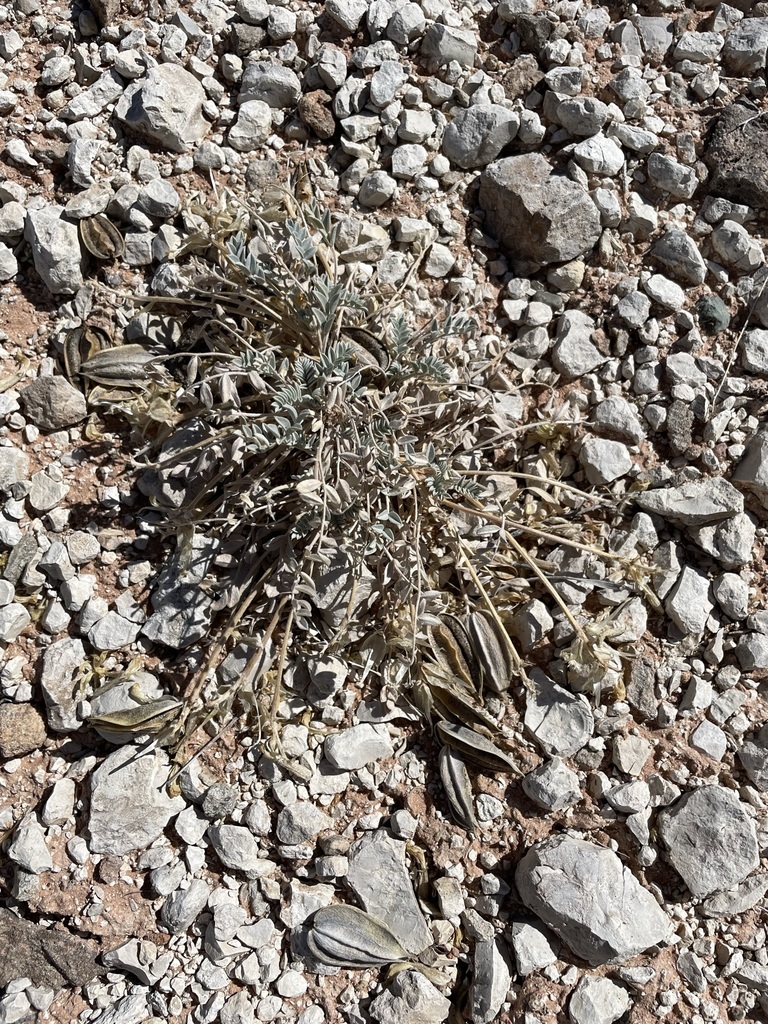
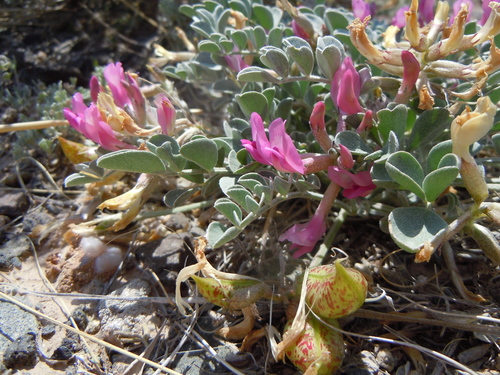
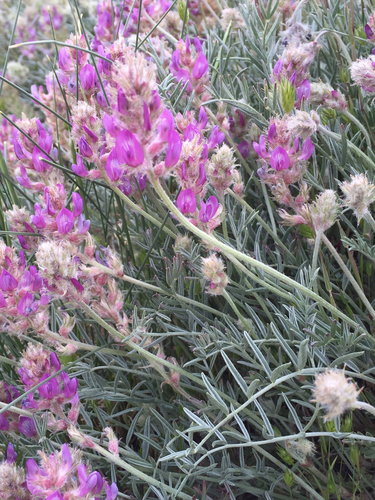
Canoe milkvetch forms low, silvery tufts across the arid Mancos Shale barrens and clay hills of eastern Utah. In spring, short flower spikes produce cream to faint lilac pea-like blossoms that give way to distinctive boat-shaped seed pods. Deep taproots anchor this specialized perennial against drying desert winds and severe soil erosion.
May contain toxic nitro compounds or selenium; toxic to pets and livestock if ingested.
Why it is dangerous
Members of this genus can synthesize toxic nitro compounds or hyperaccumulate selenium, causing neurological impairment and organ damage in livestock and domestic pets.
How to recognize a risky encounter
Look for low, silver-haired pinnate leaves and swollen, canoe-like seed pods resting close to clay surfaces.
What to do
Do not ingest any part of the plant and prevent curious dogs or grazing animals from chewing on foliage.
What to notice
Recognizable by its dwarf growth form, silvery leaflets, and curved boat-like pods on barren shale flats.
Support conservation
Observe and photograph from trails without disturbing adjacent micro-habitats or trampling desert crusts.
Responsible observation
Soil Protection: Stay on established trails to avoid crushing fragile biological soil crusts.
Optimal Timing: Look for distinctive boat-shaped seed pods from late April through June.