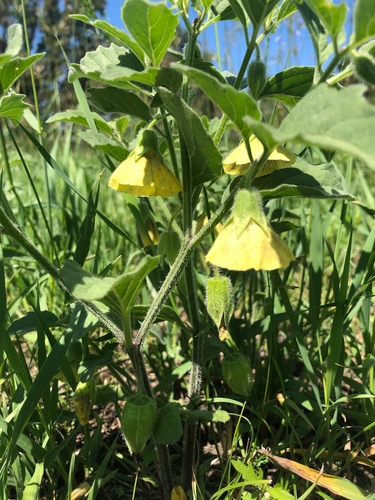
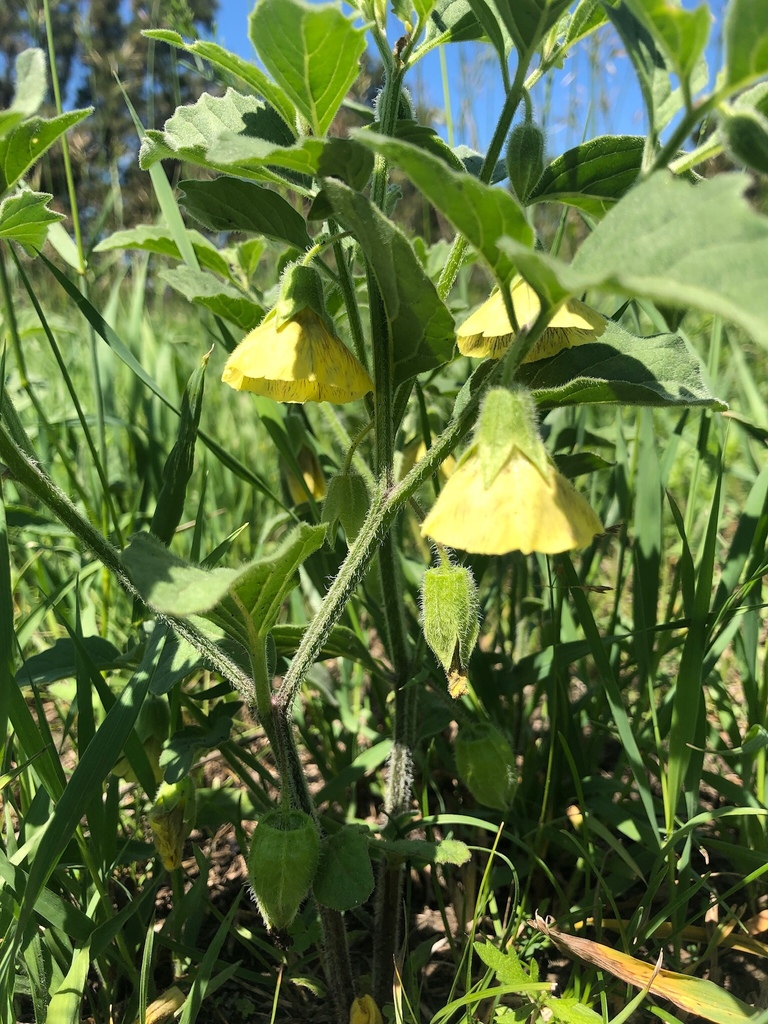
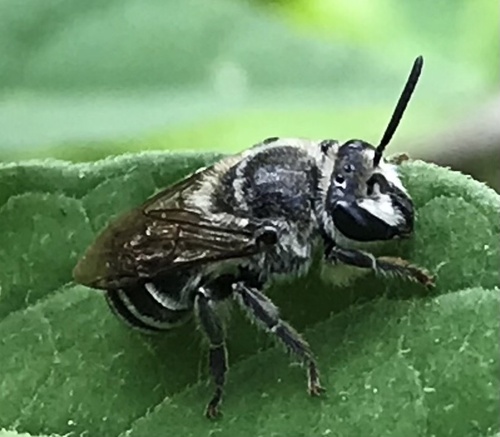
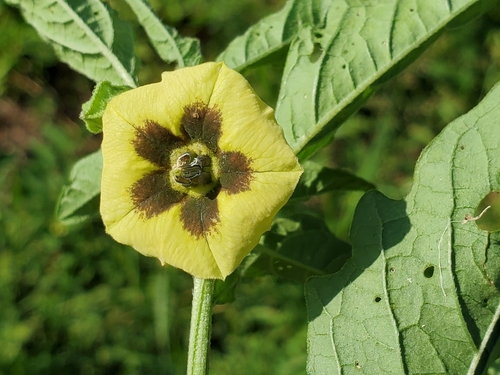
Virginia groundcherry is a hardy, rhizomatous perennial that anchors itself with a deeply buried stem base across eastern and central North American prairies, open woods, and roadsides. From late spring through summer, it produces nodding, bell-shaped yellow flowers with dark brownish-purple centers that attract specialist solitary bees. After pollination, the calyx inflates into a papery, ten-angled lantern that completely encloses a round berry until birds or small mammals disperse the seeds.
ThreatsHabitat conversion, intensive mowing, and broadleaf herbicide use
HabitatsPrairies, open woodlands, fields, roadsides, and disturbed sandy or rocky soils
Life spanPerennial (underground rhizomes persist for many years)
Classification
FamilySolanaceae
SpeciesPhysalis virginiana
Range & activity
Range data is not available yet.
Safe observation
Interaction riskHigh
Low
Moderate
High
Very high
Why interaction risk is high
Foliage and unripe berries are toxic; wild fruits have toxic look-alikes, so never eat based on app ID.
Why it is dangerous
The leaves, stems, and unripe green berries contain solanine and related glycoalkaloids, which irritate the digestive tract and can cause nausea, vomiting, diarrhea, and neurological symptoms if ingested by humans or pets.
How to recognize a risky encounter
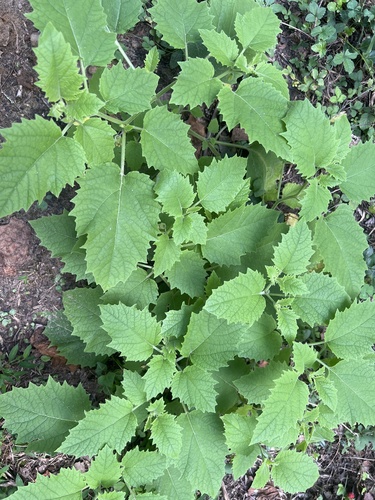
Look for a low, branching perennial with alternate oval leaves, downward-facing yellow flowers with dark centers, and inflated, papery, ten-angled husks enclosing a single round berry.
What to do
Leave the plants undisturbed in the field and keep curious pets and children from chewing the foliage or unripe fruits.
Responsible observation
Identification: Gently lift the nodding stems to spot the papery, lantern-like calyx husks hanging beneath the leaves.
Pollinator Watching: Observe the yellow bell-shaped flowers on warm mornings for specialist solitary bees.
Safety: Admire the inflated husks in place without picking or tasting any part of the plant.